Blog
Headlight Restoration: Why It Yellows Again in a Year
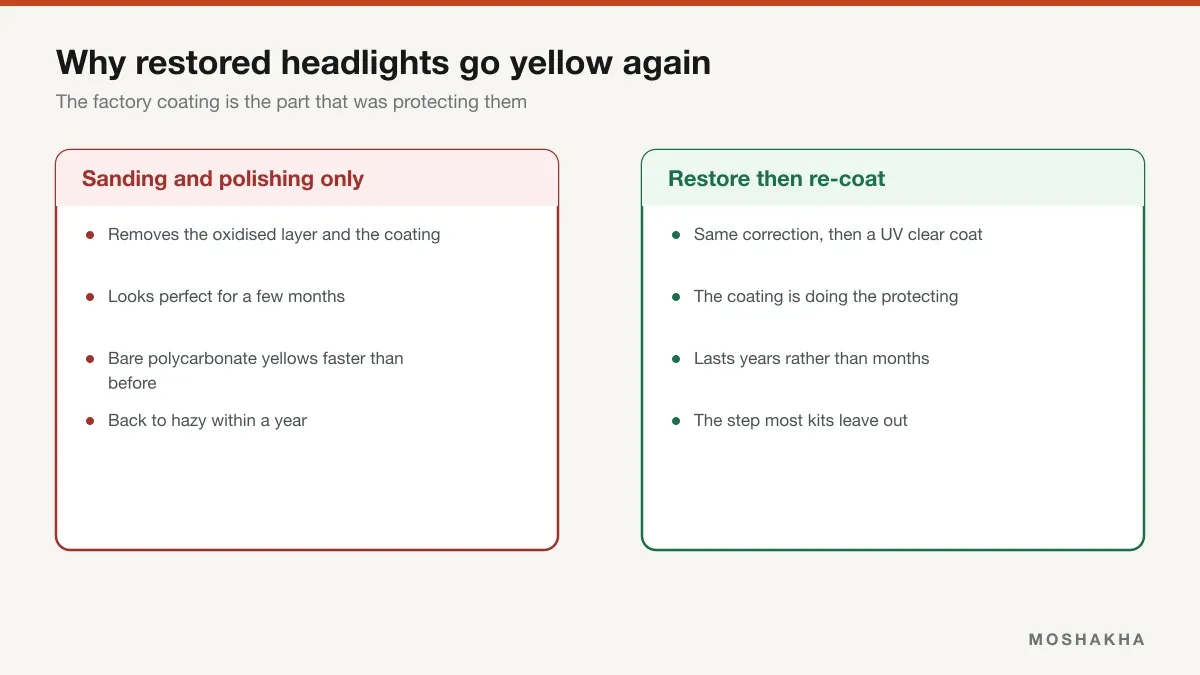
Sanding and polishing removes the haze and the factory UV coating with it. Without re-coating, bare polycarbonate yellows faster than it did originally.
Headlight restoration is the most satisfying car care job to do and the most disappointing one to have done, because the result usually doesn’t last.
What’s actually gone wrong
Modern headlights are polycarbonate, not glass. Polycarbonate yellows under UV, so the factory applies a hard UV-resistant clear coat over it.
That coating is what fails first. Years of sun, road grit, bug impacts and washing break it down, and once it’s compromised the polycarbonate underneath oxidises quickly.
So the haze is two things: a failed coating, and oxidised plastic beneath it. That distinction is the whole article.
Why polishing alone backfires
Sanding and polishing removes the oxidation — and it removes whatever remained of the factory UV coating with it.
What you’re left with is bare polycarbonate with nothing protecting it at all. It looks perfect, because you’ve just polished it. Then it yellows faster than it ever did originally, because the original had a coating and this doesn’t.
That’s the pattern people report: excellent for a few months, then deteriorating on an accelerating curve, worse within a year than before they started.
The step that decides it
Apply a new UV clear coat after the correction.
That’s it. The correction restores clarity; the coating is what keeps it. A restoration with re-coating lasts years. One without lasts months and then accelerates.
Cheap kits that contain only sandpaper and polish are selling you the half of the job that feels productive. The protective step is the one that matters, and it’s the one most often missing from the box.
Doing it properly, in short
Mask the surrounding paint generously — sanding slurry on paint is its own problem. Wet sand through progressively finer grits, polish to clarity, then wipe down with isopropyl alcohol so the coating bonds to clean plastic rather than polish residue.
Then apply the UV coating in thin, even passes and leave it to cure undisturbed.
See the microfiber towels from our guideDedicate towels to this job and don’t put them back in the paint rotation — polishing compound and sanding residue embed in the pile.
Toothpaste, briefly
It’s mildly abrasive, so it removes a little surface oxidation and produces a visible improvement for a few weeks.
It doesn’t touch yellowing deeper in the plastic and it provides no protection at all. It’s a demonstration of the principle, not a repair.
When to replace instead
Surface work can’t fix problems inside the unit. Replace rather than restore if:
- The lens is crazed with fine cracks throughout rather than merely hazed
- Moisture is getting inside the housing
- The reflector coating behind the lens has gone patchy or dull
Check for those before spending an afternoon on the outside of a headlight that needs replacing anyway.
Frequently asked questions
Why do headlights turn yellow and cloudy?
Modern headlights are polycarbonate, which yellows under UV. The factory applies a hard UV-resistant clear coat to prevent it, and that coating is what degrades first — it breaks down under years of sun, road grit and washing, and once it fails the polycarbonate underneath oxidises rapidly. So the haze you see is a failed coating plus oxidised plastic, not dirty glass.
Why did my restored headlights go cloudy again so quickly?
Because sanding and polishing removes the remaining factory coating along with the oxidation. What's left is bare polycarbonate with nothing protecting it, so it yellows faster than the original ever did. That's why polish-only restorations look excellent for a few months and then deteriorate on an accelerating curve.
What actually makes a restoration last?
Applying a new UV-resistant clear coat after the correction. That's the step most cheap kits leave out, and it's the step that determines whether you get months or years. The correction gets the clarity back; the coating is what keeps it. A restoration without re-coating is maintenance you'll be repeating annually.
Does toothpaste actually restore headlights?
It's mildly abrasive, so it removes a small amount of surface oxidation and produces a visible short-term improvement. It won't touch genuine yellowing deeper in the plastic, and it does nothing about protection. It's a demonstration of the principle rather than a repair — the improvement typically fades within weeks.
Is it worth restoring or should I just replace the headlights?
Restoration is dramatically cheaper and works well on units whose lenses are hazed but otherwise sound. Replacement makes sense if the lens is crazed with fine cracks throughout, if moisture is getting inside the unit, or if the reflector coating behind the lens has degraded — none of which surface work can fix. Check for internal problems before spending time on the outside.