Reviews
Jackery Explorer 300 Plus Review: The Chemistry Is the Point
288Wh of LiFePO4 in something light enough to actually carry. Why the battery chemistry matters more than the capacity number, and what 300W genuinely won't run.
Moshakha is reader-supported. When you buy through links on our site, we may earn an affiliate commission at no extra cost to you. How we make money.
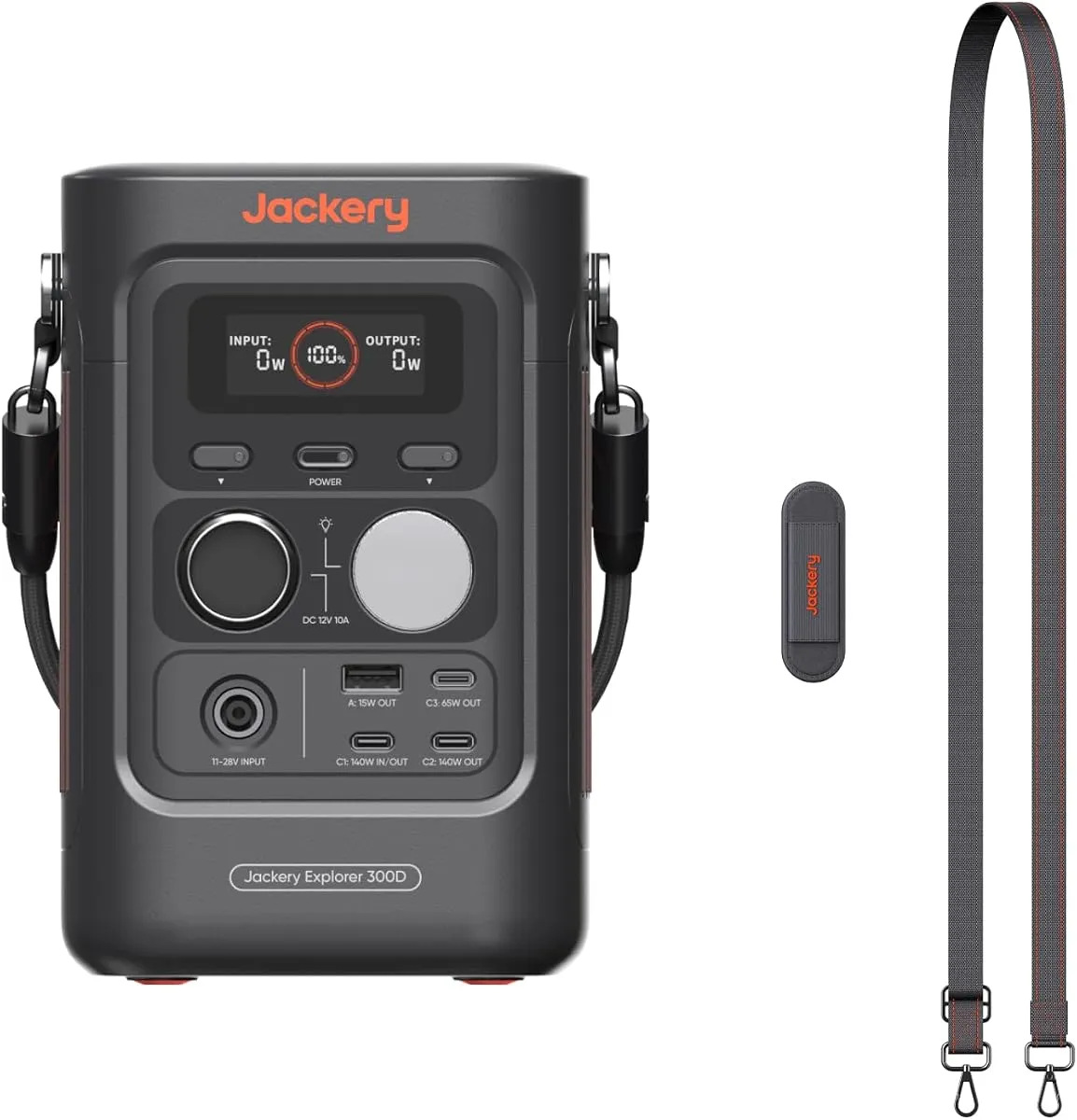
Pros
- LiFePO4 chemistry — far more charge cycles than older lithium-ion
- Light enough that it gets carried rather than left in the garage
- USB-C PD input and output, so it charges from a laptop brick
- 300W covers laptops, phones, lights and camera batteries comfortably
Cons
- 300W rules out kettles, heaters, compressors and most power tools
- 288Wh is a weekend of small devices, not a day of anything large
Power stations are sold on watt-hours. The number that actually decides whether this is still useful in five years is printed much smaller.
LiFePO4 is the spec that matters
Lithium iron phosphate tolerates substantially more charge cycles than the lithium-ion packs older models use, and it copes better with heat — which matters for anything that lives in a car.
Two units with identical 288Wh ratings can be very different products once you’ve cycled them a few hundred times. One holds most of its capacity; the other doesn’t.
That’s the whole reason this sits above the older Explorer 300 in our ranking despite near-identical capacity. For a unit used twice a year the difference barely registers. For one you actually use, it decides the lifespan.
The watt-hour figure is a ceiling
288Wh is not what you’ll get out of it.
Anything drawn through the AC outlets passes through an inverter, and that conversion loses a meaningful share as heat. Then the device you plug in does its own conversion.
Charging over USB-C straight from DC skips one of those conversions and lands much closer to the rated number. That’s the single most useful habit with one of these, and this unit’s USB-C PD input and output is what makes it practical.
What 300W refuses
This is the limit worth understanding before buying, because it’s absolute rather than gradual.
Fine: laptops, phones, tablets, camera batteries, lights, many CPAP machines.
Refuses: kettles, hair dryers, induction hobs, compressors, most power tools.
Anything with a motor or a heating element draws a startup surge far above its running wattage. A 300W unit doesn’t struggle with those — it declines. If you need appliances, that’s a different and much heavier class of product.
Light enough to get used
Easy to undervalue. A power station that’s awkward to carry gets left in the garage, and a unit in the garage has zero capacity when you want it.
This is light enough to take without planning around it, which in practice is worth more than the extra capacity of something you leave behind.
It is not a jump starter
Worth stating because people assume otherwise. A jump starter delivers a huge current burst for seconds; this delivers moderate power for hours. Attempting the former with the latter can damage it.
If roadside failure is the thing you’re covering, that’s a jump starter, and the broader argument about what’s worth carrying is in car emergency kits.
Should you buy it?
Yes, if you want to keep phones, a laptop and camera gear running through a weekend, in something you’ll actually carry, and you want the battery to still be good years from now.
No, if you need to run anything with a motor or a heating element — that’s a 1000Wh, 1500W+ purchase and a two-hands item.
Frequently asked questions
Why does LiFePO4 matter more than the watt-hour figure?
Because it determines how long the unit stays useful. LiFePO4 typically tolerates several times the charge cycles of standard lithium-ion before meaningful capacity loss, and it handles heat better — which matters for anything stored in a car. Two units with identical 288Wh ratings can differ enormously in how much of that capacity remains after a few hundred cycles.
Will I actually get 288Wh out of it?
No, and that's true of every power station. Anything drawn through the AC outlets passes through an inverter converting DC to AC, and that conversion loses a meaningful share as heat. Charging over USB-C directly from DC skips one conversion and gets noticeably closer to the rated figure. Treat 288Wh as a comparison number between products rather than a promise.
What can 300W actually run?
Laptops, phones, tablets, camera batteries, lights, a CPAP in many cases. What it won't run is anything with a motor or a heating element — kettles, hair dryers, induction hobs, compressors, most power tools. Those draw a startup surge far above their running wattage, and a 300W unit refuses rather than struggling.
Can it jump start a car?
No, and attempting it can damage the unit. A jump starter delivers an enormous current burst for a few seconds; a power station delivers moderate power for hours. They're different engineering problems. If roadside failure is what you're covering, carry a dedicated jump starter instead.
Can I leave it in the car permanently?
Not ideal, particularly in a hot climate, though LiFePO4 tolerates heat better than older lithium-ion would. If you do store it in the vehicle, keep it at a partial charge rather than full, and check it every few months — the same discipline a jump starter needs, and for the same reason.