Buying Guides
Car Emergency Kits: What's Actually Worth Carrying
Pre-made emergency kit boxes are mostly filler. The three things that cover the failures that actually strand people, and why a box of triangles isn't one of them.
Moshakha is reader-supported. When you buy through links on our site, we may earn an affiliate commission at no extra cost to you. How we make money.
At a glance
Judged by which failure each item actually solves, not by how many pieces come in the box.
| Product | Award | Best for | Rating | Jump to review |
|---|---|---|---|---|
| NOCO Boost GB40 (1000A) | Solves the most common roadside failure | Petrol engines up to about 6.0L — the single most common cause of being stranded | Details | |
| AstroAI AIRUN H Tire Inflator (12V) | Solves the second most common failure | A slow leak or a tire that's dropped pressure before it becomes a flat | Details | |
| DRIVE Collapsible Car Trunk Organizer | Keeps the other two from becoming trunk clutter | Keeping the jump starter and inflator anchored instead of rolling around loose | Details |
Search “car emergency kit” and most results are a box of 40-plus pieces — triangles, a poncho, jumper cables, a first-aid kit — priced to look thorough. Thoroughness isn’t the same as usefulness. The question worth asking about any item is: which specific failure does this solve, and how often does that failure actually happen?
The two failures that actually strand people
A dead battery, overwhelmingly, is the most common reason anyone calls for roadside help. A flat or badly under-inflated tire is the second most common. Almost everything else — a warning triangle, a poncho, a first-aid kit — addresses a failure that’s real but far less frequent.
That’s the entire logic behind this list: cover the two failures that actually happen, properly, before spreading the budget across items that address rarer scenarios.
Why not jumper cables?
Cables are cheap, they never go flat, and they’re a reasonable thing to also carry. But they have one structural limitation a jump starter doesn’t: they need a second car and a willing stranger. A jump starter works alone, in an empty car park at night, which is precisely the situation a dead battery tends to produce. If you can only carry one, the jump starter is the one that doesn’t depend on someone else showing up.
Why not a pre-made kit box?
Most bundle a warning triangle, a cheap poncho, low-quality jumper cables, and a thin first-aid kit, priced by piece count rather than by what each piece actually solves. None of it addresses a dead battery or a soft tire — the two things most likely to actually strand you. You end up with a box that looks complete and doesn’t cover the common case.
How we chose
Each item here was selected because it solves one of the two most common roadside failures, using picks already vetted in their own category guides — see best jump starters and best tire inflators for the full field and sizing guidance. The organizer isn’t a fourth emergency item; it’s what keeps the other two found and undamaged when you need them.
What we deliberately left out
Warning triangles and flares are worth carrying if you have the space, but they address a rarer scenario — being stopped on a live road — rather than the two failures above. A full tire-repair plug kit adds real capability but has a learning curve most people never practice before the day they need it; the inflator is the simpler, higher- value first purchase. First-aid kits are sensible but orthogonal to “getting the car moving again,” which is the specific problem this list solves.
Buy those separately if you want them. Don’t let a bundle substitute for the two things that actually get used.
The picks in detail
Solves the most common roadside failure
1. NOCO Boost GB40 (1000A)
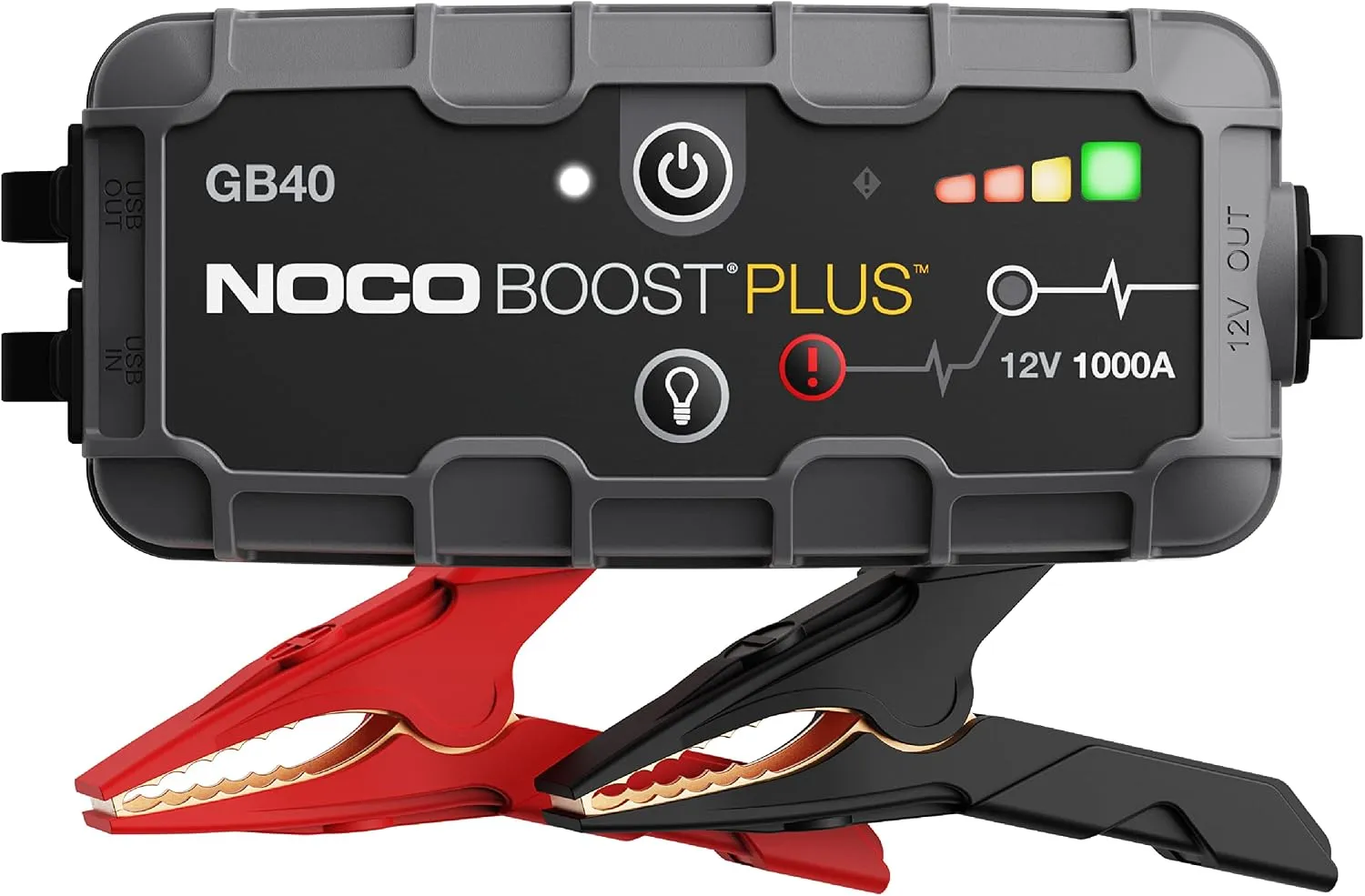
Best for: Petrol engines up to about 6.0L — the single most common cause of being stranded
A dead battery is the most likely reason anyone reading this ever needs roadside help. The GB40's spark-proof, reverse-polarity-protected clamps make the one genuinely dangerous part of jump starting — a spark near a venting battery — a non-event. Full review and sizing notes for larger engines in our full write-up.
Pros
- Covers the single most common cause of being stranded
- Spark-proof and reverse-polarity protected
- Compact enough to actually stay in the car
Cons
- Undersized for large diesels — size up to a GB50 or GB70
- Needs recharging every 3–6 months to stay useful
Solves the second most common failure
2. AstroAI AIRUN H Tire Inflator (12V)
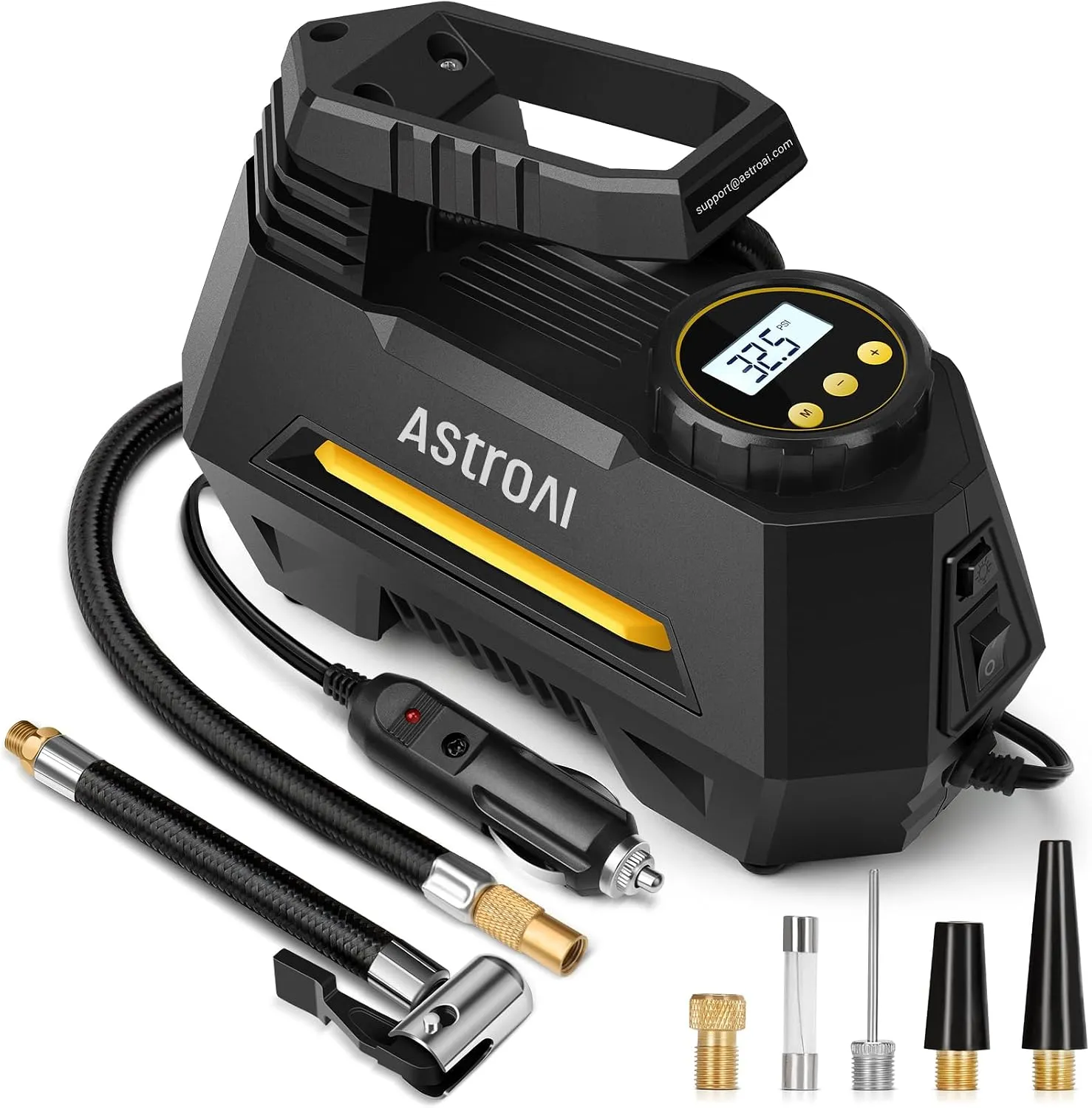
Best for: A slow leak or a tire that's dropped pressure before it becomes a flat
A flat or badly under-inflated tire is the second most common reason for a roadside call. Auto shut-off at a preset pressure means you're not standing there watching a gauge — you set the target, walk away, and it stops. Confirm your car's 12V socket stays live with the ignition off before relying on this as an emergency tool.
Pros
- Auto shut-off — no need to babysit the gauge
- Buys time to reach a shop rather than requiring a full tire change
- Digital gauge and an LED light for a puncture found at night
Cons
- Needs a 12V socket that stays powered with the ignition off
- Won't fix a puncture — it buys time to get somewhere that can
Keeps the other two from becoming trunk clutter
3. DRIVE Collapsible Car Trunk Organizer
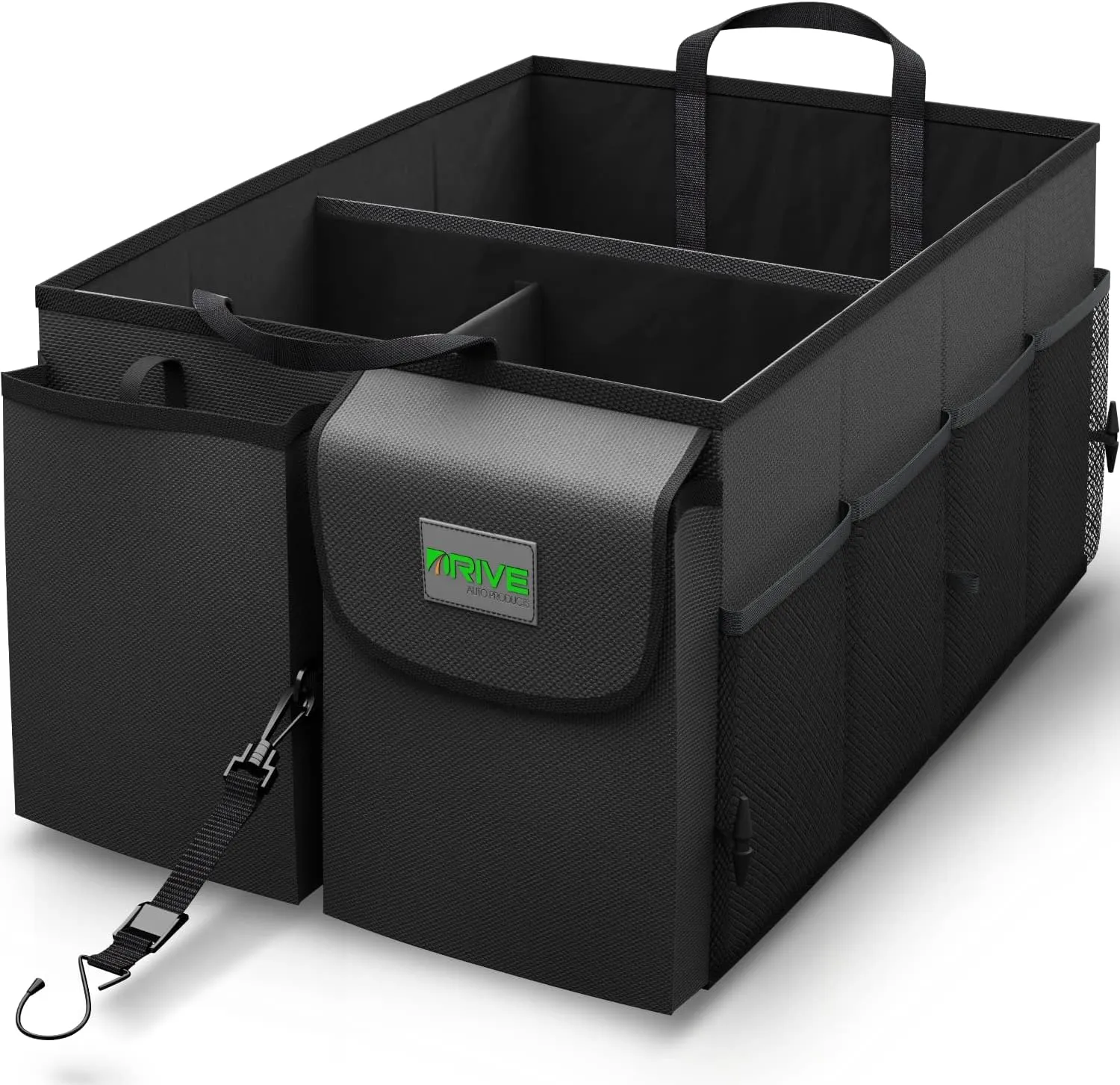
Best for: Keeping the jump starter and inflator anchored instead of rolling around loose
A jump starter and inflator rattling around loose in the trunk is how they get forgotten, damaged, or buried under groceries when you actually need them. The tie-down straps anchor the organizer so it — and what's in it — stays put when the car changes direction, and it collapses flat when you need the trunk space back.
Pros
- Tie-down straps keep the kit from sliding around
- Collapses flat when the trunk space is needed for something else
- Compartments keep the jump starter and inflator separated and found quickly
Cons
- Anchoring depends on your car having trunk tie-down points
- It's storage, not a fourth emergency item — don't count it as one
Frequently asked questions
Are the pre-made emergency kit boxes worth buying?
Usually not. Most bundle warning triangles, a cheap poncho, and jumper cables that require a second car to use — none of which address the two failures that actually strand people: a dead battery and a low or flat tire. A jump starter and a 12V inflator solve real, common failures; a box of triangles solves a much rarer one.
What's the single most important thing to carry?
A jump starter with proper protection circuitry. A dead battery is the most common reason for a roadside breakdown, and a spark-proof, reverse-polarity-protected pack removes the genuine injury risk from fixing it yourself, without needing a second car.
Do I need jumper cables if I have a jump starter?
Not for most situations — that's the entire advantage of a jump starter over cables. Cables need a second car and a stranger willing to help; a jump starter works alone. Cables are cheap and never go flat, so carrying both isn't unreasonable, but the jump starter is what actually gets you unstuck without depending on someone else.
Should I carry a full tire-repair kit instead of just an inflator?
An inflator buys you time and is enough for a slow leak; it doesn't fix a puncture. A plug kit adds real capability for a nail-in-tread puncture but has a learning curve most people never practice before they need it. The inflator is the higher-value first purchase because it's simpler and covers more common scenarios — a slowly under-inflated tire, not just a full flat.
What am I not including that other emergency kit lists mention?
Warning triangles, jumper cables, and first-aid kits are all reasonable to carry, but they solve failures that are rarer or already covered better by what's above. This list is deliberately three items that address what actually strands people most often — not a complete list of everything that could conceivably help in an emergency.