Buying Guides
Portable Power Stations: Watt-Hours vs Real Runtime
The watt-hour figure on the box is not what you'll get out of it. What inverter losses actually cost you, and why battery chemistry matters more than capacity.
Moshakha is reader-supported. When you buy through links on our site, we may earn an affiliate commission at no extra cost to you. How we make money.
At a glance
Sorted by realistic delivered energy and battery chemistry rather than the headline watt-hour number. Prices move constantly, so we link out for live pricing rather than quoting figures that go stale.
| Product | Award | Best for | Rating | Jump to review |
|---|---|---|---|---|
| Jackery Explorer 300 Plus (288Wh LiFePO4, 300W) | Best overall | Keeping phones, a laptop and a camera going for a weekend, in something you'll actually carry | Details | |
| EcoFlow River 2 Max 500 (499Wh LiFePO4) | Best for fast recharging | Trips where you can only top up briefly — it refills far faster than most | Details | |
| Anker SOLIX C300 DC (288Wh LiFePO4) | Best DC-focused option | Charging USB devices efficiently, where skipping the AC inverter saves real energy | Details | |
| Anker SOLIX C1000 Gen 2 (1024Wh, 2000W) | Best for real appliances | Running things with motors and heating elements, and short home-outage cover | Details | |
| Jackery Explorer 300 (292Wh, lithium-ion) | The older chemistry, and why it's cheaper | Occasional light use where the pack won't see many charge cycles | Details |
Power stations are sold on one number, and it’s the number least likely to describe what you’ll actually get.
The watt-hour figure is a ceiling, not a delivery
A 300Wh battery does not hand you 300Wh of usable output.
Anything drawn through the AC outlets goes through an inverter, converting DC battery power into AC mains power, and that conversion loses a meaningful share as heat. Then the device you plug in does its own conversion, with its own losses.
Charging over USB-C straight from DC skips one of those conversions and gets noticeably closer to the rated figure. That’s the single most useful efficiency habit with one of these, and it’s why pick three exists as a DC-focused option at all.
Treat the watt-hour rating as a comparison figure between products, not as a promise.
Chemistry decides the lifespan
This is the spec that actually separates the picks here, and it’s rarely on the front of the box.
LiFePO4 (lithium iron phosphate) tolerates substantially more charge cycles before meaningful capacity loss than the lithium-ion packs older models use, and it copes better with heat — which matters for anything living in a car.
For a unit you’ll cycle regularly, that difference decides whether you still have a useful battery in five years. For one used twice a year in emergencies, it barely registers, which is exactly why pick five is still on this list at a lower price.
Output rating matters more than capacity for appliances
Capacity tells you how long. Output tells you whether it starts at all.
Anything with a motor or a compressor — a fridge, a tire inflator, a power tool — draws a surge at startup far above its running wattage. A 300W unit will simply refuse, even if the appliance only draws 200W once spinning.
That’s worth checking before you assume a power station covers roadside tire duty: most 12V inflators are designed to run off the car’s own socket rather than an inverter, which is usually the simpler answer anyway.
That’s the real dividing line in this list: picks one through three are device-charging units, and pick four is the one that runs appliances.
What it won’t do
It won’t jump start your car. A jump starter delivers an enormous current burst for a few seconds; a power station delivers moderate power for hours. They’re different engineering problems, and attempting the former with the latter can damage it.
If roadside failure is what you’re covering, that’s a jump starter — and the full argument for what’s worth carrying is in car emergency kits.
How we chose
Specification analysis — battery chemistry, continuous and surge output, recharge time, realistic delivered energy after conversion losses — plus aggregated long-term owner feedback weighted toward capacity retention after repeated cycling. No lab testing, no paid placement.
Sizing, roughly
| What you’re running | Reasonable capacity |
|---|---|
| Phones, lights, camera batteries | 250–300Wh |
| Laptop through a working weekend | 300–500Wh |
| 12V fridge running continuously | 500–1000Wh |
| Anything with a heating element | 1000Wh+ and 1500W+ output |
Buying more capacity than you need costs weight and money. Buying less output than you need means the appliance never starts, which is the failure people actually run into.
The picks in detail
Best overall
1. Jackery Explorer 300 Plus (288Wh LiFePO4, 300W)
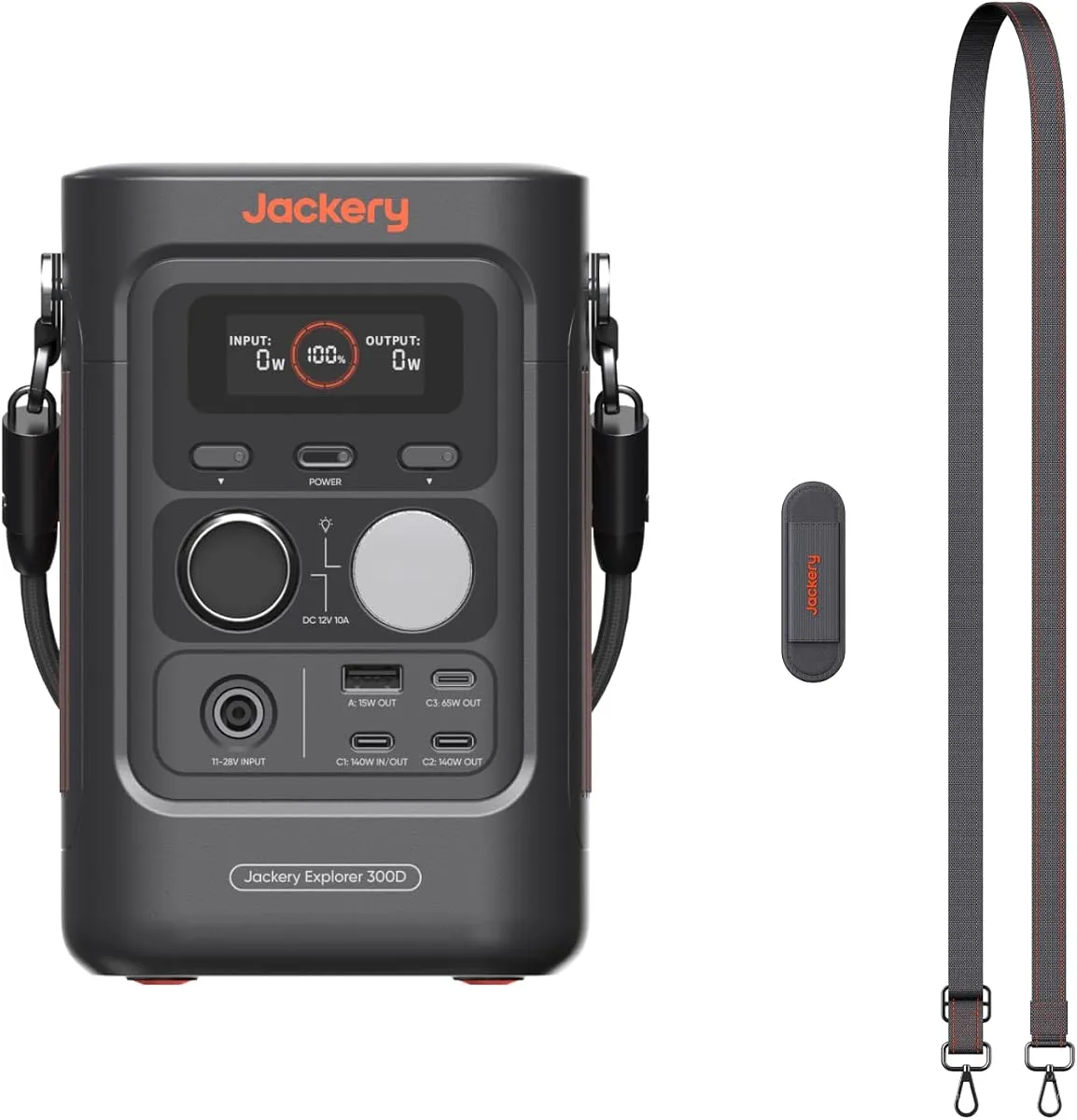
Best for: Keeping phones, a laptop and a camera going for a weekend, in something you'll actually carry
Skip if: You need to run anything with a motor or a heating element — 300W is not enough
288Wh of LiFePO4 in a package light enough to move without planning around it. The chemistry is the reason this ranks first: LiFePO4 typically tolerates several times the charge cycles of the older lithium-ion packs at the same capacity, which decides whether you still have a usable battery in five years.
Pros
- LiFePO4 chemistry — far more charge cycles than older lithium-ion
- Light enough that it gets carried rather than left in the garage
- USB-C PD input and output, so it charges from a laptop brick
- 300W covers laptops, phones, lights and camera batteries comfortably
Cons
- 300W rules out kettles, heaters, compressors and most power tools
- 288Wh is a weekend of small devices, not a day of anything large
Best for fast recharging
2. EcoFlow River 2 Max 500 (499Wh LiFePO4)
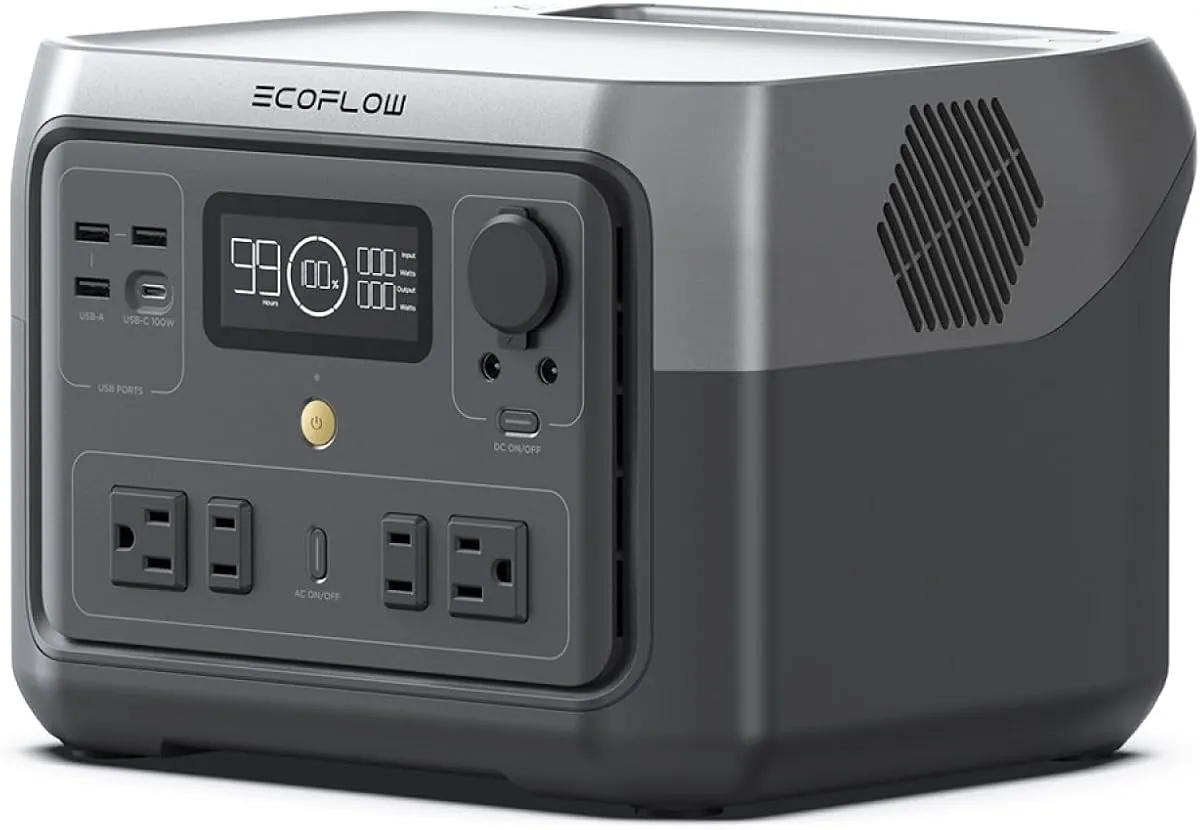
Best for: Trips where you can only top up briefly — it refills far faster than most
Skip if: You want the lightest option, or you never have mains access to recharge from
499Wh with a genuinely fast AC recharge, which matters more than it sounds. A power station that reaches full charge in about an hour can be topped up during a lunch stop; one that takes six hours effectively has to be charged overnight or not at all, and that changes how usable the capacity is.
Pros
- Very fast AC recharge — usable in a short stop rather than overnight
- LiFePO4 chemistry with a long rated cycle life
- Higher sustained output than the 300W tier, so it covers more appliances
Cons
- Heavier and bulkier than the 300Wh class
- Fast charging generates noticeable fan noise
Best DC-focused option
3. Anker SOLIX C300 DC (288Wh LiFePO4)
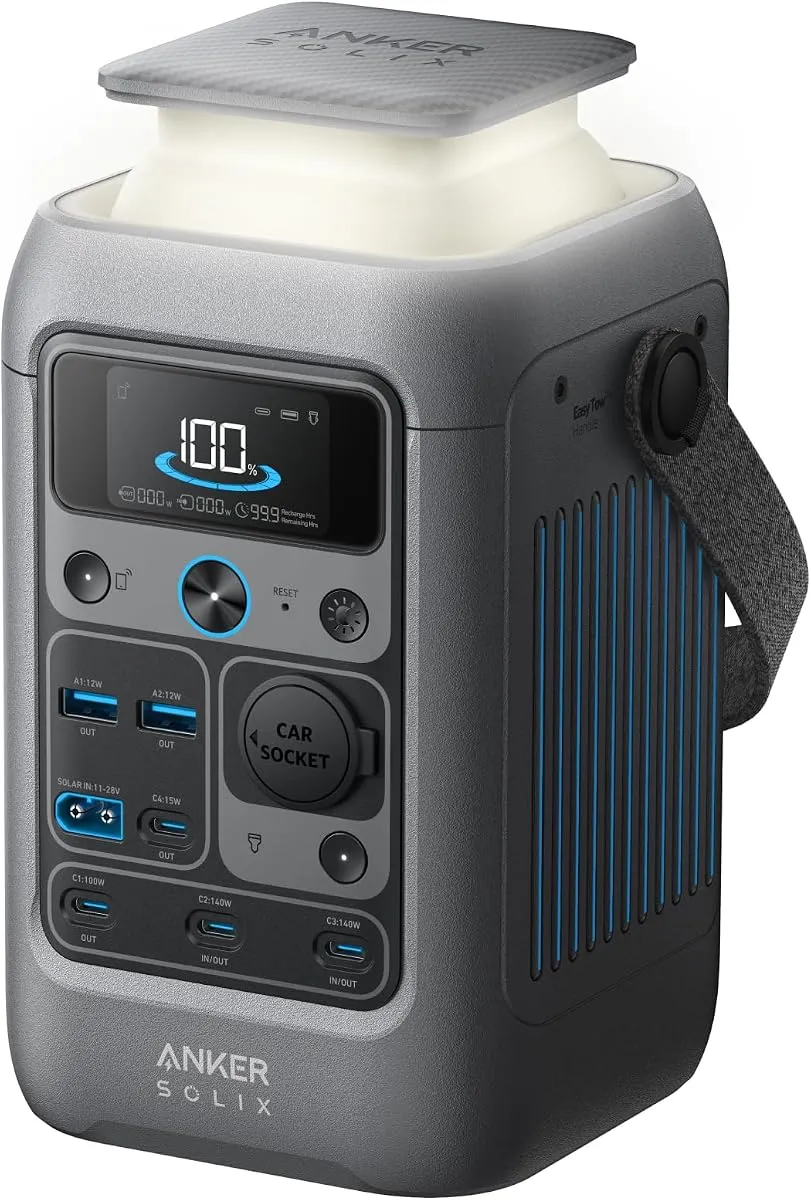
Best for: Charging USB devices efficiently, where skipping the AC inverter saves real energy
Skip if: You need household AC outlets — this variant is built around DC and USB output
The same 288Wh class as pick one, in a DC-oriented package. This is the honest efficiency play: every watt-hour that goes through an AC inverter loses something to conversion, so charging USB devices directly from DC gets meaningfully more of the rated capacity into your phone rather than into waste heat.
Pros
- Avoiding the AC inverter means less conversion loss on USB charging
- LiFePO4 chemistry, same long cycle life as the leaders here
- Built-in light panel is genuinely useful in a roadside situation
Cons
- Sold without a wall charger in some configurations — check before buying
- DC focus is a limitation if you expected household outlets
Best for real appliances
4. Anker SOLIX C1000 Gen 2 (1024Wh, 2000W)
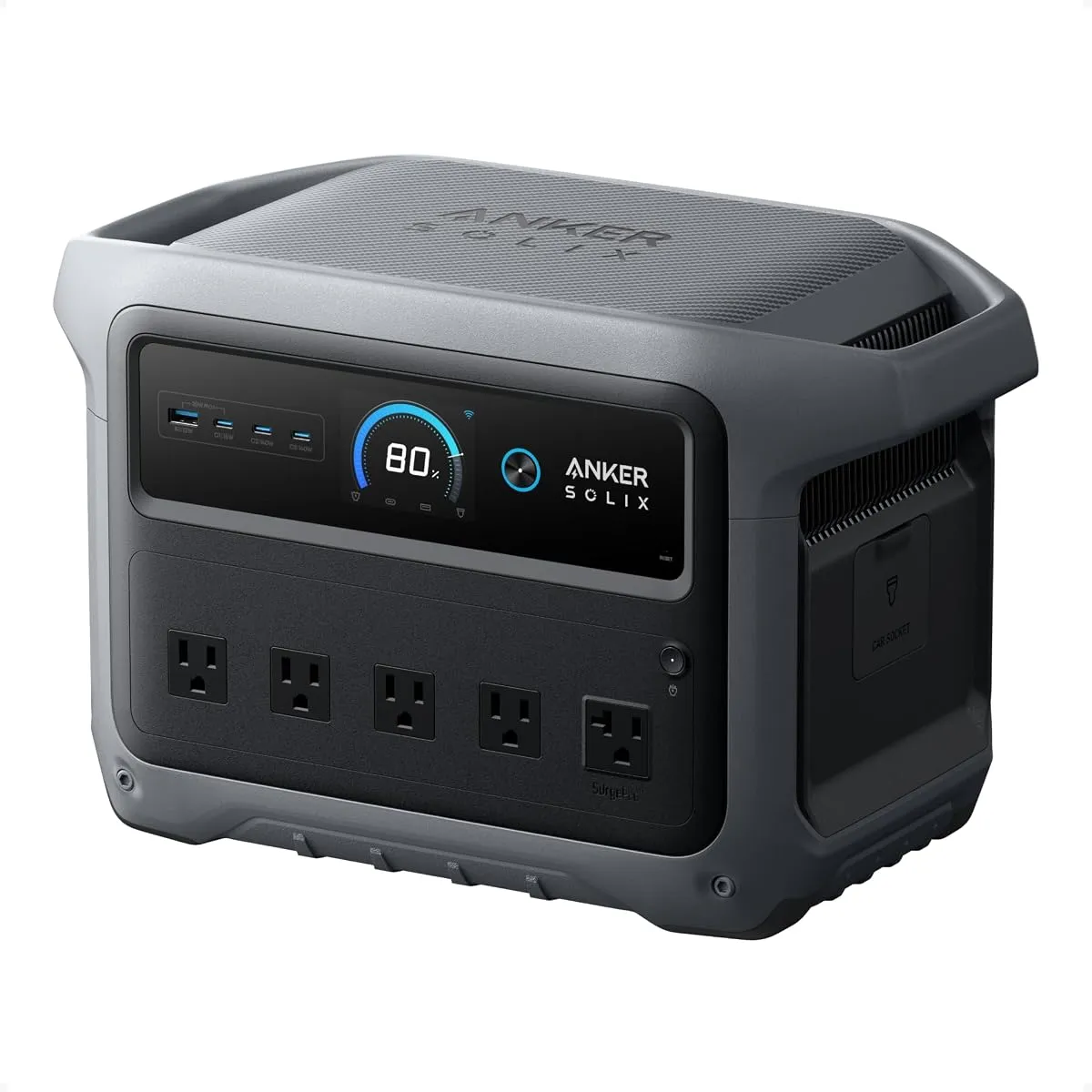
Best for: Running things with motors and heating elements, and short home-outage cover
Skip if: This is going in a car trunk for phone charging — it's several times the weight you need
1024Wh and 2000W output puts this in a different category from everything above it. The output figure is what unlocks appliances the smaller units simply refuse to start — anything with a compressor or a heating element draws a surge far above its running wattage, and a 300W unit trips instead of starting it.
Pros
- 2000W output actually starts motor and heating loads
- 1024Wh covers a fridge or CPAP for a meaningful stretch
- Doubles as short-term home outage backup
Cons
- Heavy — this is a two-hands, plan-ahead item
- Substantially more expensive than the 300Wh tier
The older chemistry, and why it's cheaper
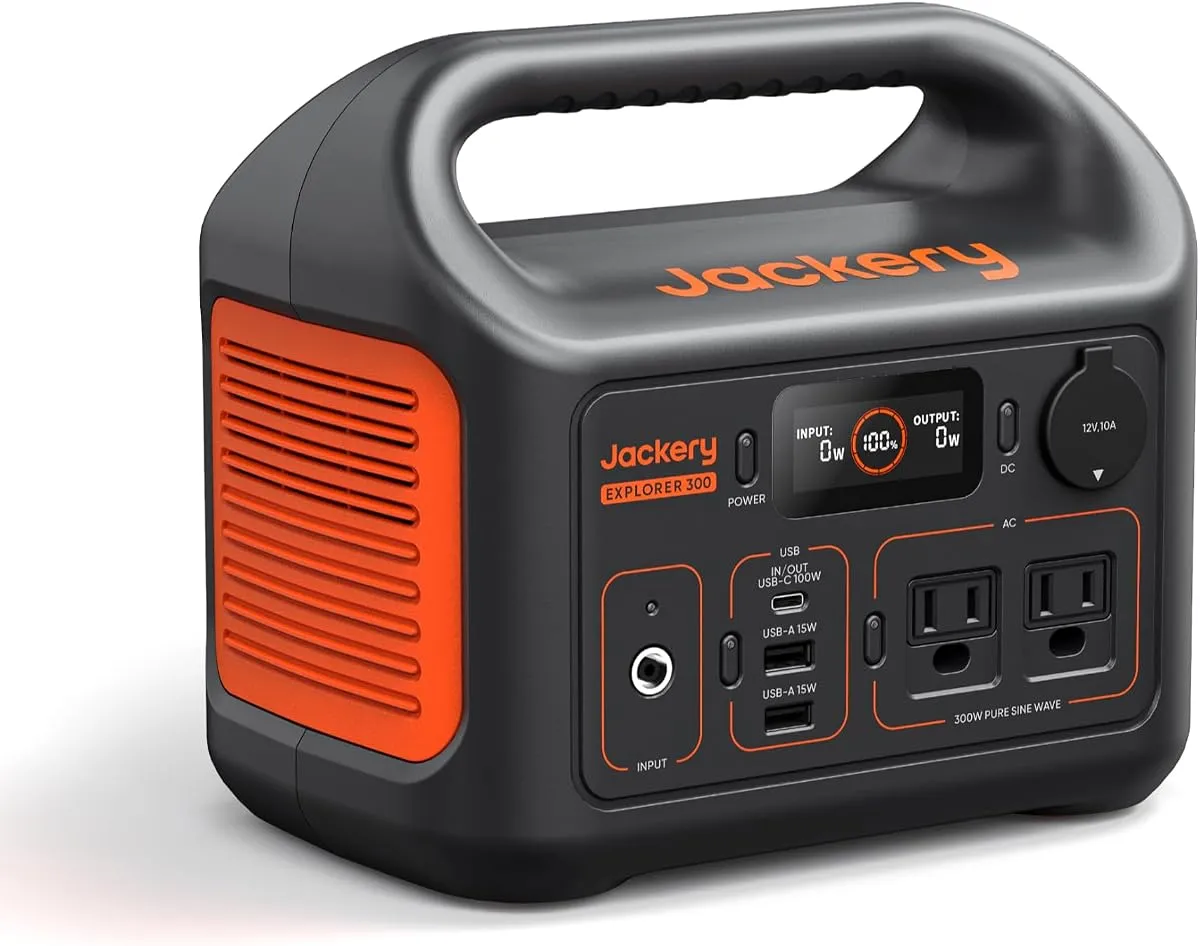
5. Jackery Explorer 300 (292Wh, lithium-ion)
Best for: Occasional light use where the pack won't see many charge cycles
Skip if: You'll cycle it regularly — the newer LiFePO4 version is worth the difference
Near-identical capacity to pick one and frequently cheaper, because it uses the older lithium-ion chemistry rather than LiFePO4. That's a real difference rather than a marketing one: fewer usable charge cycles before capacity degrades. For a unit used a handful of times a year it barely matters; for regular use it decides the lifespan.
Pros
- Same usable capacity class as the newer model, often for less
- Well-established product with mature firmware and support
- Fine for occasional or emergency-only duty
Cons
- Lithium-ion rather than LiFePO4 — materially fewer charge cycles
- Degrades faster if stored at full charge in a hot car
Frequently asked questions
Why won't I get the full watt-hours out of a power station?
Two reasons. Anything drawn through the AC outlets passes through an inverter converting DC battery power to AC, and that conversion is never free — a meaningful share is lost as heat. On top of that, the device you're charging has its own conversion losses. A realistic expectation for AC output is noticeably less than the rated figure; charging over USB-C directly from DC gets closer to it.
LiFePO4 or lithium-ion — does the chemistry actually matter?
For anything you'll cycle regularly, yes, and it's the single most consequential spec on the box. LiFePO4 typically tolerates several times the charge cycles of standard lithium-ion before meaningful capacity loss, and it handles heat better — which matters for something stored in a car. For a unit used twice a year, the difference is largely academic.
What size power station do I need for car camping?
Work backwards from what you'll actually run. Phones, lights, a laptop and camera batteries fit comfortably in the 300Wh class. A 12V fridge running continuously needs closer to 500–1000Wh depending on ambient temperature. Anything with a heating element — kettle, hair dryer, induction hob — needs both high capacity and high output, which is a different and much heavier class of product.
Can a portable power station jump start my car?
Not unless it explicitly says so. A jump starter delivers a very high current burst for a few seconds, which is a completely different engineering problem from delivering moderate power for hours. Most power stations cannot do it and attempting it can damage them. Carry a dedicated jump starter for that job.
Can I leave one in the car permanently?
It's not ideal, particularly in a hot climate. Sustained heat accelerates degradation in any lithium chemistry, though LiFePO4 tolerates it better than older lithium-ion. If you do store one in the vehicle, keep it at a partial charge rather than full, and check it every few months — the same discipline a jump starter needs.
Does a bigger inverter rating mean I can run bigger appliances?
It's necessary but not always sufficient. The continuous output rating tells you what it will sustain, but appliances with motors or compressors draw a much larger surge at startup than while running. A unit rated at 300W continuous will refuse to start a device whose surge exceeds that, even if the device only draws 200W once running.