Blog
How to Restore Microfiber Absorbency (Strip Washing)
A microfiber towel that stopped absorbing water isn't worn out — it's coated in fabric softener or detergent residue. Strip washing usually fixes it.
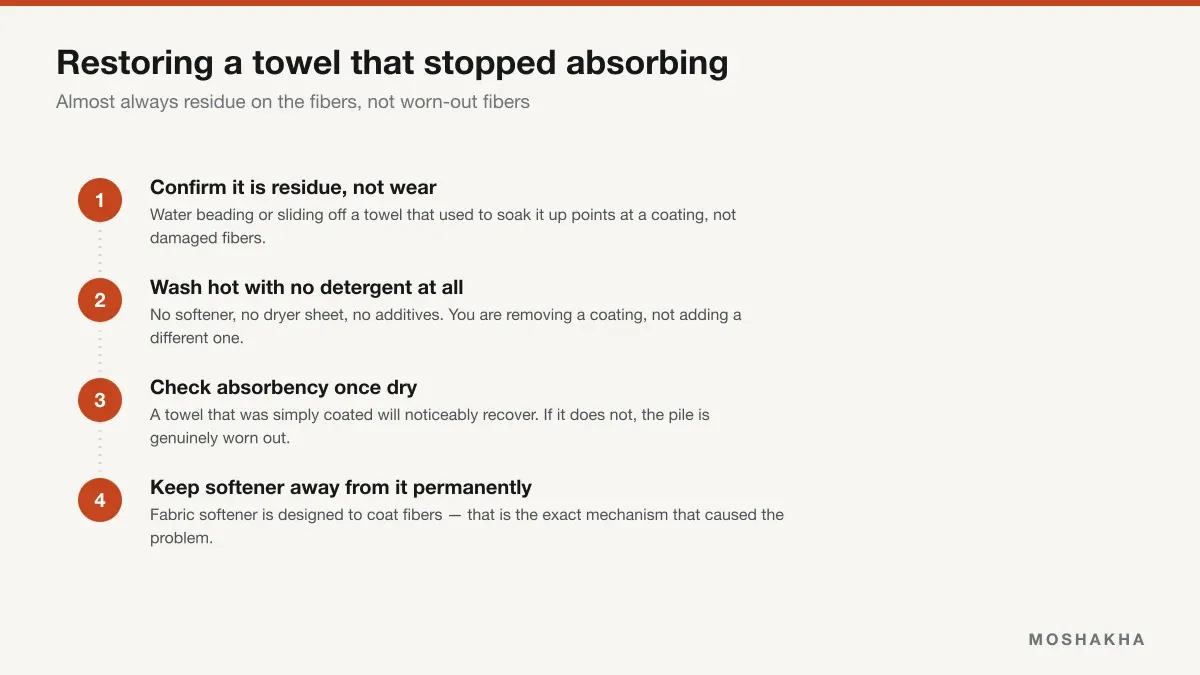
A microfiber towel that used to soak up water fast and now beads it, or drags it around without absorbing, hasn’t worn out. In almost every case, it’s coated in something.
The actual cause: residue, not wear
Microfiber absorbs water through capillary action in microscopic gaps between the strands. Fabric softener is specifically designed to coat fibers — that’s how it makes regular laundry feel soft — and that coating fills the same gaps that give microfiber its absorbency. Detergent additives and dryer sheets do a version of the same thing.
The fibers themselves are usually undamaged. They’re just physically blocked from doing what they’re built to do.
The fix: a strip wash
A strip wash is a wash cycle with no detergent, no fabric softener, and no dryer sheets — hot water alone, or hot water with a small amount of plain dish soap specifically without added softening agents or fragrance oils. The goal is removal, not addition: you’re washing residue off, not putting a different product on.
Run the towels through on hot, skip the softener dispenser entirely, and check absorbency once dry. A towel that was genuinely just coated will noticeably improve.
What doesn’t work
Regular laundry detergent often contains its own additives, some of which re-coat the fibers with a different residue rather than removing the original one. Fabric softener of any kind is the specific thing causing the problem — using less of it doesn’t help, it needs to be absent entirely.
Preventing it from happening again
Wash microfiber separately from regular laundry, skip the softener dispenser every time — not just for microfiber loads if you share a machine — and avoid dryer sheets on anything microfiber. The full washing and drying routine, including why heat matters, is in microfiber care basics.
When it isn’t residue
If a strip wash genuinely doesn’t restore absorbency, the towel may actually be worn out — thin, matted fibers from age and heavy use eventually do lose capacity, and no amount of washing brings that back. At that point it’s a replacement, not a cleaning problem.
Frequently asked questions
Why does a microfiber towel lose absorbency?
Almost always residue buildup, not fiber wear. Fabric softener and detergent additives coat the microfiber strands with a film that fills the microscopic gaps responsible for absorbency. The fibers themselves are usually fine — they're just coated in something that's blocking them from doing their job.
What is a strip wash?
A wash cycle with no detergent, no fabric softener, and no additives — just hot water and, optionally, a small amount of dish soap or a dedicated laundry stripping product designed to lift oil-based residue without leaving any of its own behind. The goal is to remove buildup, not add anything new.
How often should I strip wash my microfiber towels?
Only when absorbency actually drops off, not on a fixed schedule. Over-washing wears towels out for no benefit. If a towel that used to soak up water fast now beads or slides water around instead, that's the signal to strip wash — not a calendar date.
Can I use regular laundry detergent to strip wash?
No — that defeats the purpose. Most laundry detergents contain their own additives and residues, some of which cause the same coating problem you're trying to fix. Use hot water alone, or a small amount of plain dish soap specifically formulated without added softeners or fragrance oils.
Will strip washing damage the microfiber?
Not when done correctly — hot water and mechanical agitation are within normal limits for the material. What damages microfiber is washing it with cotton towels or anything that sheds lint, using fabric softener (the actual cause of the original problem), or drying on high heat, which can melt the fine fibers.