Blog
Wheel Cleaner pH: Acidic, Alkaline or Neutral?
Acidic wheel cleaners work fastest and ruin finishes fastest. Which pH is safe on which wheel, and why neutral is the sensible default.
Wheel cleaner marketing sells speed. Acidic cleaners genuinely deliver it — spray, watch the brake dust dissolve, rinse. The question is what else is dissolving while you watch.
The three categories
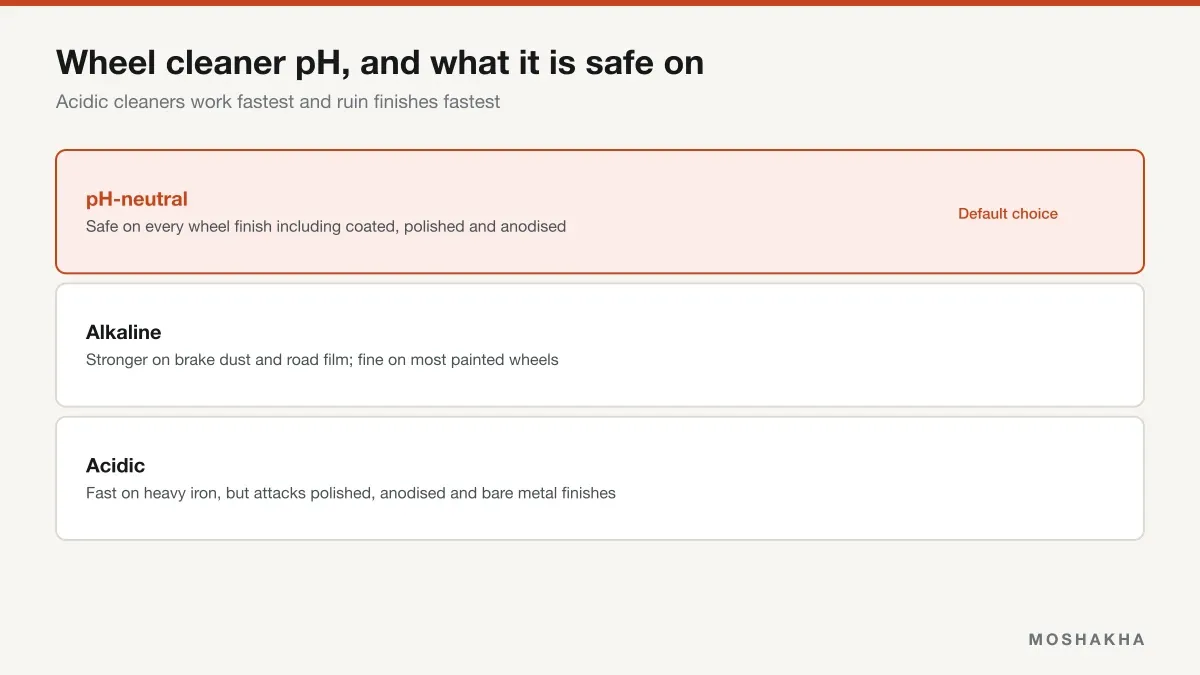
Acidic. Fastest on heavy iron and baked-on brake dust. Also attacks polished aluminum, anodized, chrome-plated and bare metal finishes, permanently. On a healthy clear-coated factory wheel, used briefly and rinsed well, usually fine — but “usually fine” is doing a lot of work in that sentence.
Alkaline. Strong on road film and general grime, gentler than acid on most finishes. Doesn’t dissolve embedded iron. This is roughly where a diluted all-purpose cleaner sits.
pH-neutral. Slower on heavy contamination, safe on every wheel finish there is. Relies on surfactants and chelating agents rather than aggressive chemistry.
Why neutral is the right default
Not because acid never works — because most people can’t reliably identify their wheel’s finish, and the failure mode is permanent.
A painted, clear-coated factory alloy tolerates a lot. A machined-face or polished wheel does not, and the damage from a single overly enthusiastic acid application doesn’t polish out. If you can’t say with confidence which you have, neutral removes the question entirely.
See the wheel cleaner from our tire guideThe purple bleed isn’t a pH thing
Worth separating, because the two get conflated: the purple color some wheel cleaners produce is iron-dissolving chemistry, not acidity.
A chelating agent bonds with embedded iron particles and forms a colored compound as it reacts. Plenty of pH-neutral cleaners include it — which is how they manage genuine decontamination without needing to be aggressive. The full mechanism is in iron fallout remover explained.
Dwell time, not strength
The pattern that gets people into trouble is reaching for a stronger product when a neutral one seems slow. Usually the neutral cleaner just needed longer.
Spray, let it dwell for the labeled time, agitate with a dedicated wheel mitt or brush, rinse. Contamination that survives that is embedded iron, which is a decontamination job rather than a stronger-cleaner job.
Never let any of them dry
This applies at every pH. A wheel cleaner drying on a hot wheel concentrates whatever chemistry it contains against the finish and redeposits the contamination it just dissolved.
Work one wheel at a time, out of direct sun, on a cool wheel — never one that’s just come off a highway drive. The full wheel routine is in wheel and rim care.
Frequently asked questions
Is acidic wheel cleaner safe to use?
On a healthy painted or clear-coated factory wheel, used briefly and rinsed thoroughly, it usually causes no immediate harm. The risk is on polished aluminum, anodized, chrome-plated and bare metal finishes, where acid attacks the surface directly and the damage is permanent. Given that most people can't reliably identify their wheel's finish, acid is a lot of risk for a modest time saving.
What does pH-neutral actually mean for a wheel cleaner?
It means the formula sits near pH 7 and relies on surfactants and chelating agents rather than aggressive acid or alkali chemistry to lift contamination. It's slower on heavy brake dust than an acidic cleaner, and it's safe on every wheel finish including coated, polished and anodized — which is why it's the sensible default.
Why do some wheel cleaners turn purple?
That's iron-dissolving chemistry rather than a pH effect. The chelating agent bonds with embedded iron particles and produces a colored compound as it reacts. Many pH-neutral wheel cleaners include it, which is how they achieve real decontamination without needing aggressive acidity.
Can I use an alkaline all-purpose cleaner on wheels?
For general road film and brake dust on painted wheels, diluted APC works reasonably well and is a common approach. It won't dissolve embedded iron the way a dedicated fallout remover does, and it's not appropriate for polished or anodized finishes. It's a serviceable general cleaner, not a decontamination product.
How do I tell what finish my wheels have?
Most factory alloys are painted and clear-coated, which is the most forgiving case. Polished, machined-face, anodized and chrome wheels look distinctly brighter and more mirror-like, and these are the ones acid damages. If you can't tell, use pH-neutral — it's safe on all of them, which removes the need to identify the finish at all.