Blog
Iron Fallout Remover: What the Purple Bleed Actually Is
The purple color is a chemical reaction with embedded iron, not a dye for show. What fallout remover dissolves, and the rinse step people skip.
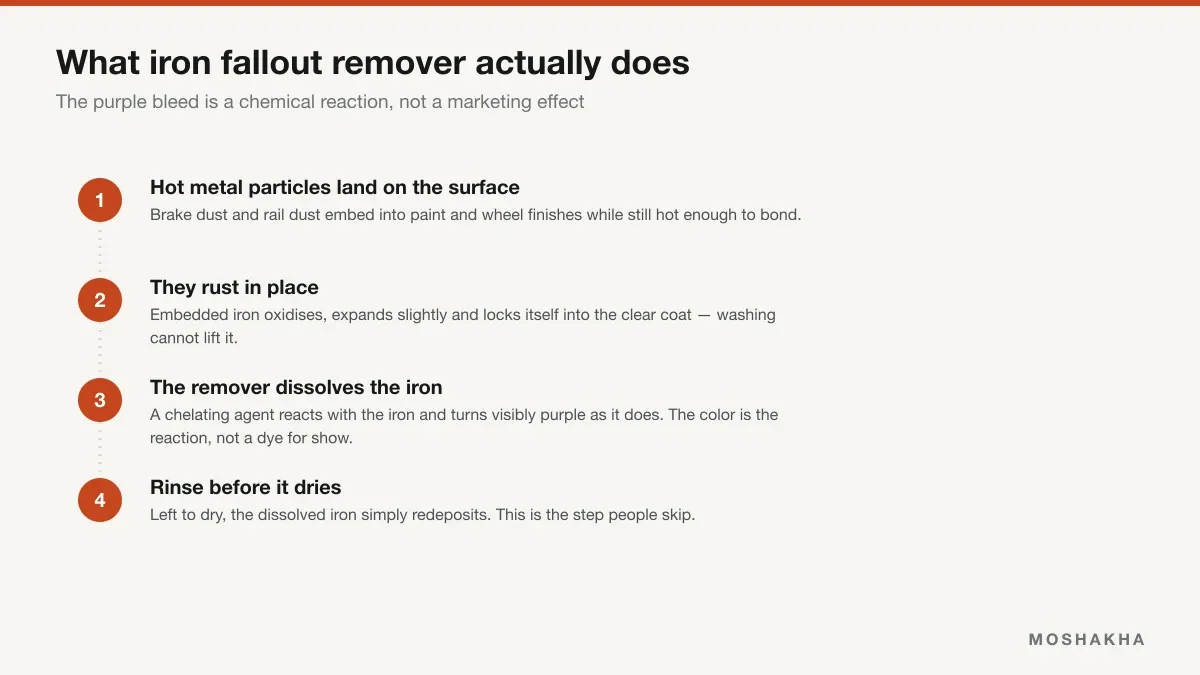
Iron fallout remover is the most theatrical product in car care — spray it on a wheel and it bleeds purple down the spokes. It looks like a gimmick. It isn’t.
Where embedded iron comes from
Brake dust doesn’t just land on your wheels and paint. It lands hot, and hot metal particles embed into whatever they hit rather than resting on top of it. Rail dust — from industrial areas and from cars transported by train — does the same thing.
Once embedded, those particles oxidize. Rust expands slightly as it forms, which locks the particle deeper into the clear coat. At that point no amount of washing removes it, because it isn’t sitting on the surface any more.
That’s what causes the rough, gritty feel on paint that looks clean, and the orange speckling that shows up on light-colored cars.
The purple is the reaction
The active ingredient is a chelating agent that bonds to iron and forms a strongly colored compound in the process. The color appears because iron is present — it’s a genuine indicator, not a dye added for the show.
Practically, that makes it a diagnostic. A panel that bleeds heavily had a lot of embedded iron. A panel that stays clear didn’t, and doesn’t need the treatment.
See the wheel cleaner from our tire guideThe step people skip
Rinse before it dries. Once the dissolved iron dries on the surface, it simply redeposits — you’ve done the chemistry and then undone it.
That means working panel by panel out of direct sun, and rinsing thoroughly rather than letting the product sit until it looks like it’s finished. Longer dwell time doesn’t make it work better; it just increases the risk of it drying.
Iron remover and clay do different jobs
Clay shears off contamination sitting proud of the surface, mechanically. Iron remover dissolves iron that has embedded and corroded into the clear coat, chemically.
Doing the chemical decontamination first means the clay has far less material to extract — which directly reduces the marring risk, since clay marring is caused by dragging extracted grit. The lubrication rules for that step are in how to use a clay bar.
Twice a year is plenty
This is a decontamination step, not a wash product. Most cars need it once or twice annually; wheels may justify more, since they accumulate brake dust faster than anything else on the vehicle.
If you’re planning to coat your wheels, this step is mandatory beforehand — a coating seals in whatever is underneath, including iron that’s still actively corroding. That argument is in ceramic coating wheels.
And yes, the smell is normal
The sulfurous odor is a byproduct of the thiol chemistry that makes the iron bonding work. Ventilate, avoid closed garages, and it clears once you’ve rinsed.
Frequently asked questions
Is the purple color in iron remover just a dye?
No — it's the reaction itself. The active ingredient is a chelating agent that bonds with iron and produces a strongly colored compound as it does. If a panel bleeds purple, there was embedded iron there; if it doesn't, there wasn't. That makes the color a genuine diagnostic rather than a marketing effect.
Do I need iron remover if I already clay the car?
They address overlapping but different contamination. Clay shears off particles sitting proud of the surface mechanically. Iron remover dissolves iron that has embedded and started to corrode within the clear coat, which clay can't fully extract without aggressive work. Using the chemical first means the clay has much less to do, which reduces the marring risk from claying.
Can iron remover damage paint or wheels?
On healthy clear coat and most factory wheel finishes, used as directed and rinsed before drying, it's safe. The risks come from letting it dry on the surface, using it in direct sun, or applying it to bare metal, polished aluminum or damaged finishes. Never leave it dwelling longer than the label states in the hope of a stronger effect.
How often should I use iron fallout remover?
Once or twice a year for most cars — it's a decontamination step, not a maintenance wash product. Wheels may justify more frequent use than paint because they accumulate brake dust far faster. Using it every wash is unnecessary and adds chemical exposure for no benefit.
Why does my car smell terrible when I use it?
That sulfurous smell is a normal byproduct of the thiol-based chemistry these products use to bond with iron. It's unpleasant but expected. Work in a ventilated area, avoid enclosed garages, and it dissipates once the product is rinsed away.