Blog
Ceramic Coating Wheels: Higher Return Than Paint
The same coating saves far more work on wheels than on paint, because wheels start from a much worse baseline. Why the return is bigger where nobody looks.
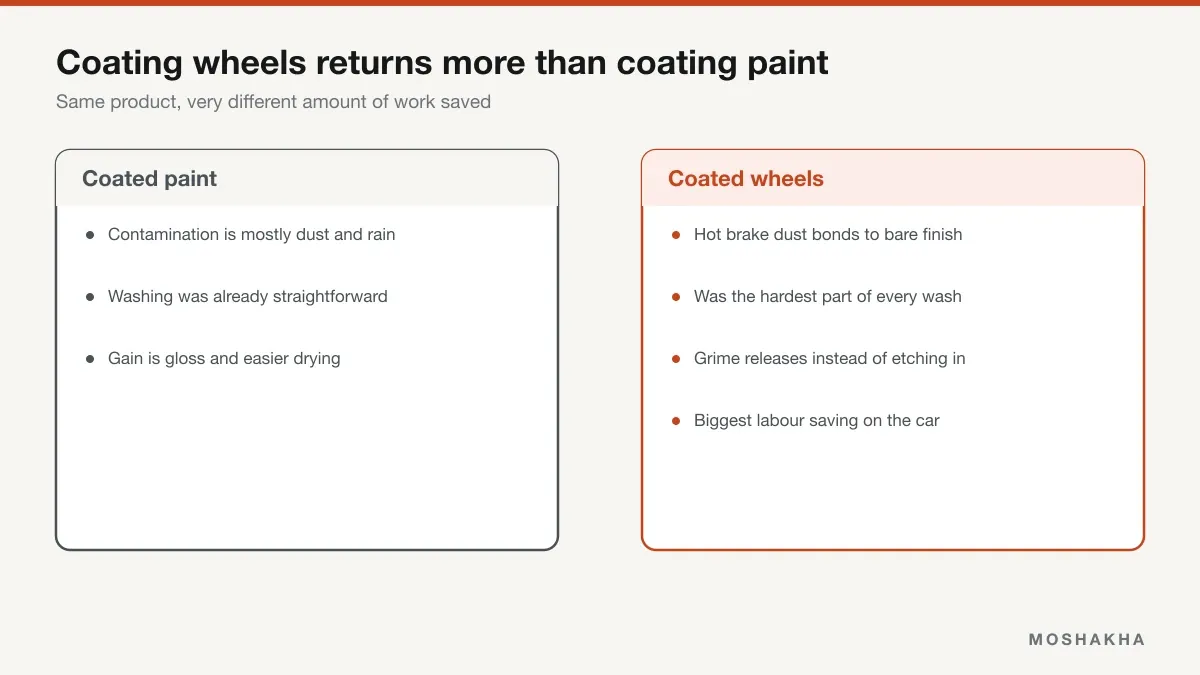
Ceramic coatings get sold on paint. The gloss photos are all paint, the marketing is all paint, and paint is where most people spend the money. Wheels are where the same product saves more work.
The return depends on the baseline
Coating paint takes something that was already fairly easy to wash and makes it a bit easier, plus adds gloss. That’s a real benefit, but it’s an improvement on a task that wasn’t the problem.
Wheels start from a much worse baseline. Brake dust doesn’t just land on a wheel — it lands hot, and hot metal particles embed into the finish and then corrode in place. That’s why wheels need a dedicated cleaner, a brush, and the most physical effort of any part of a normal wash.
Coat that surface, and the dust largely stops bonding. It sits on top and rinses away. The hardest job on the car becomes one of the easiest, which is a bigger change than anything a coating does for a hood.
What a coating does and doesn’t change
It doesn’t reduce brake dust. The same amount lands on the wheel either way.
It changes whether that dust bonds. That distinction is the entire value proposition, and it’s the one most product pages blur.
Decontaminate first, or you’re sealing in the problem
A coating seals whatever is beneath it. Wheels that already have embedded iron particles need those dissolved and removed before coating — otherwise the particles keep corroding underneath a layer you can’t get through.
That means a proper decontamination pass, including an iron remover, before any coating goes near the wheel. The mechanism behind that purple bleed is explained in iron fallout remover.
See the wheel cleaner from our tire guideTake the wheels off if you’re serious
The barrel and the inner face collect the most brake dust and are nearly impossible to prep and coat properly while the wheel is on the car. Coating only the outer face still helps, but it leaves the dirtiest area — where most of the benefit was — untreated.
Expect shorter durability than on paint
Wheels heat-cycle every time you brake, take constant impact from road debris, and get cleaned more aggressively than paint ever does. A coating’s stated durability is measured on paint under gentler conditions. On wheels, treat it as an optimistic ceiling, and expect the barrel to wear before the face.
None of that changes the conclusion. Even at reduced durability, removing the worst job from every wash is a better return than adding gloss to a panel that was already easy.
Broader coating expectations — what they do and don’t replace — are in the ceramic coating guide.
Frequently asked questions
Is ceramic coating worth it on wheels?
In terms of work saved per dollar, wheels are usually the better place to spend a coating than paint. Paint was already reasonably easy to wash; wheels deal with hot brake dust that bonds to the finish, which is the hardest, most time-consuming part of a typical wash. Coating the surface so that dust releases instead of embedding removes the worst job on the car.
Does coating wheels stop brake dust?
No — it doesn't reduce how much brake dust lands on the wheel. What it changes is whether that dust bonds to the finish. On a coated wheel, hot particles are far less able to embed into the surface, so they rinse off with much less agitation instead of requiring a dedicated cleaner and a brush.
How long does a coating last on wheels?
Generally less than the same product on paint, because wheels experience repeated heat cycling from braking, constant impact from road debris, and more aggressive cleaning. Treat the manufacturer's stated durability as an optimistic ceiling for wheels specifically, and expect the barrel and the face behind the spokes to wear at different rates.
Do I need to remove the wheels to coat them properly?
For a thorough job, yes — the barrel and the inner face are where brake dust accumulates most heavily, and they're nearly impossible to prep and coat properly in place. Coating only the visible outer face is still better than nothing, but it leaves the dirtiest part of the wheel untreated, which is where most of the benefit was.
Can I coat wheels that already have brake dust embedded?
Not usefully. A coating seals whatever is underneath it, so embedded iron particles get locked in and continue to corrode beneath the coating. The wheel needs full decontamination — including an iron remover to dissolve embedded particles — before any coating goes on. Skipping that step wastes the product.