Blog
Ceramic Coating: What It Does, and What It Doesn't
Ceramic coatings are oversold and genuinely useful. What they actually protect against, the levelling step people get wrong, and realistic expectations.
Ceramic coatings are simultaneously the most oversold product in detailing and a genuinely good one. Both things are true, and the gap between them is where people end up disappointed.
What it actually does
A ceramic coating forms a thin, hard, chemically bonded layer over your clear coat. In practice:
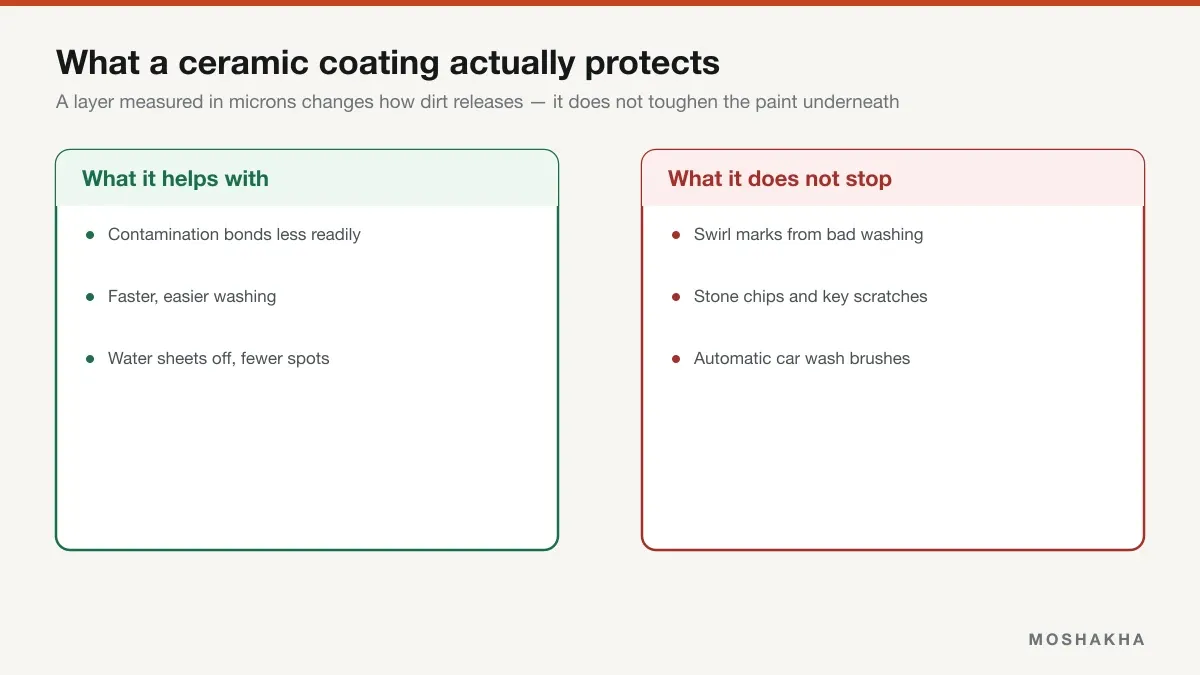
- Contamination bonds less readily. Brake dust, tree sap and road film sit on top rather than keying into the paint.
- Washing gets easier and faster. Dirt releases with less contact, which — indirectly but genuinely — means fewer opportunities to add swirl marks.
- Water sheets off rather than sitting in beads, so fewer water spots.
- Chemical resistance improves. Bird droppings and hard water are less likely to etch through to the clear coat if you don’t get to them immediately.
- Gloss increases, modestly.
Those are real benefits, and for someone who washes their car regularly they add up.
What it does not do
It does not prevent scratches. This is the claim that sells coatings and it is misleading. The layer is measured in microns — a fraction of the thickness of your clear coat. It resists the very lightest marring and does nothing against:
- Swirl marks from washing with a sponge or one bucket
- Stone chips
- Key scratches or trolley damage
- Automatic car wash brushes
If you coat a car and then run it through a brush wash, it will swirl. The coating changes how dirt behaves, not how hard your paint is.
It does not make washing optional. A coated car still needs washing — it just gets easier.
It does not last a decade. Consumer coatings realistically give one to three years. The larger figures on the box assume perfect preparation and maintenance.
Preparation is most of the job
A coating locks in whatever is underneath it for its entire life. Apply it over swirled, etched paint and you’ve sealed in those defects for two years.
Proper preparation is:
- Thorough wash and dry
- Chemical decontamination — iron fallout remover for bonded metallic particles
- Mechanical decontamination — clay bar or mitt for anything still embedded
- Machine polishing to correct defects — see swirl mark removal
- Panel wipe with an IPA or dedicated prep solution to strip polishing oils
That last step gets skipped constantly and matters enormously. Polishing oils fill defects temporarily and prevent the coating bonding to bare clear coat. Skip it and the coating fails early in patches.
Levelling: where DIY coatings go wrong
Application is straightforward — a few drops on an applicator, worked in a cross-hatch pattern over a small section.
Levelling is the part that goes wrong. After application, the coating flashes and you wipe off the excess before it cures. Timing this is the whole skill:
- Too early and you pull the coating off the panel.
- Too late and the residue cures into visible high spots — streaky, rainbow-ish patches that can only be removed by machine polishing.
Flash time varies with temperature, humidity and product. Work in small sections, in shade, on cool paint, and watch the panel rather than the clock. Inspect at an angle under good light before moving on, because a high spot is far easier to fix in the first few minutes than after it cures.
Realistic expectations
A ceramic coating is a maintenance-reduction product, not armour. If you enjoy looking after your car and want washing to be faster and results to last longer, it’s worth the effort.
If you’re hoping it means you can stop being careful, it doesn’t — and a car that gets washed properly without a coating will stay in better condition than a coated car that goes through brush washes.
Frequently asked questions
Does a ceramic coating prevent scratches?
No, and this is the most oversold claim in detailing. A coating adds a thin, hard layer that resists very light marring, but it will not stop swirl marks from bad washing technique, stone chips, or key scratches. It changes how easily dirt releases, not how tough your paint is.
What does a ceramic coating actually do?
It creates a slick, hydrophobic layer that makes contamination less likely to bond and much easier to remove. Washing gets faster, water sheets off rather than beading in place, and chemical etching from bird droppings and hard water is less likely to reach the clear coat.
How long does a ceramic coating last?
Consumer coatings realistically last one to three years depending on the product, preparation and maintenance. Claims of nine or ten years assume ideal preparation and maintenance most cars never receive. Treat manufacturer durability figures as a ceiling, not an expectation.
What is levelling and why does it matter?
After applying coating you wipe off the excess before it fully cures — that is levelling. Leave it too long and the residue cures into visible high spots that need machine polishing to remove. This timing is the single most common way a DIY coating goes wrong.
Do I need to polish before coating?
Yes, if you want the result to be worth the effort. A coating locks in whatever is underneath, including swirl marks and etching, for its entire lifespan. Preparation is most of the work, and skipping it means sealing in defects for years.