Buying Guides
Best Car Wash Soap 2026: pH-Neutral Picks That Won't Strip Wax
Dish soap strips your protection in one wash. Our picks for pH-neutral car shampoos that clean properly while leaving wax, sealant and coatings intact.
Moshakha is reader-supported. When you buy through links on our site, we may earn an affiliate commission at no extra cost to you. How we make money.
At a glance
All picks here are pH-neutral and safe over wax, sealant and ceramic coatings. Prices move constantly, so we link out for live pricing rather than quoting figures that go stale.
| Product | Award | Best for | Rating | Jump to review |
|---|---|---|---|---|
| Chemical Guys Mr. Pink Car Wash Soap (64oz) | Best overall | Regular maintenance washes, in a bucket or a foam cannon | Details | |
| Meguiar's Gold Class Car Wash (64oz) | Best for older or unprotected paint | Paint without much protection, or older finishes that look tired | Details | |
| Chemical Guys Mr. Pink Car Wash Soap (128oz) | Best value in bulk | Washing frequently, or more than one vehicle | Details | |
| Chemical Guys Extreme Bodywash & Wax (64oz) | Best wash-and-protect in one | Adding a little gloss and protection without a separate waxing step | Details |
Car shampoo is the cheapest part of a wash and one of the easiest to get wrong — mostly by reaching for whatever’s under the kitchen sink.
Which one, in one line
| If this is you | Buy |
|---|---|
| Normal car, washed every week or two | Mr. Pink 64oz — the default, and the one most people should stop at |
| Two cars, or you wash weekly | Mr. Pink 128oz — same formula, far lower cost per wash |
| Older paint, no wax on it | Gold Class — conditioners make tired paint look better |
| No time to wax separately | Extreme Bodywash & Wax — light gloss during the wash |
| Ceramic-coated car | Mr. Pink, and skip anything with wax in it (see below) |
How long a bottle actually lasts
This is the number that decides value, and almost no listing states it plainly.
Mr. Pink dilutes at 1 to 3 oz per five-gallon bucket. Call it 2 oz for a normal wash, and a 64oz bottle gives you roughly 32 washes. The 128oz jug gives you around 64.
At a fortnightly wash, one gallon jug is comfortably over a year of washing a single car. That’s the actual argument for the bulk pick — not the shelf price.
Gold Class is less concentrated, so expect to pour noticeably more per bucket. It’s cheaper per bottle and closer to level once you account for how much you use.
The failure mode in both directions is worth naming: too little shampoo is a paint risk, because lubrication is the thing protecting your clear coat during contact. Too much is only a waste of money. If you’re unsure, pour more.
Why dish soap ruins paint protection
Dish soap is engineered to strip oils and grease. That’s exactly what it does to your wax or sealant, in a single wash, along with drying out rubber seals and plastic trim over time.
It also has no lubricity. Car shampoo is slick on purpose — that slickness is what allows a trapped particle to slide across the panel instead of cutting into it. Dish soap cleans and offers nothing on that front, which makes swirl marks more likely even with good technique.
There is one legitimate use: deliberately stripping old wax before polishing or applying a new sealant. If that’s not what you’re doing, use car shampoo.
What pH-neutral means
A pH-neutral shampoo lifts dirt without chemically attacking whatever protection is on the paint. Strongly alkaline cleaners strip wax and sealant — genuinely useful when you want a clean slate before correction, and destructive when you’ve just spent an afternoon waxing.
Every pick above is pH-neutral and safe over wax, sealant and ceramic coatings.
If your car is ceramic coated
Two things change, and the second one surprises people.
pH-neutral stops being a preference and becomes a requirement. A coating is more chemically durable than wax, but repeatedly washing it with something alkaline degrades its hydrophobic behavior faster than it should.
Skip the wash-and-wax. Pick four is a good product and the wrong one here — the carnauba sits on top of the coating and masks the water behavior you paid for. When that layer wears unevenly, people read it as the coating failing and start troubleshooting a problem they created. Plain pH-neutral shampoo, and a coating-specific topper if you want one.
The wider durability comparison is in wax vs sealant vs ceramic coating.
What to avoid, even when it’s sold as car soap
Being marketed for cars doesn’t make something safe over your protection:
- Anything labeled a “bug and tar” or “heavy duty” wash. These are deliberately alkaline to cut bonded contamination. Fine as a targeted pre-treatment, destructive as your weekly shampoo.
- Strip wash products, which do exactly what the name says. Correct before applying new protection, wrong at any other time.
- Bargain concentrates with no stated dilution. If a bottle won’t tell you how much to use per bucket, you can’t work out cost per wash or whether you’re under-lubricating.
Will it work in a foam cannon?
Mr. Pink does, and that’s genuinely useful — one bottle covers both the pre-foam and the contact wash rather than buying two products.
Gold Class foams less impressively through a cannon, being less concentrated. It’s a bucket shampoo first.
Worth being clear that a foam cannon and a shampoo are solving different problems, and a dedicated snow foam is formulated for dwell rather than lubrication — that distinction is in snow foam vs car shampoo, and the technique is in the foam cannon guide.
How we chose
Specification analysis — pH, concentration, lubricity claims and coating compatibility — plus aggregated owner feedback. We have not lab-tested pH. No brand paid for placement.
The honest ranking of what matters
Shampoo is genuinely the least important variable in whether your wash damages paint. In order of actual impact:
- Not using a brush-type automatic wash
- Two buckets with grit guards
- A mitt rather than a sponge
- Washing top to bottom in straight lines
- Drying properly and immediately
- Shampoo choice
Any pH-neutral shampoo used with good technique beats the most expensive bottle on the shelf used with one bucket and a sponge. Buy a decent one, then spend your attention on the steps above it.
The picks in detail
Best overall
1. Chemical Guys Mr. Pink Car Wash Soap (64oz)
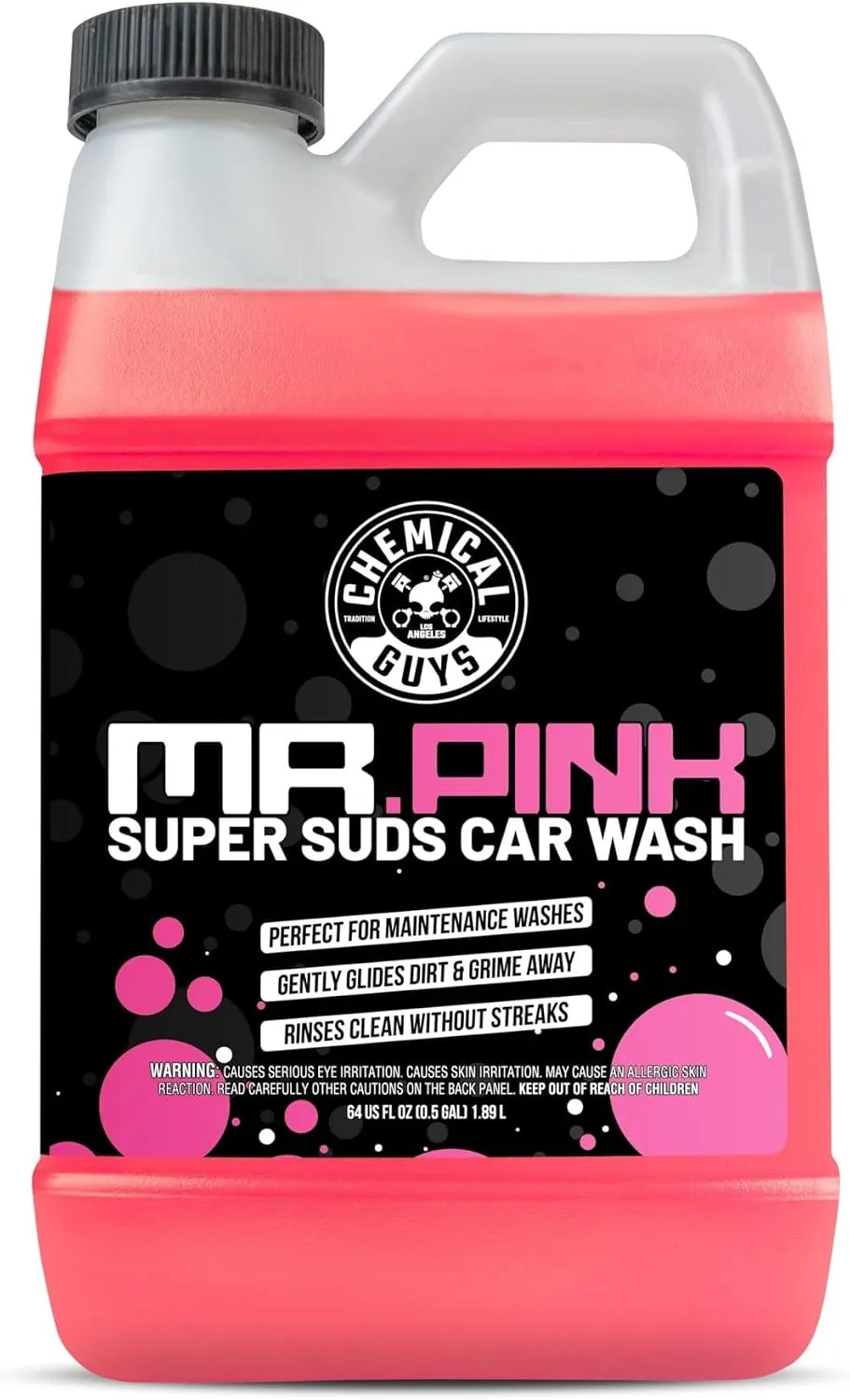
Best for: Regular maintenance washes, in a bucket or a foam cannon
A pH-balanced concentrate that produces genuinely thick suds at low dilution — 1 to 3 oz in a five-gallon bucket. Suds matter more than people think: the lubrication is what lets grit slide off the paint instead of being dragged across it. Works equally well through a foam cannon.
Pros
- Highly concentrated — a 64oz bottle lasts many washes
- Genuinely slick, which is the point of car shampoo
- Safe over wax, sealant and ceramic coatings
- Works in buckets and foam cannons alike
Cons
- Strong candy fragrance that not everyone wants
- No cleaning boosters — heavy grime may need a pre-soak
Best for older or unprotected paint
2. Meguiar's Gold Class Car Wash (64oz)
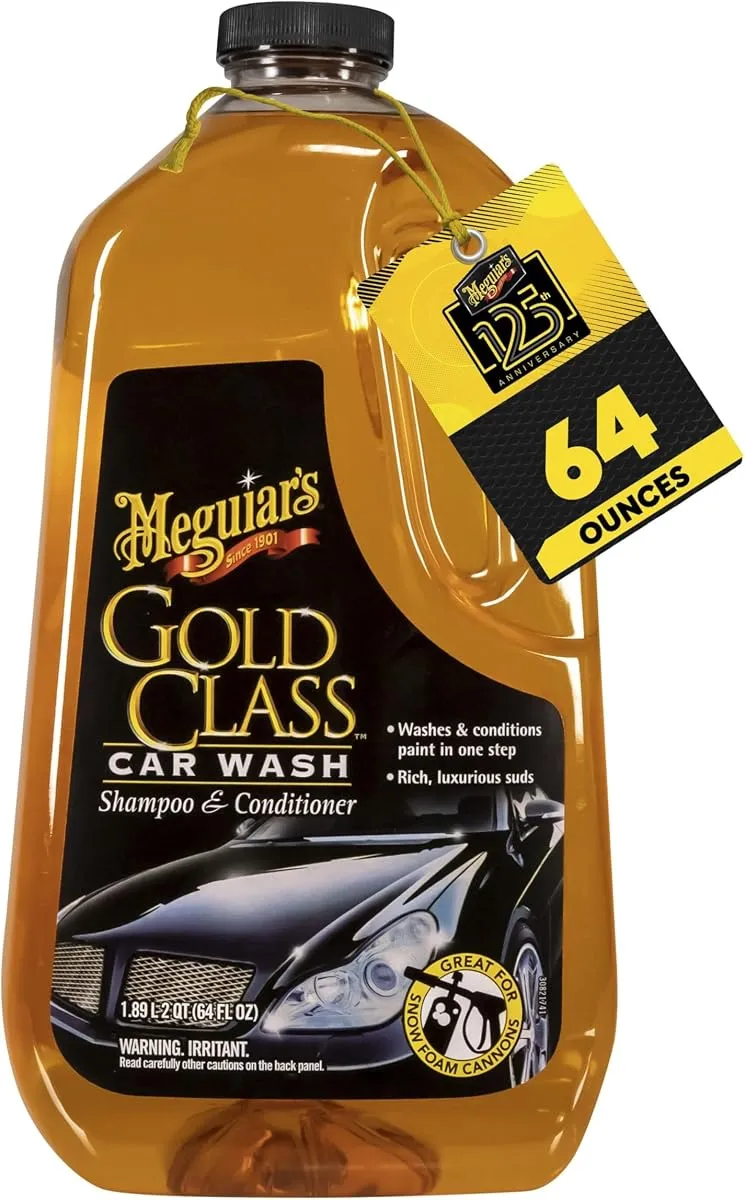
Best for: Paint without much protection, or older finishes that look tired
Includes conditioners that improve how tired paint looks as you wash. That's a cosmetic effect rather than protection, but on an older car without wax it makes a visible difference. Very widely stocked and consistently cheap.
Pros
- Conditioners improve the look of older paint
- Available almost everywhere, often discounted
- Gentle enough to preserve existing wax
Cons
- The conditioning effect is cosmetic and temporary
- Less concentrated than Mr. Pink — you use more per wash
Best value in bulk
3. Chemical Guys Mr. Pink Car Wash Soap (128oz)
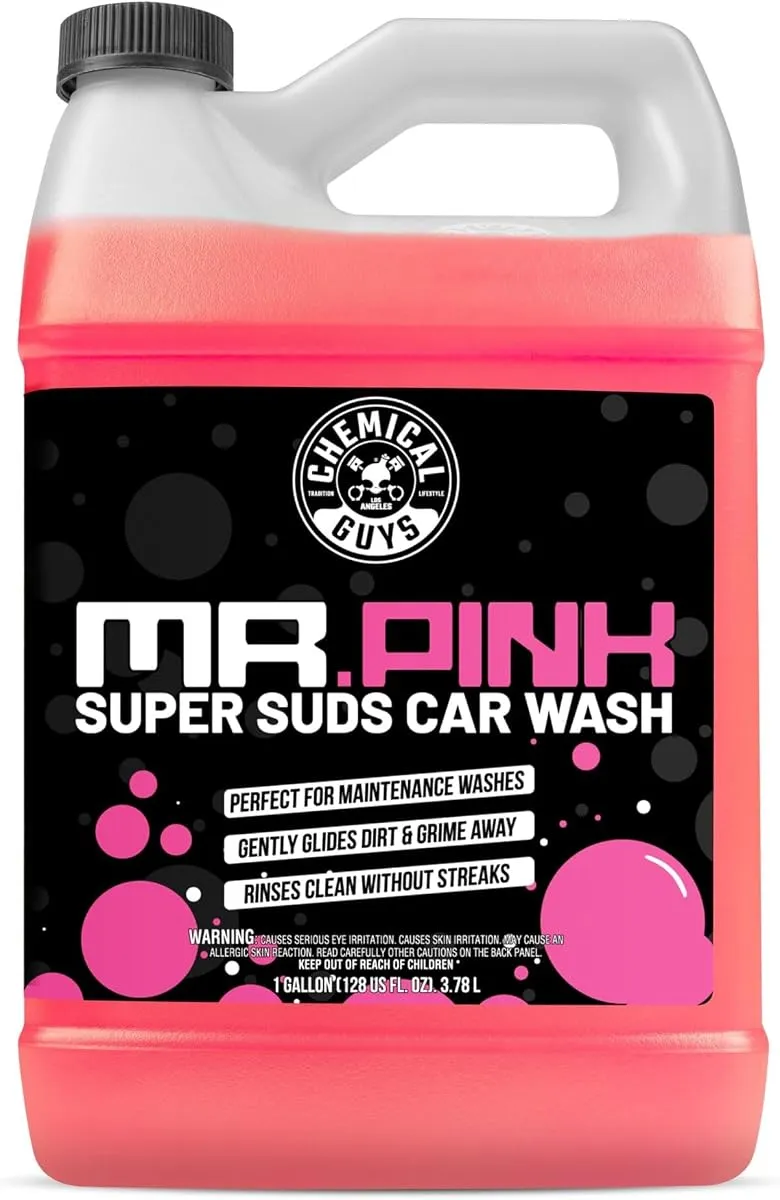
Best for: Washing frequently, or more than one vehicle
The same formula as pick one in a gallon jug. If you wash fortnightly or look after more than one car, the cost per wash drops substantially. There is no performance difference — this is purely an economics pick.
Pros
- Much lower cost per wash
- Identical formula to the 64oz bottle
- One purchase lasts most of a year
Cons
- Large jug is awkward to pour and store
- Only worth it if you wash regularly
Best wash-and-protect in one
4. Chemical Guys Extreme Bodywash & Wax (64oz)
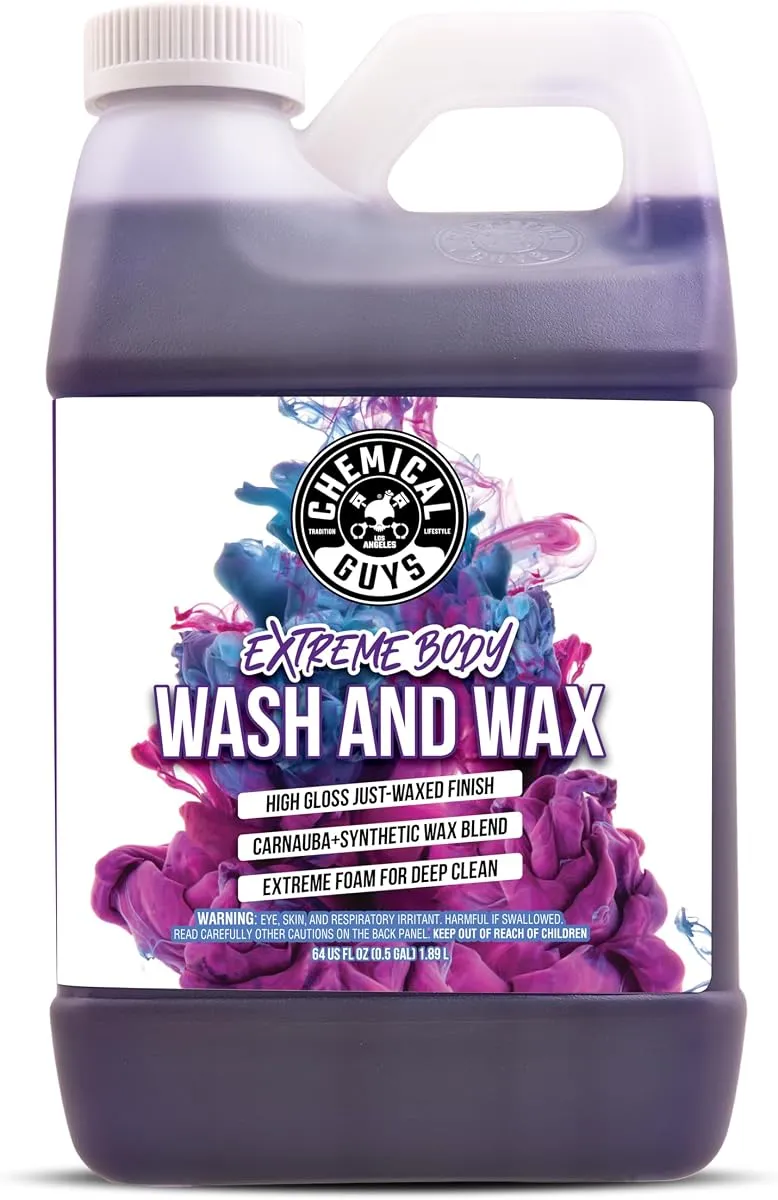
Best for: Adding a little gloss and protection without a separate waxing step
Carnauba is carried in the shampoo, leaving a light layer of protection as you wash. Be clear about expectations: this adds gloss and a few weeks of marginal protection. It does not replace an actual wax or sealant, and no wash-and-wax product does.
Pros
- Adds visible gloss in the wash step
- Convenient when you have no time to wax separately
- Still pH-safe over existing protection
Cons
- Protection is minimal compared with a real wax
- Can leave residue if used at too strong a dilution
Frequently asked questions
Can I use dish soap to wash my car?
No. Dish soap is a degreaser designed to strip oils, and it will remove wax or sealant in a single wash while drying out plastic and rubber trim. It also has no lubricating properties, so it increases the risk of swirl marks. A bottle of car shampoo costs little and lasts months.
What does pH-neutral actually mean here?
That the shampoo is neither strongly acidic nor strongly alkaline, so it lifts dirt without chemically attacking your wax, sealant or ceramic coating. Aggressive alkaline cleaners strip protection — useful when you intend to strip it before polishing, and destructive when you don't.
Does more suds mean better cleaning?
Not directly, but suds do matter. The foam carries lubrication, and lubrication is what lets trapped grit slide rather than scratch. A slick, sudsy wash is safer for your paint even where the cleaning power is similar.
Do I need a foam cannon?
No, but it helps. Pre-foaming loosens and lifts grit before your mitt touches the paint, which means less for the mitt to drag. It reduces the grit load rather than eliminating it — you still need the two-bucket method for the contact wash.
Is wash-and-wax shampoo a replacement for waxing?
No. It leaves a very light layer of protection that adds gloss and lasts a few weeks at most. Treat it as a bonus during a normal wash, not as a substitute for a proper wax or sealant applied to clean paint.
How many washes do you get from a bottle of car shampoo?
It depends entirely on concentration, which is why comparing bottle prices is misleading. Mr. Pink dilutes at 1 to 3 oz per five-gallon bucket, so at roughly 2 oz per wash a 64oz bottle gives about 32 washes and the 128oz jug about 64. Less concentrated shampoos need more per bucket, which closes most of the apparent price gap. Work out cost per wash rather than cost per bottle.
What car wash soap should I use on a ceramic coated car?
A plain pH-neutral shampoo, and specifically not a wash-and-wax. pH-neutral matters more on a coated car because repeated alkaline washing degrades the coating's water behavior faster than it should. Wash-and-wax products are the subtler mistake — the carnauba layer sits on top of the coating and masks the beading you paid for, which is commonly misread as the coating failing.
How much car shampoo should I put in the bucket?
Follow the bottle's stated dilution, and if you're going to err, err toward more. Too much shampoo wastes money; too little removes the lubrication that lets grit slide across the paint instead of cutting into it. Under-dosing is a paint risk, over-dosing is only a cost — so the two mistakes are not equivalent.