How-To Guides
Foam Cannons: What Pre-Foaming Does and Doesn't Replace
A foam cannon lifts grit off paint before you touch it — but it doesn't replace contact washing. Here's how to use one correctly and what it actually solves.
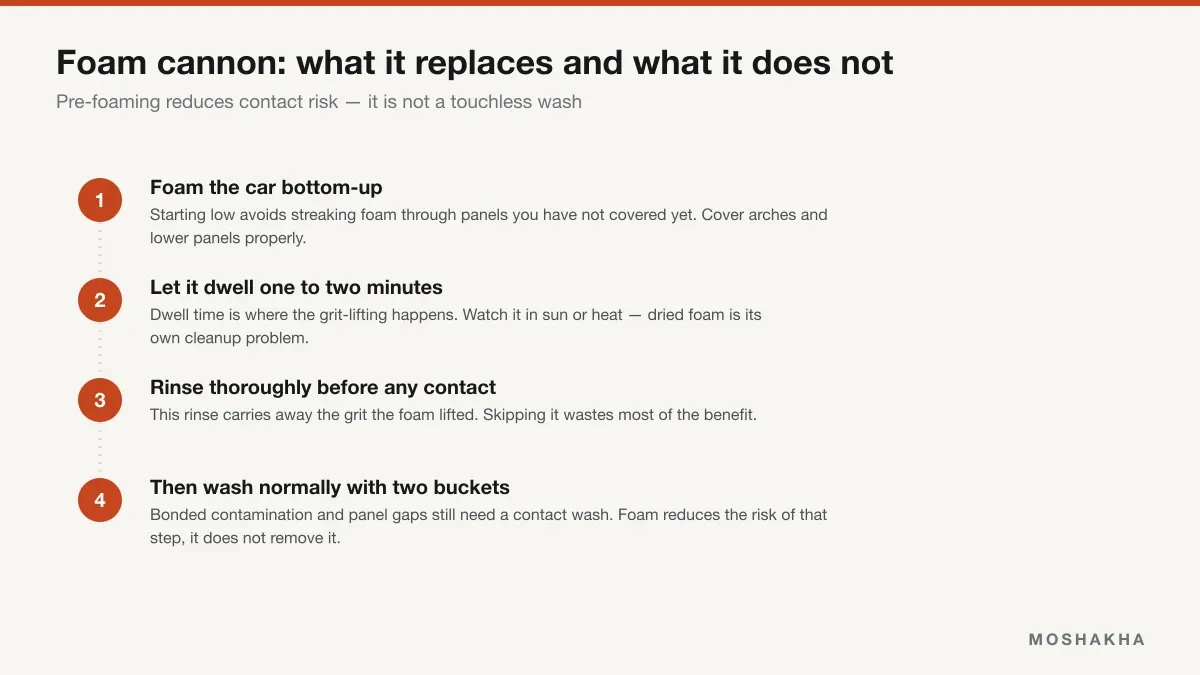
A foam cannon gets sold as a shortcut, and used that way, it disappoints. Used correctly, it’s a genuine risk-reduction step ahead of a normal contact wash — not a replacement for one.
What pre-foaming actually does
Contact washing — a mitt dragged across paint — is where swirl marks come from, because grit sitting on the surface gets dragged along with the mitt under friction. Pre-foaming coats the car in thick, clinging suds that dwell on the surface for a minute or two, softening and starting to lift that grit before any mitt ever touches the paint.
Rinse the foam off, and a meaningful share of that loosened grit goes with it. What’s left for the contact wash to deal with is less than what would have been there without the pre-foam step.
See the pressure washer we use for thisIf you’re choosing a machine specifically to foam with, the Sun Joe SPX3000 review covers what the included cannon does well and where its modest flow rate shows up on a large vehicle.
What it doesn’t do
It doesn’t replace contact washing. Bonded contamination, grime worked into panel gaps, and anything that’s had time to etch into the surface won’t lift with foam alone. A full two-bucket wash still follows every time.
It doesn’t work without dwell time. Spraying foam on and rinsing immediately skips the part where the foam actually does its job. Give it a minute or two before rinsing.
It isn’t a substitute for the right soap. Not every car shampoo aerates well through a cannon — check that whatever you’re using is rated for foam cannon use, since the dilution ratio typically differs from bucket-wash use of the same product.
See the soap we use through the cannonGetting the dwell time right
Watch the foam rather than setting a fixed timer. In cool, shaded conditions a couple of minutes is fine. In direct sun or hot weather, foam can start drying on the surface faster than expected — and dried foam residue is its own cleanup problem, sometimes worse than the dirt it was meant to loosen. Rinse before it looks like it’s starting to dry, not after.
The full sequence
Foam, dwell, rinse thoroughly, then wash normally with clean water, a grit guard, and the two-bucket method. Pre-foaming is a step that makes the wash after it safer — it isn’t a wash on its own.
Frequently asked questions
Does a foam cannon replace hand washing?
No, and this is the most common misunderstanding about foam cannons. Pre-foaming lifts and loosens surface grit before contact starts, which reduces the risk of that grit being dragged across paint during the mitt wash — but it doesn't remove everything, especially bonded contamination or grime in tight panel gaps. A normal two-bucket contact wash still follows.
How long should foam sit on the car before rinsing?
One to two minutes is a reasonable dwell time for most foams — long enough to start lifting grit, short enough that it doesn't dry on the surface. In direct sun or hot weather, watch it more closely; foam left too long can dry into a residue that's more work to remove than if you'd rinsed on time.
Does the soap need to be foam-cannon specific?
It needs to be rated for foam cannon use, though many general car wash soaps are — check the label or product listing. Soaps designed purely for bucket washing don't always aerate into thick, clinging foam through a cannon; the dilution ratio also typically differs between bucket and cannon use for the same soap.
Can I use a foam cannon without a pressure washer?
No — foam cannons rely on a pressure washer's water pressure to aerate the diluted soap into foam as it exits the nozzle. A garden-hose attachment marketed as a 'foam gun' works on a different, lower-pressure mechanism and produces thinner foam with less dwell benefit.
Is a foam cannon worth it if I already wash carefully?
Yes, if you're specifically trying to reduce swirl marks over time. Careful technique during contact washing still leaves some grit for the mitt to encounter; pre-foaming reduces how much grit is present at that stage. It's a meaningful risk reduction, not a replacement for the technique you're already using.