Buying Guides
Best Car Wash Mitts 2026: Safest Picks for Your Paint
The wash mitt decides whether you add swirl marks or avoid them. Our picks across microfiber, chenille and wheel-specific mitts, with what each is good at.
Moshakha is reader-supported. When you buy through links on our site, we may earn an affiliate commission at no extra cost to you. How we make money.
At a glance
Every mitt here is a genuine paint-safe option — the differences are about which job each one suits.
| Product | Award | Best for | Rating | Jump to review |
|---|---|---|---|---|
| The Rag Company Cyclone Ultra Wash Mitt + Pad | Best overall | Anyone who wants one mitt that handles a normal two-bucket wash properly | Details | |
| Chemical Guys Chenille Microfibre Wash Mitt | Best budget | First proper mitt, or a cheap spare to keep in the trunk | Details | |
| Adam's Polishes Microfibre Dual Wash Mitt | Best for bugs and tar | Front bumpers, bug splatter and sap, without reaching for a separate tool | Details | |
| The Rag Company Cyclone Ultra Wheel Mitt | Best for wheels | Wheels, grilles and tight areas — and keeping brake dust away from paint | Details | |
| The Rag Company Premium Chenille Knobby Wash Mitts | Best value multipack | Running several clean mitts per wash, or washing more than one car | Details |
Your wash mitt spends more time in contact with your paint than any other tool you own. It is also the cheapest thing in the process to get right — and the most common reason a carefully washed car ends up covered in fine swirl marks under direct sunlight.
The good news: almost any decent microfiber or chenille mitt is dramatically safer than the sponge it replaces. The differences between the mitts below are about which job each suits, not about which is “safe”.
How we chose
Specification analysis — pile construction, blend ratio, whether there’s a foam core, and how readily each design releases trapped grit in the rinse bucket — combined with aggregated long-term owner feedback focused on how each mitt holds up after repeated laundering. We haven’t lab-tested these, and we don’t claim to have.
No brand paid for placement, and none can.
What actually makes a mitt safe
It lifts grit away from the contact surface. This is the whole game. Fibers and chenille noodles suspend dirt up in the pile, away from your paint. A sponge’s flat face holds that same grit pressed directly against the panel.
It holds enough suds to stay lubricated. Most marring happens on a mitt that has run dry. Lubrication is what lets contamination slide instead of scratch.
It releases dirt when you rinse. A mitt that holds onto grit through the rinse bucket carries it back to the paint. This is where cheap mitts genuinely fall down, and where a 70/30 blend earns its price.
It keeps your hand off the paint. A foam core spreads pressure. Without one, your fingertips concentrate force in small spots — which is exactly where swirls appear.
Technique beats gear
Honestly: buying the best mitt on this page and using it badly will produce a worse result than the cheapest mitt used well.
- Two buckets, always. One with soap, one with plain water and ideally a grit guard. Rinse the mitt in the plain water before it goes back in the soap.
- Top to bottom. Lower panels carry the most grit. Working downwards keeps that grit away from the panels you’ve already done.
- Straight lines, no circles. Circular motions turn any marring into visible swirls.
- Drop it, retire it. A mitt that touches the ground has picked up sharp grit. It is out of service until it has been through the wash — no exceptions, no rinsing it off and carrying on.
- Never wheels then paint. Brake dust is metallic and will scratch immediately.
Which one should you buy?
- One mitt, done properly: pick 1.
- Tight budget, or a spare for the trunk: pick 2.
- Bug-covered front end every summer: pick 3.
- You don’t yet have a wheel-only mitt: pick 4, and treat it as mandatory.
- You want to split upper and lower panels, or wash two cars: pick 5.
If you’re still deciding whether to move on from a sponge at all, our wash mitt vs sponge comparison covers exactly what changes — and it is the single cheapest paint-safety upgrade available.
Once the car is washed, drying is the next place damage happens. Our drying towel guide covers that half.
The picks in detail
Best overall
1. The Rag Company Cyclone Ultra Wash Mitt + Pad
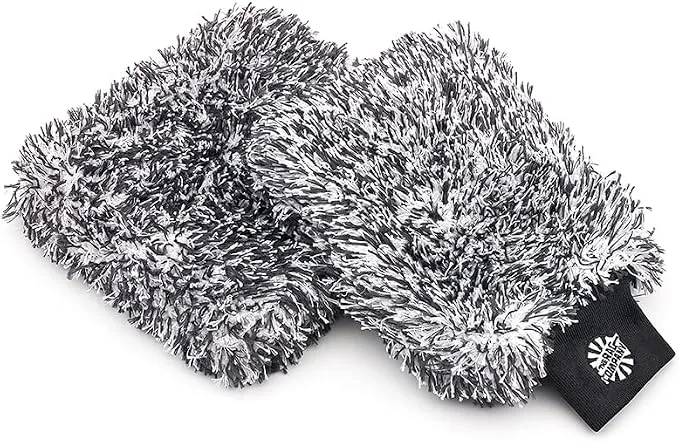
Best for: Anyone who wants one mitt that handles a normal two-bucket wash properly
A 70/30 Korean microfiber mitt with foam padding, bundled with a 10x10in wash pad. The foam core is what separates this from cheap mitts — it keeps the fibers standing up and stops your hand pressing grit directly into the panel. The included flat pad is genuinely useful for lower panels and rocker rails where a mitt is clumsy.
Pros
- Foam padding keeps pressure off the paint
- 70/30 blend releases dirt readily in the rinse bucket
- Works for rinseless and bucket washes alike
- The bundled flat pad handles awkward lower panels
Cons
- More expensive than a basic chenille mitt
- The pad has no wrist cuff, so it can slip when soapy
Best budget
2. Chemical Guys Chenille Microfibre Wash Mitt
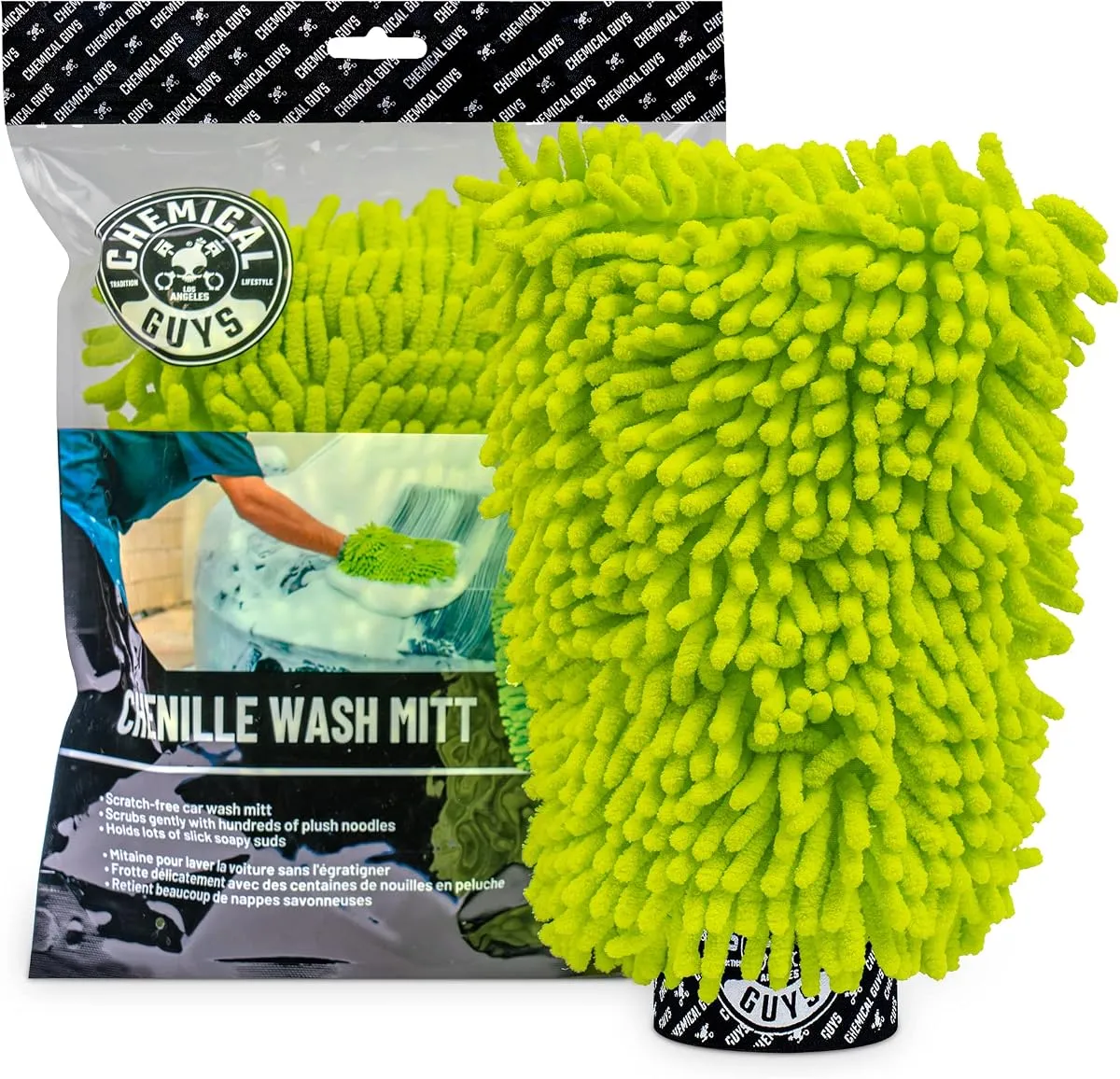
Best for: First proper mitt, or a cheap spare to keep in the trunk
The chenille 'noodle' mitt most people start with, and a legitimate choice rather than just a cheap one. The long noodles hold a lot of suds and keep grit suspended away from the paint surface. It is widely stocked, cheap enough to replace without hesitation, and considerably safer than any sponge.
Pros
- Cheap enough to retire the moment it hits the ground
- Long noodles carry plenty of suds and lubrication
- Available almost everywhere
Cons
- No foam core — easier to press too hard
- Noodles tangle and mat over time
- Slower to release trapped grit than a 70/30 microfiber mitt
Best for bugs and tar
3. Adam's Polishes Microfibre Dual Wash Mitt
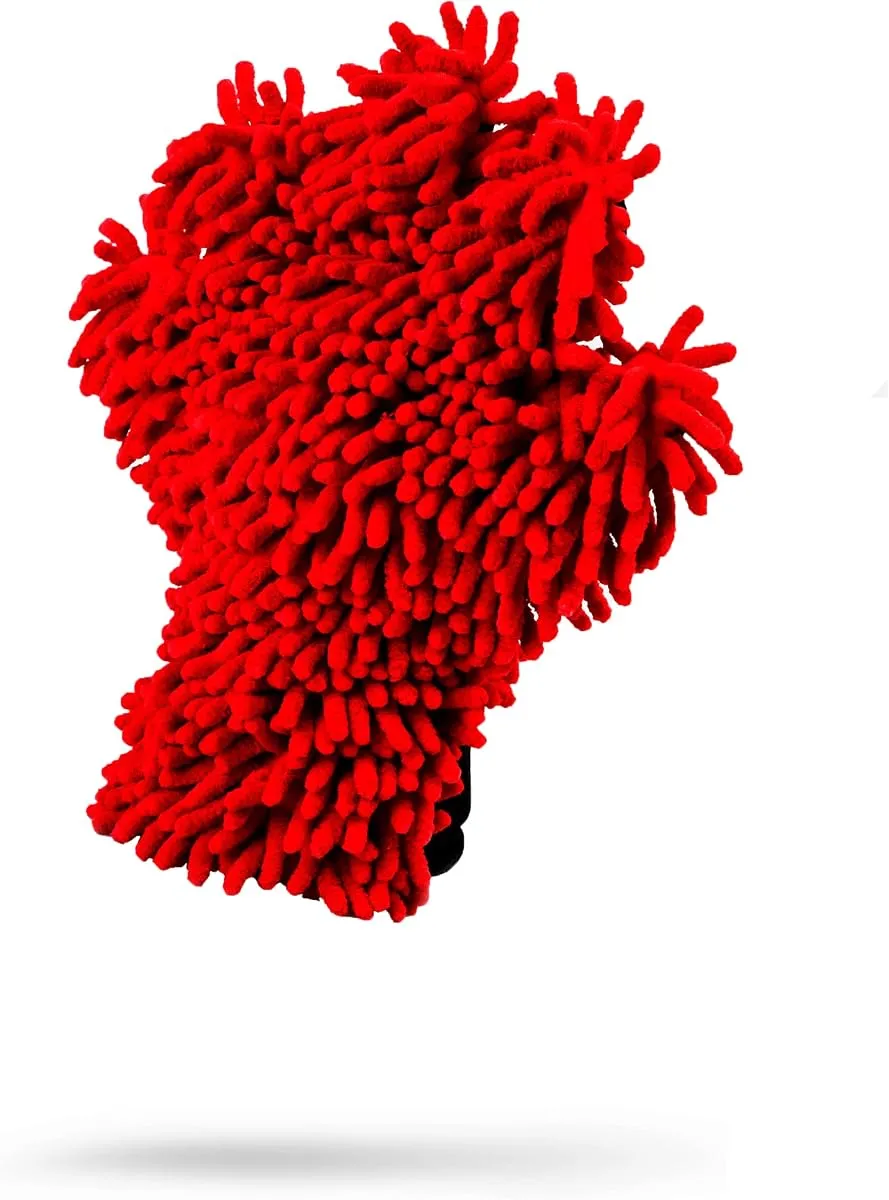
Best for: Front bumpers, bug splatter and sap, without reaching for a separate tool
A chenille mitt with a scrubbing side for stubborn deposits — sap, tar and baked-on bugs. The two-sided design means one tool covers both general washing and the front-end work that usually needs something more aggressive. Use the scrub side deliberately and only where needed.
Pros
- Scrub side handles bugs and sap without a dedicated bug sponge
- Soft side is a competent general wash mitt
- Saves carrying an extra tool
Cons
- The scrub side is too aggressive for general panel washing
- Easy to use the wrong side by accident when it's soapy
Best for wheels
4. The Rag Company Cyclone Ultra Wheel Mitt
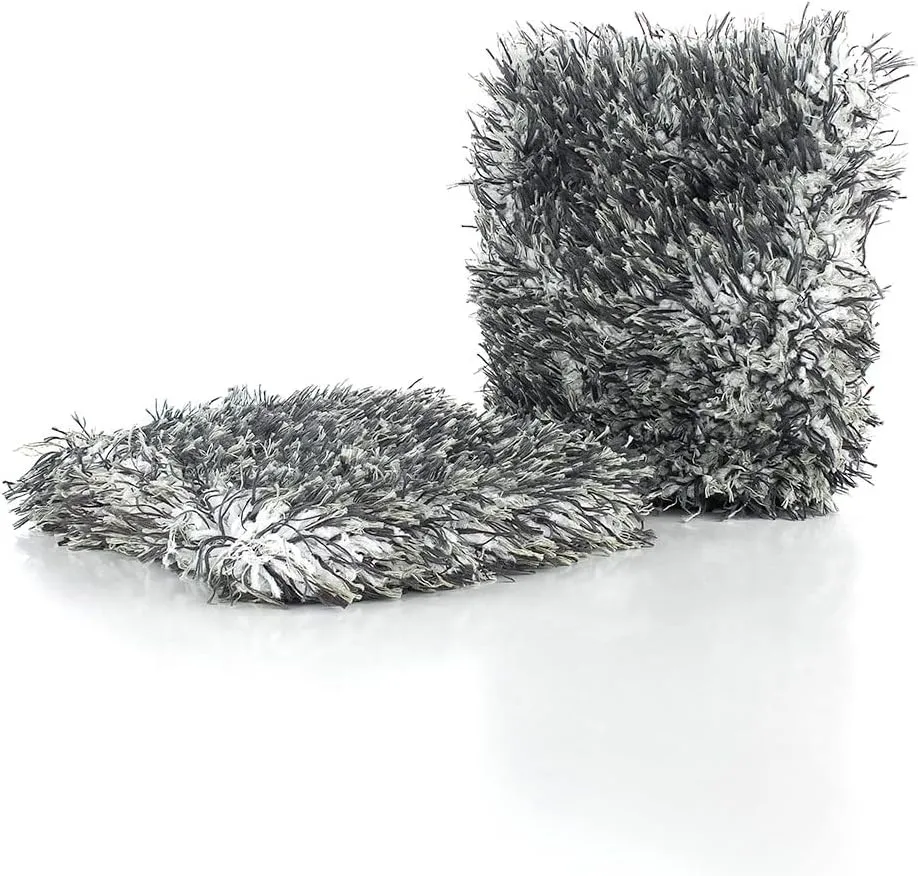
Best for: Wheels, grilles and tight areas — and keeping brake dust away from paint
A small 6x7in mitt sized for wheel barrels, spokes and grilles. The important thing here is not the mitt itself but the discipline it enforces: wheels carry brake dust and metallic particles that will scratch paint immediately. A dedicated wheel mitt that never touches a panel is basic paint safety, and cheap insurance.
Pros
- Sized for spokes and tight areas a full mitt can't reach
- Keeps brake dust strictly away from paintwork
- Two-pack covers front and rear separately
Cons
- Single purpose — it should never touch paint
- Small enough to be slow on large wheels
Best value multipack
5. The Rag Company Premium Chenille Knobby Wash Mitts
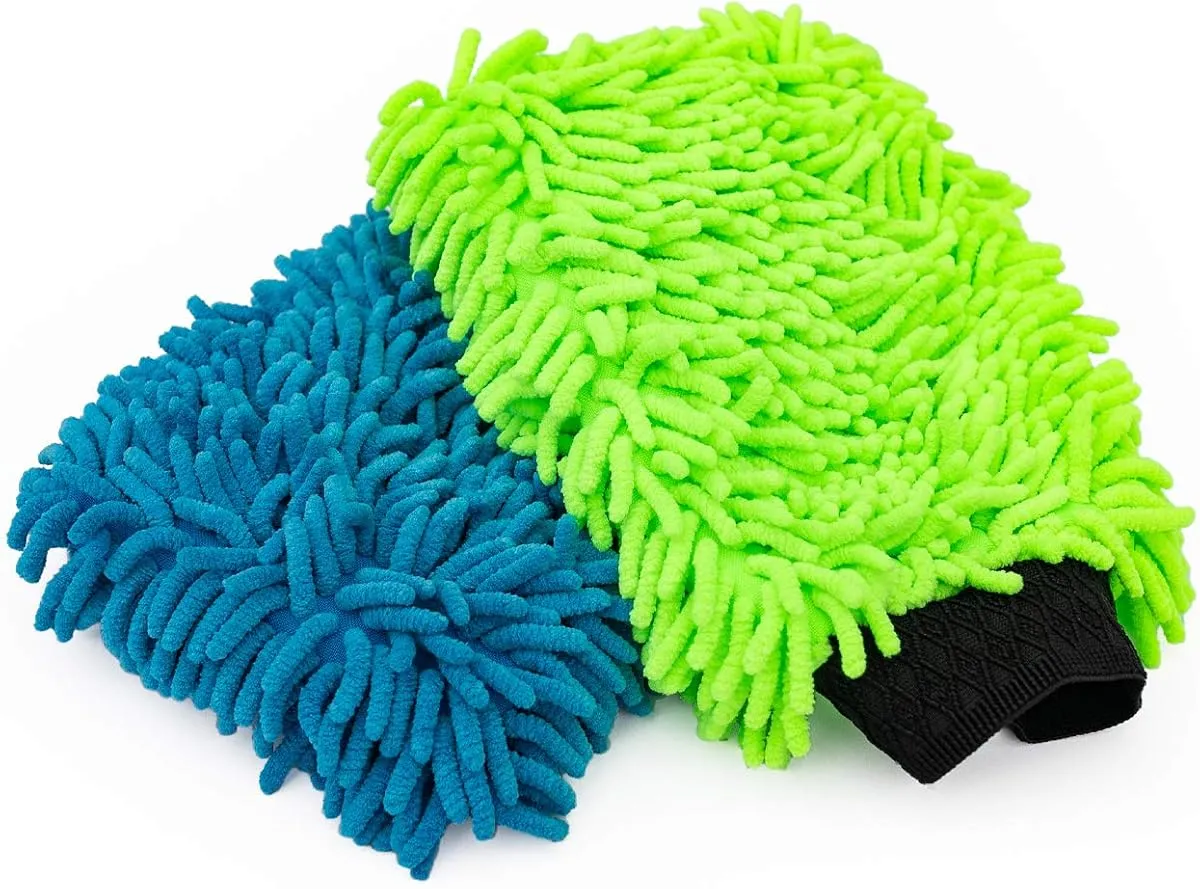
Best for: Running several clean mitts per wash, or washing more than one car
Double-sided chenille mitts sold in pairs. The reason to buy a multipack is not economy but technique: swapping to a fresh mitt when you reach the lower half of the car is one of the simplest ways to avoid dragging road grime across upper panels. Two mitts used well beat one premium mitt used for the whole car.
Pros
- Two mitts lets you split upper and lower panels
- Double-sided, so more usable surface per mitt
- Good price per mitt
Cons
- No foam core
- Chenille noodles mat with age
Frequently asked questions
Is a wash mitt really safer than a sponge?
Yes, and the reason is structural. A sponge has a flat, closed surface that traps grit between the foam and your paint, then drags it along the panel. A mitt's fibers or noodles lift grit up and away from the contact surface, where it stays suspended until you rinse. We cover this in detail in our wash mitt vs sponge comparison.
How often should I replace a wash mitt?
Replace it when the pile mats down and stops feeling plush, when the noodles tangle permanently, or immediately if it hits the ground and you cannot fully launder it before the next wash. For a mitt used fortnightly and washed properly, a year is a reasonable expectation.
Do I need a separate mitt for wheels?
Yes. This is the one piece of gear separation that genuinely is not optional. Brake dust contains hard metallic particles that will scratch paint on contact. A wheel mitt should never touch a painted panel, and a paint mitt should never touch a wheel.
Can I wash a wash mitt in the washing machine?
Yes — wash it separately from cotton, with no fabric softener and no dryer sheets, on a warm or cold cycle. Fabric softener coats the fibers and destroys their ability to lift and hold grit, which is the entire reason a mitt is safer than a sponge.
How many mitts do I need for one car?
Two is the practical answer: one for the upper half of the vehicle and a second for the lower panels, which carry far more road grime. Add a third dedicated wheel mitt. Splitting upper and lower is a bigger safety improvement than upgrading to a more expensive single mitt.