Buying Guides
Best Car Drying Towels 2026: Picks for Every Vehicle Size
Twisted loop or plush, 900 GSM or 1200 — which drying towel actually suits your car. Our picks for sedans, SUVs, glass and tight budgets.
Moshakha is reader-supported. When you buy through links on our site, we may earn an affiliate commission at no extra cost to you. How we make money.
At a glance
Prices move constantly — we link out for live pricing rather than quoting figures that go stale.
| Product | Award | GSM | Best for | Rating | Jump to review |
|---|---|---|---|---|---|
| The Rag Company The Gauntlet 900 GSM | Best overall | 900 | Sedans and hatchbacks; anyone buying one towel to do everything | Details | |
| The Rag Company The Liquid8r 1100 GSM | Best for SUVs and trucks | 1100 | Full-size SUVs, trucks and vans, or drying two cars back to back | Details | |
| Chemical Guys Woolly Mammoth 25x36in | Best plush option | — | Drivers who want maximum softness and aren't chasing one-pass speed | Details | |
| SMINDER 1200 GSM Twisted Loop 36x24in | Best budget twisted loop | 1200 | Getting twisted-loop performance without premium-brand pricing | Details | |
| Generic Edgeless 540 GSM 12x12in (6-pack) | Best for glass and final wipe | 540 | Glass, door shuts, badges and final touch-ups — not drying panels | Details |
Drying is where most paint damage actually happens. The wash is careful — two buckets, plenty of lubrication, a clean mitt. Then the car comes out dripping, the towel comes out of the trunk, and every bit of that care gets undone by dragging a saturated, grit-flecked cloth across a wet panel.
Picking the right drying towel is not really about finding the “best” one. It is about matching three things to your car: weave, size and GSM. Get those right and a mid-priced towel will outperform an expensive one used wrong.
How we chose
We are explicit about our method rather than implying testing we haven’t done. These picks come from specification analysis — weave construction, blend ratio, size and edge treatment — combined with aggregated long-term owner feedback, with particular attention to how each towel behaves after 20+ wash cycles, which is where cheap microfiber falls apart. Where a cheaper product wins, we say so; pick five costs under $20 and is the one we think most readers are actually missing.
No brand paid for a position here, and none can.
The three specs that matter
Weave: twisted loop vs plush vs waffle
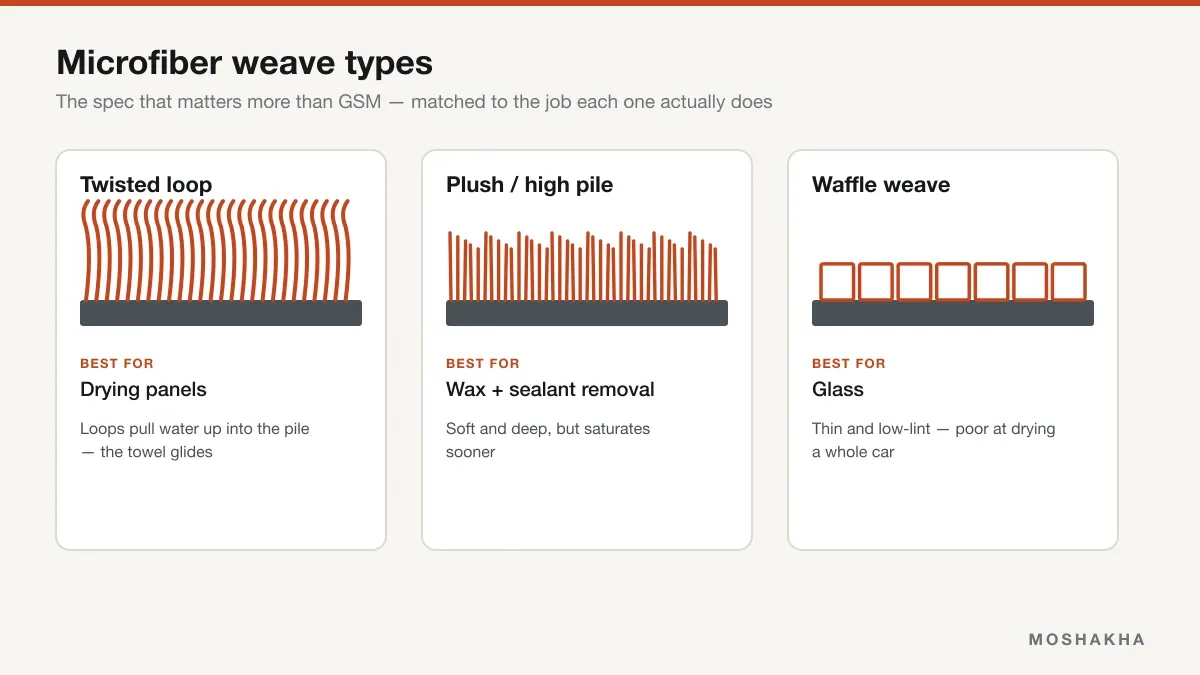
This matters more than GSM, and it is the spec most roundups skip.
Twisted loop towels have long fibers twisted into loops that pull water up into the pile. The towel glides. This is the correct weave for removing bulk water from a vehicle, and it is what nearly every serious drying towel now uses.
Plush (high-pile) towels are softer and hold a lot of water, but release it more slowly. They saturate sooner and start smearing rather than lifting.
Waffle weave is thin and low-lint. It is poor at drying a whole car and excellent at glass. If your windows streak, a waffle weave or a low-pile edgeless towel fixes it.
Size: match it to your vehicle, not to the marketing
A 25x36in towel on a hatchback is unwieldy. A 15x24in towel on a Suburban means wringing it out four times. The most common buying mistake is going as large as possible — a huge towel saturates as a single unit, and once it’s soaked, the whole thing is useless until you wring it.
GSM: density, not quality
Grams per square meter measures how much fiber is packed into the cloth. More fiber means more water capacity — and more weight, more drying time, and less control.
Anyone selling you a 1600 GSM towel as automatically superior is selling, not advising. 1600 GSM is genuinely useful on a large truck. It is the wrong tool for glass, wrong for door shuts, and overkill on a Civic. We go into this properly in our guide to what microfiber GSM actually means.
Which one should you buy?
- One car, sedan or hatchback, want a single towel: pick 1, plus pick 5 for glass.
- SUV, truck, or you dry two cars in a row: pick 2.
- Nervous about marring, want maximum softness: pick 3.
- Want twisted loop, tight budget: pick 4.
- Your problem is streaky glass, not drying: pick 5. It is almost certainly the towel you’re missing.
Getting more life out of whichever you buy
A good drying towel that is laundered badly becomes a bad drying towel in about three washes. Fabric softener is the main culprit — it coats the fibers with a waxy residue that destroys absorbency and causes exactly the streaking people blame the towel for.
The full routine is in our microfiber care guide, but the short version: wash separately from cotton, no softener, no dryer sheets, low heat or air dry.
The picks in detail
Best overall
1. The Rag Company The Gauntlet 900 GSM
Best for: Sedans and hatchbacks; anyone buying one towel to do everything
Skip if: You drive something SUV-sized or larger — you will be wringing this out constantly
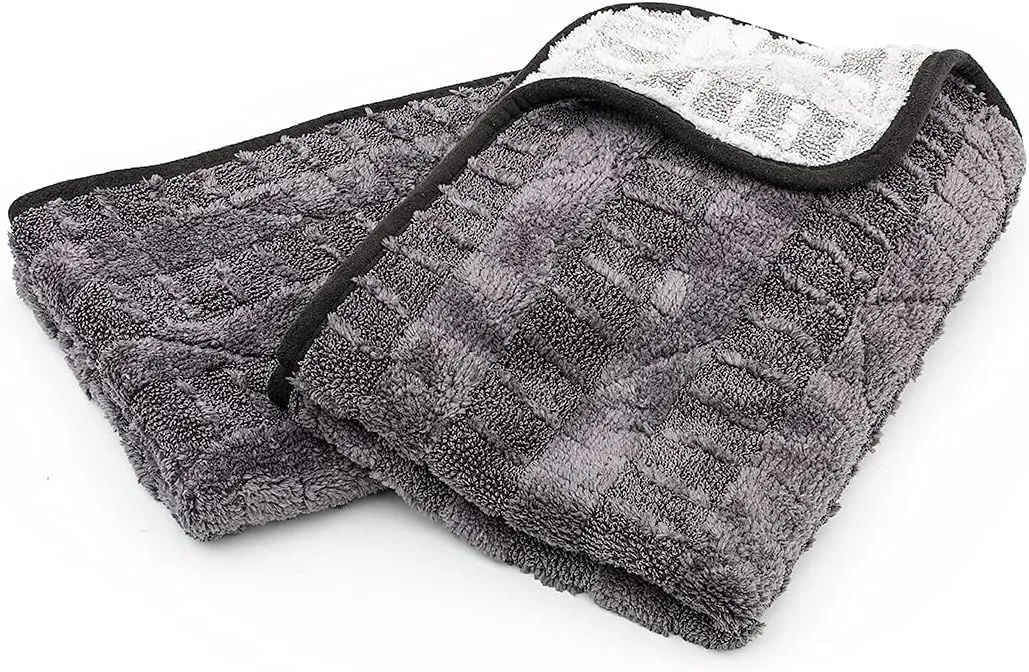
A 70/30 Korean microfiber blend at 900 GSM in a 15x24in panel. That size is the point: big enough to dry a door and a quarter panel in one pass, small enough to control one-handed around mirrors and badges. The 70/30 blend is more absorbent than the cheaper 80/20 most budget towels use.
Pros
- Genuinely one-handed — no wrestling a soaking bedsheet
- 70/30 blend absorbs more per gram than typical 80/20
- Suede edge, so no stitched border to drag across paint
- Two in the pack means one stays clean for glass
Cons
- Too small to dry a full-size SUV without wringing it out
- Costs noticeably more per towel than supermarket microfiber
Best for SUVs and trucks
2. The Rag Company The Liquid8r 1100 GSM
Best for: Full-size SUVs, trucks and vans, or drying two cars back to back
Skip if: You drive a hatchback — this is more towel and more money than you need
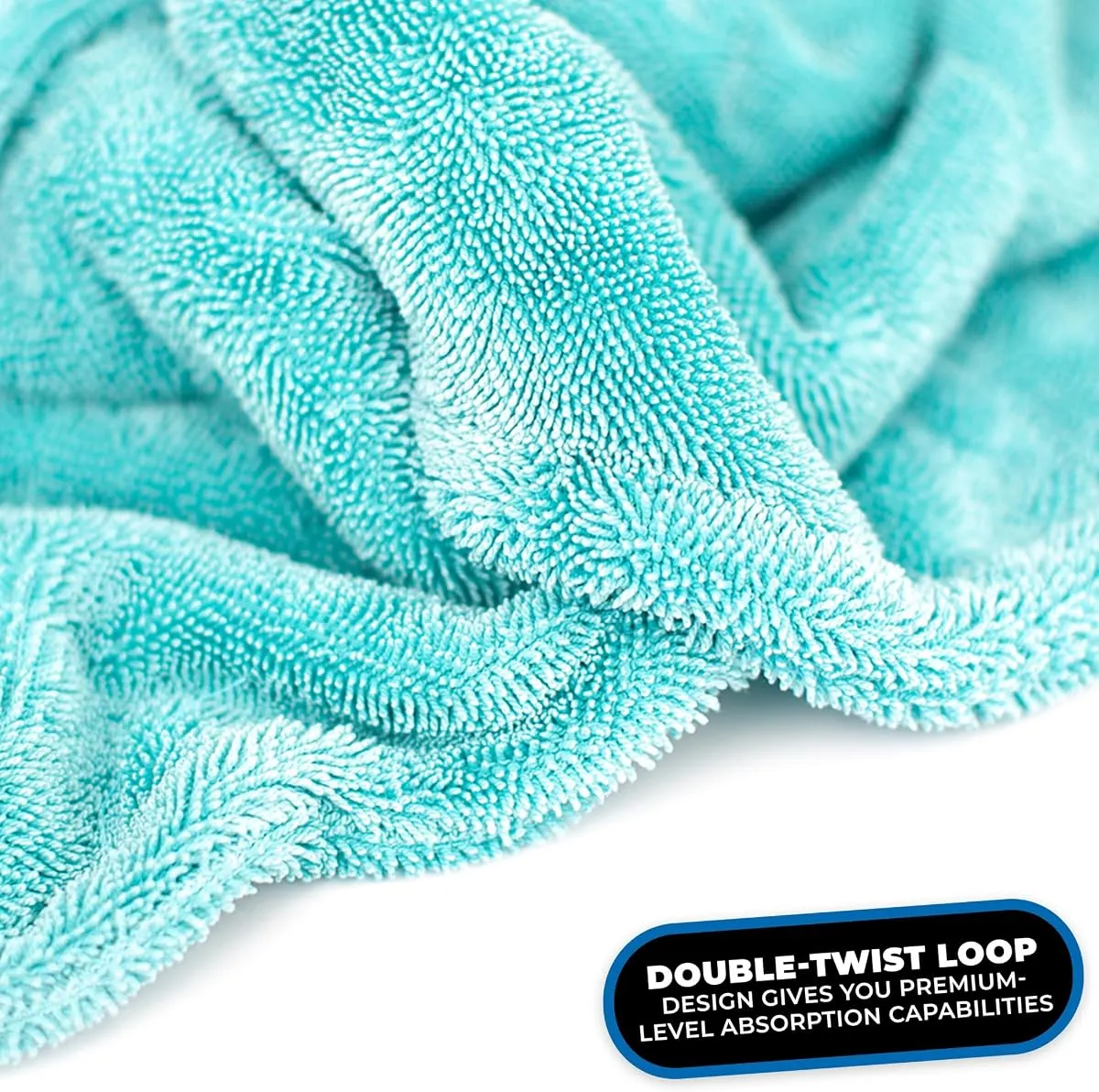
Twisted loop construction at 1100 GSM across a 25x36in sheet. Twisted loop is the right weave for bulk water removal — the loops pull water up into the pile instead of pushing it along the panel. This is the towel for a vehicle where a 15x24in panel means constant wringing.
Pros
- Holds enough water to dry a large vehicle in one go
- Twisted loop glides rather than drags
- Large enough to drape over a roof and pull
Cons
- Slow to dry between uses — needs proper hanging space
- Lints more on glass than a waffle weave; keep a separate glass towel
- Unwieldy on a small hatchback
Best plush option
3. Chemical Guys Woolly Mammoth 25x36in
Best for: Drivers who want maximum softness and aren't chasing one-pass speed
Skip if: You want the fastest possible one-pass dry on a large vehicle — twisted loop beats plush there
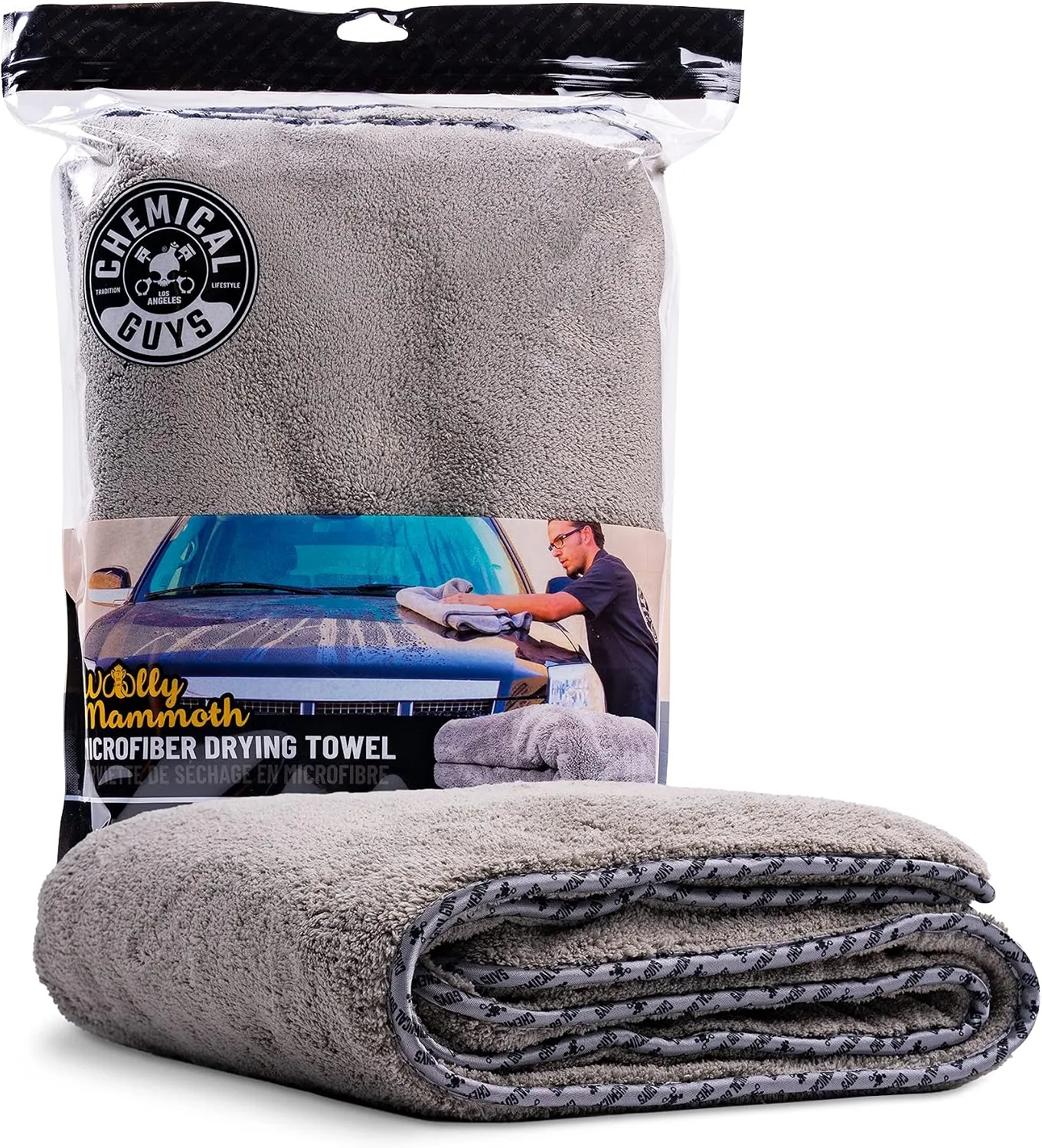
A deep, plush high-pile towel at 25x36in. It is very soft, widely stocked and forgiving — a reasonable default if you're nervous about marring. Plush pile holds water well but releases it more slowly than twisted loop, so it saturates sooner on a big vehicle.
Pros
- Very soft pile, forgiving on soft clear coats
- Widely available and frequently discounted
- Large drying area for the price
Cons
- Saturates faster than twisted loop of similar size
- Bulky and slow to air-dry
- Sheds slightly on the first few washes
Best budget twisted loop
4. SMINDER 1200 GSM Twisted Loop 36x24in
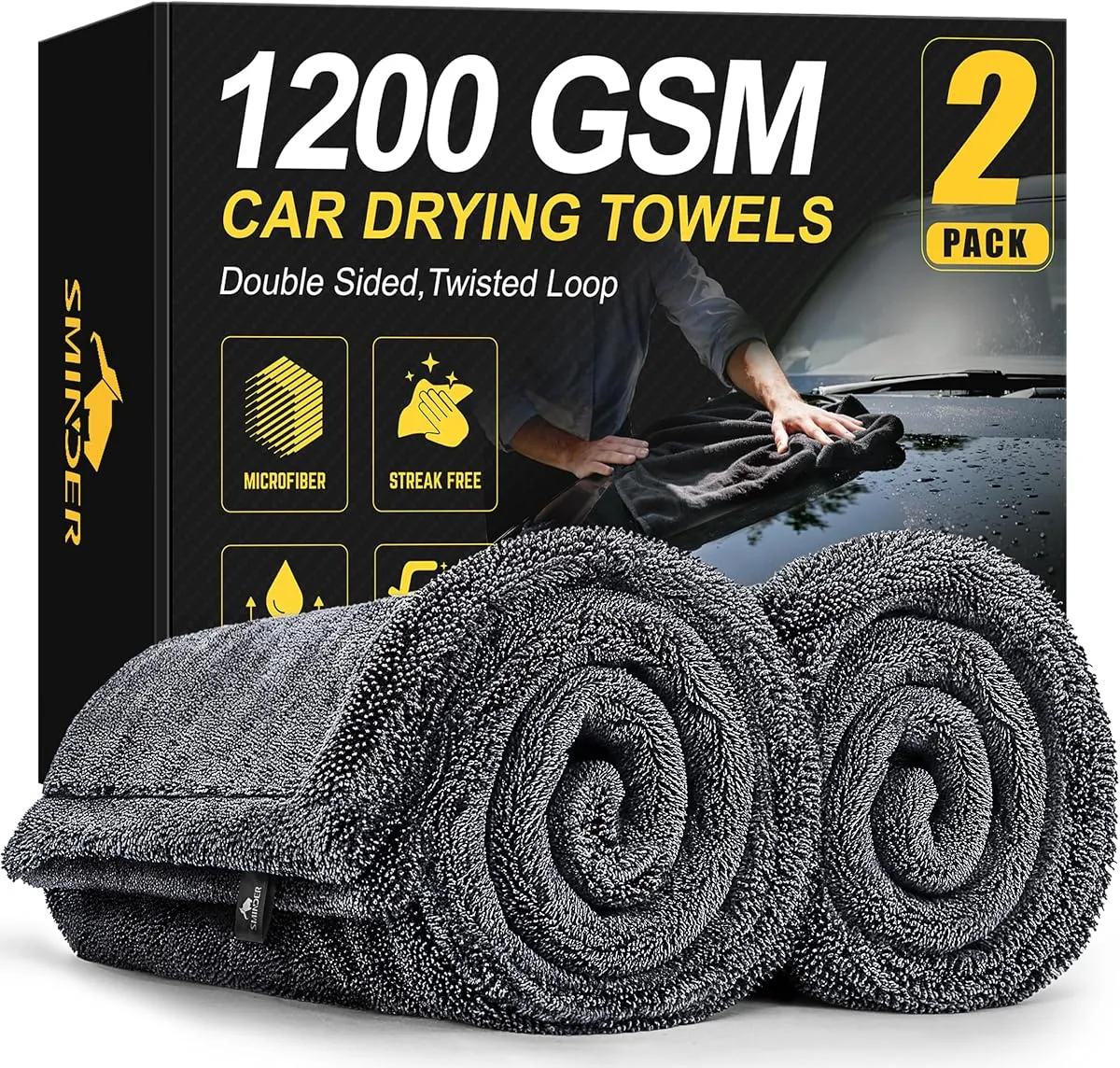
Best for: Getting twisted-loop performance without premium-brand pricing
Skip if: Consistency matters more to you than price — budget microfiber varies more batch to batch
A double-twist pile edgeless towel at 1200 GSM in a 36x24in size, sold in pairs. It delivers the twisted-loop advantage — genuine bulk water pickup — at a materially lower price than the established brands. The trade-off is consistency: budget microfiber varies more between production runs.
Pros
- Twisted loop weave at a budget price
- Edgeless, so no border seam to worry about
- Two-pack covers wash and backup duty
Cons
- Quality varies more batch to batch than premium brands
- Shorter usable life — expect fewer wash cycles before pile matting
- 1200 GSM is more than most sedans need
Best for glass and final wipe
5. Generic Edgeless 540 GSM 12x12in (6-pack)
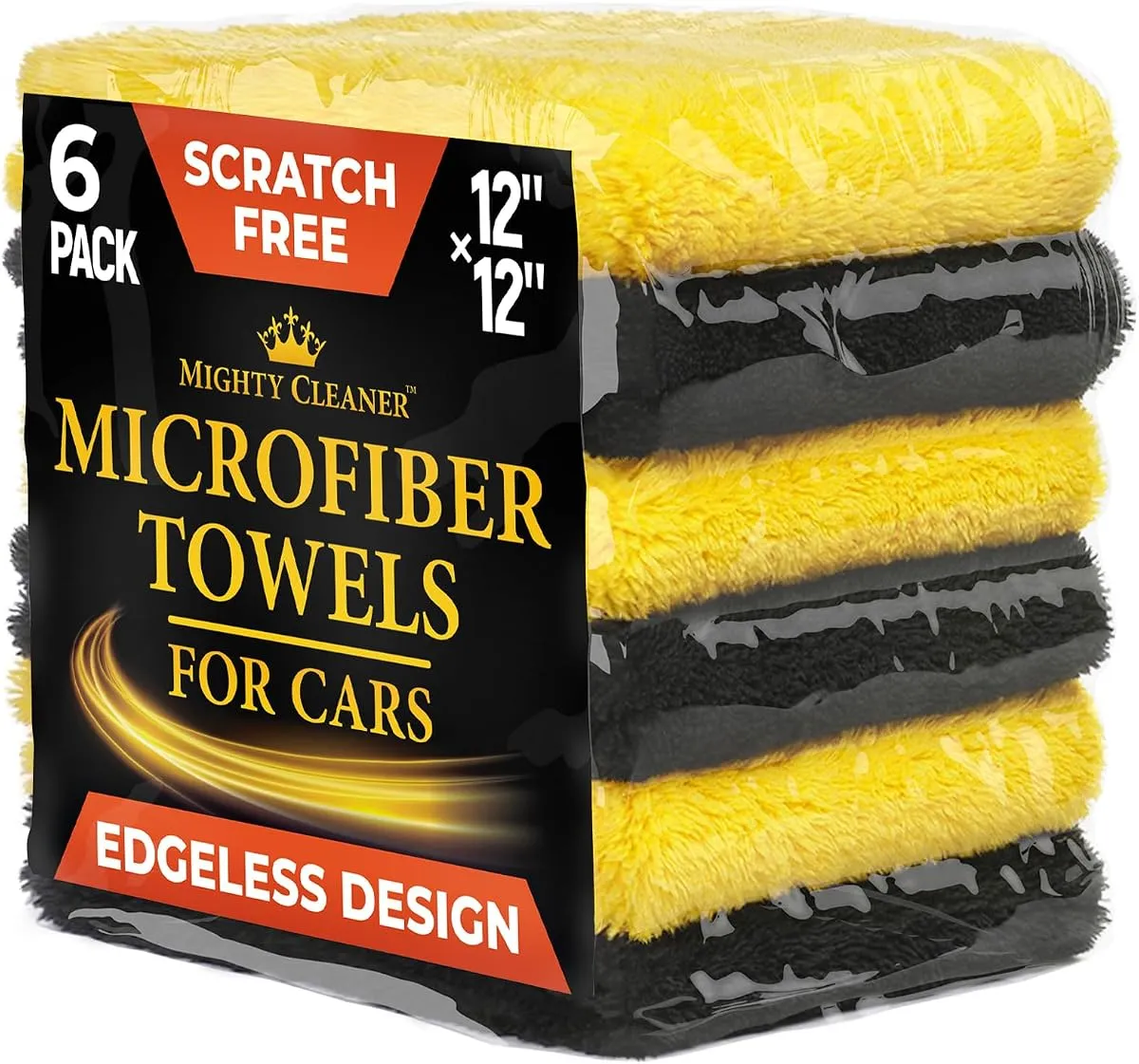
Best for: Glass, door shuts, badges and final touch-ups — not drying panels
Skip if: You are looking for a towel to dry the car with — this has no capacity for that job
These are not drying towels and shouldn't be sold as them. They are the low-pile companions every drying towel needs: 540 GSM edgeless squares for glass, door jambs and chasing the drips a big towel leaves behind. Buying a stack of these fixes more streak complaints than upgrading your main towel does.
Pros
- Low pile leaves glass genuinely streak-free
- Cheap enough to retire one the moment it hits the ground
- Edgeless construction, no seams
Cons
- Far too small and thin to dry panels
- Generic manufacturing — expect some variation
Frequently asked questions
What GSM should a car drying towel be?
For most cars, 900-1200 GSM in a twisted loop weave is the sweet spot. Below about 800 GSM you will be wringing constantly; above 1200 GSM you gain absorbency but the towel becomes heavy, slow to air-dry and awkward on tight panels. GSM measures density, not quality — a well-made 900 GSM towel outperforms a poorly made 1600 GSM one.
Twisted loop or plush — which is better for drying?
Twisted loop for bulk water removal, plush for softness. Twisted loops pull water up into the pile so the towel glides; plush pile holds water but releases it more slowly and saturates sooner. For a large vehicle, twisted loop is clearly better. For a small car where saturation is not an issue, either works.
How many drying towels do I need?
Two at minimum: one large towel for panels and one low-pile towel for glass and door shuts. Using your panel towel on glass is the single most common cause of streaking, because a saturated high-pile towel smears the last of the water rather than lifting it.
Can a drying towel scratch my paint?
A clean, good-quality microfiber towel will not. Damage comes from grit trapped in the pile, so the real risks are dropping the towel and continuing to use it, washing it with fabric softener, or drying a car that was not properly rinsed. Never use a towel that has touched the ground until it has been washed.
Should I buy one big towel or several smaller ones?
Several smaller ones, for most people. A single huge towel is faster on a large vehicle, but it saturates as one unit, is awkward to wring, and takes a long time to air-dry. Two or three mid-size towels let you swap to something dry partway through and are far easier to launder.