Buying Guides
Best Car Floor Mats 2026: All-Weather vs Carpet
Trim-to-fit or laser-measured, rubber or carpet — what each actually protects against. Our picks, and the safety rule that rules out cheap universal mats.
Moshakha is reader-supported. When you buy through links on our site, we may earn an affiliate commission at no extra cost to you. How we make money.
At a glance
Fit matters more than material. A mat that slides under the pedals is a hazard regardless of what it is made of.
| Product | Award | Best for | Rating | Jump to review |
|---|---|---|---|---|
| WeatherTech Trim-to-Fit Floor Mats, 3-Piece (Grey) | Best overall | Most cars, when laser-measured liners aren't available or affordable | Details | |
| WeatherTech Semi-Universal All-Weather Mats, 4-Piece (Black) | Best for full coverage | Covering front and rear footwells properly in a family car | Details | |
| WeatherTech TechCare FloorLiner Cleaner & Protector Kit | Keep them looking new | Stopping TPE and rubber liners going chalky gray | Details |
Floor mats are one of the few interior accessories that do a genuinely protective job: they keep water, road salt and grit off carpet that is expensive to replace and almost impossible to fully dry once soaked.
They are also the one accessory in a car with a real safety failure mode.
The safety issue
A mat that slides forward can trap your accelerator or block your brake pedal.
This is not theoretical — it has been the subject of large vehicle recalls. The mechanism is simple: an unsecured mat migrates forward over months of feet moving against it, until it bunches under the pedals.
Three rules:
- Never stack a mat on top of another mat. The new one slides on the old one.
- Use the factory retention hooks if your car has them. They exist for this.
- Replace any mat that no longer stays put, regardless of condition.
This is why fit ranks above material here. A cheap universal mat that slides is worse than no mat at all.
The three fit tiers
| Tier | What it is | Trade-off |
|---|---|---|
| Universal | One shape, all cars | Cheapest; slides, poor coverage |
| Trim-to-fit | Semi-universal, cut to your footwell | Good fit for moderate money |
| Laser-measured | Molded per model | Best coverage, highest price |
Trim-to-fit is the value sweet spot for most people. Cutting along the molded guide lines gives you a mat that actually sits in your footwell and doesn’t move — which is most of what the expensive liners buy you.
Cut conservatively. You can always trim more; you cannot put it back.
All-weather or carpet
Different jobs, and running both seasonally is a reasonable answer.
All-weather (rubber/TPE) contains liquid, salt and grit inside raised edges. In winter, road salt reaching carpet does real corrosion damage to the floor pan underneath. This is the mat that saves you money.
Carpet looks and sounds better, and absorbs rather than contains — which is fine until it’s saturated, at which point it holds moisture against the floor and causes the musty smell people blame on the car being old.
The chalky gray problem
Rubber and TPE liners go chalky, and people assume it’s age. Usually it’s cleaner residue dried in the tread channels, plus UV.
Rinse standing on edge, from the top down, for longer than feels necessary. A rubber-specific protector slows the UV component.
Never use tire shine or a silicone dressing on a mat. A glossy mat under the pedals is exactly the hazard described above, arriving by a different route. This is the one place in a car where shine is actively dangerous.
How we chose
Specification analysis — material compound, cold-weather flexibility, edge height, retention design and fit tier — plus aggregated long-term owner feedback with attention to how compounds hold up after several winters. No lab testing. No brand paid for placement.
Cleaning them properly, which is where most of the lifespan comes from, is covered in how to clean car floor mats.
The picks in detail
Best overall
1. WeatherTech Trim-to-Fit Floor Mats, 3-Piece (Grey)
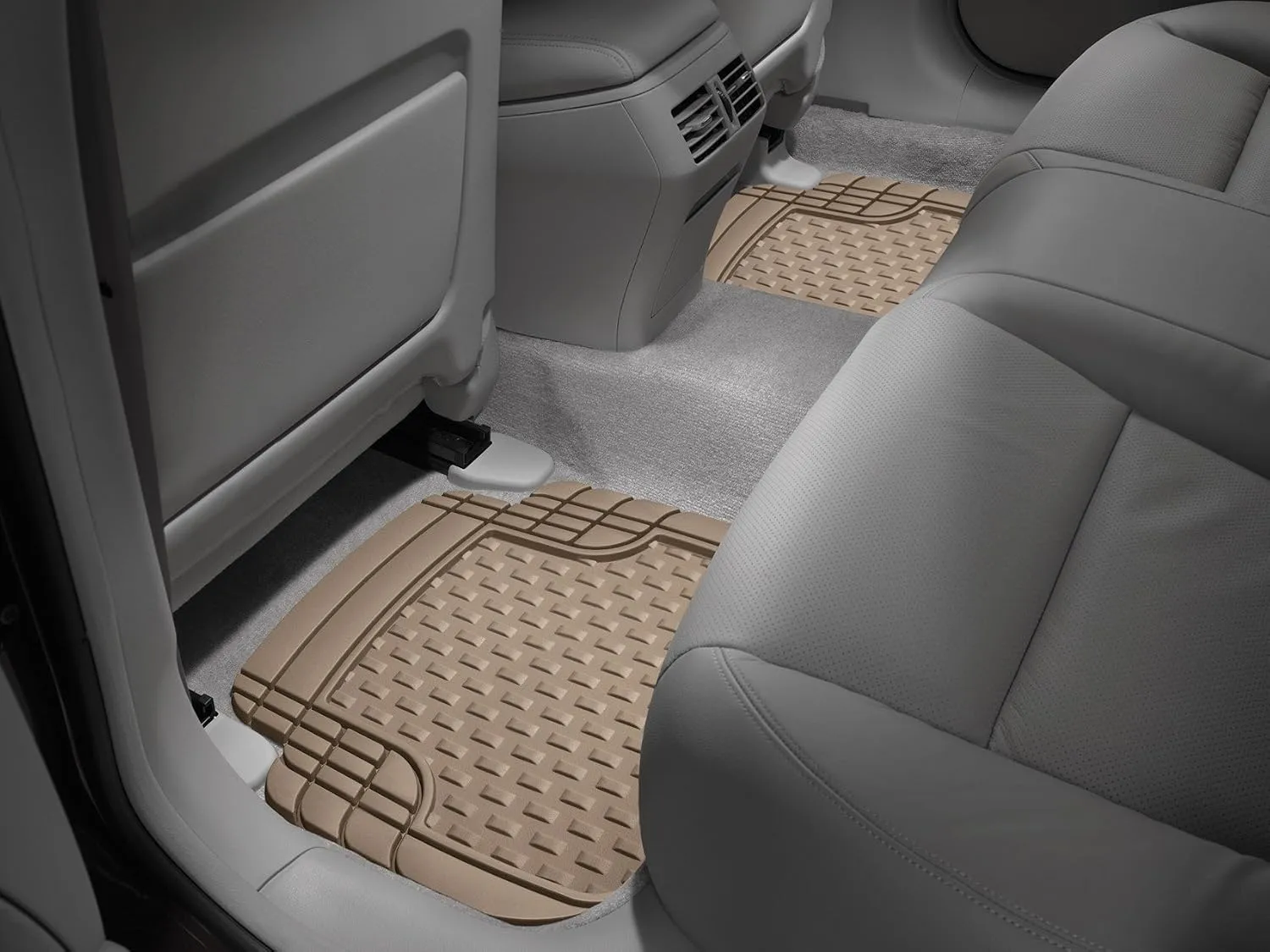
Best for: Most cars, when laser-measured liners aren't available or affordable
Semi-universal mats you trim to your footwell along molded guide lines. Trim-to-fit sits between cheap universal mats and expensive custom liners, and the trimming is the point — a mat cut to your car's footwell doesn't slide, and sliding is the actual safety issue with universal mats.
Pros
- Trims to a genuine fit rather than approximating one
- Raised edges contain water, slush and grit
- TPE compound stays flexible in cold rather than going rigid
- Far cheaper than laser-measured liners
Cons
- Trimming is permanent — measure carefully
- Not the exact coverage of a custom-molded liner
- Three-piece set may not cover a third row
Best for full coverage
2. WeatherTech Semi-Universal All-Weather Mats, 4-Piece (Black)
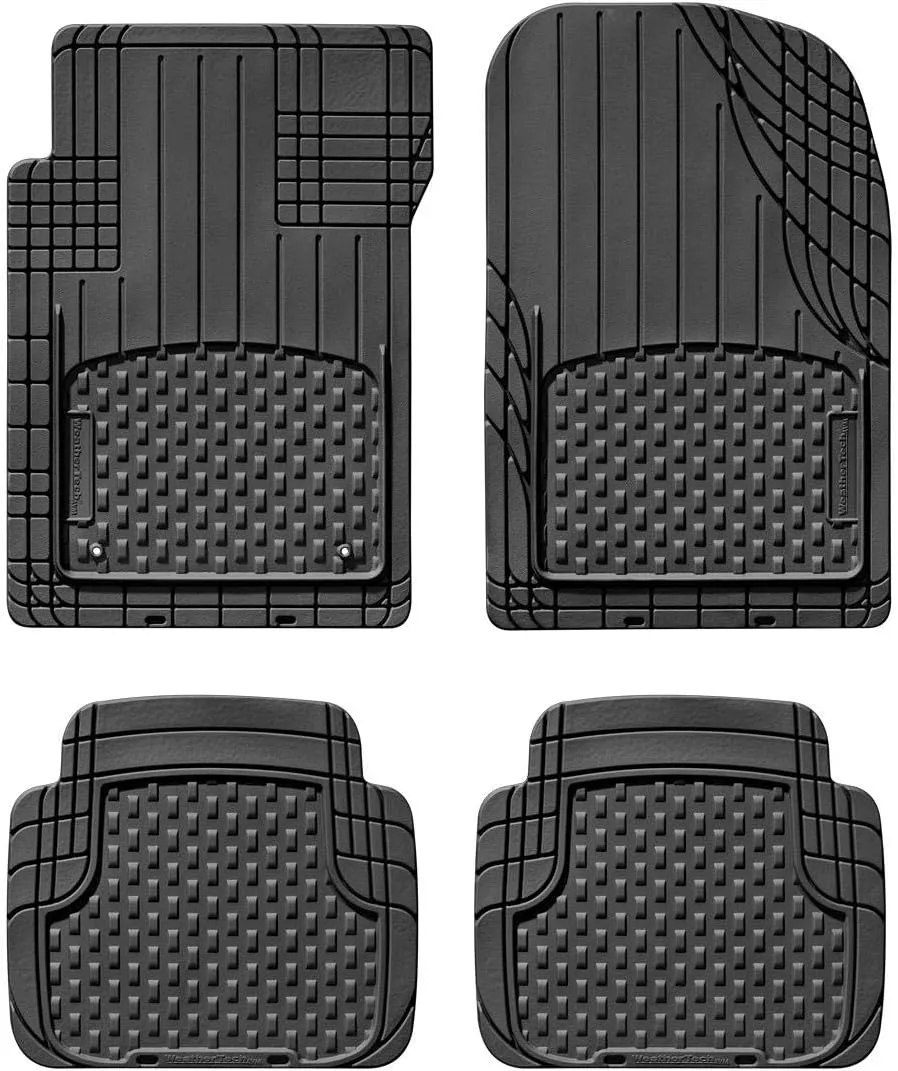
Best for: Covering front and rear footwells properly in a family car
The four-piece version, which matters if the back seats see actual use. Rear footwells get neglected in mat purchases and then take the worst of the wet shoes and dropped food. Buying a front-only set and regretting it later is the common pattern here.
Pros
- Covers rear footwells, which usually get worse abuse
- Same TPE compound and raised-edge design
- Black hides wear better than lighter colors
Cons
- Rear mats are generic in shape and fit less precisely
- More expensive than a front-only set
Keep them looking new
3. WeatherTech TechCare FloorLiner Cleaner & Protector Kit
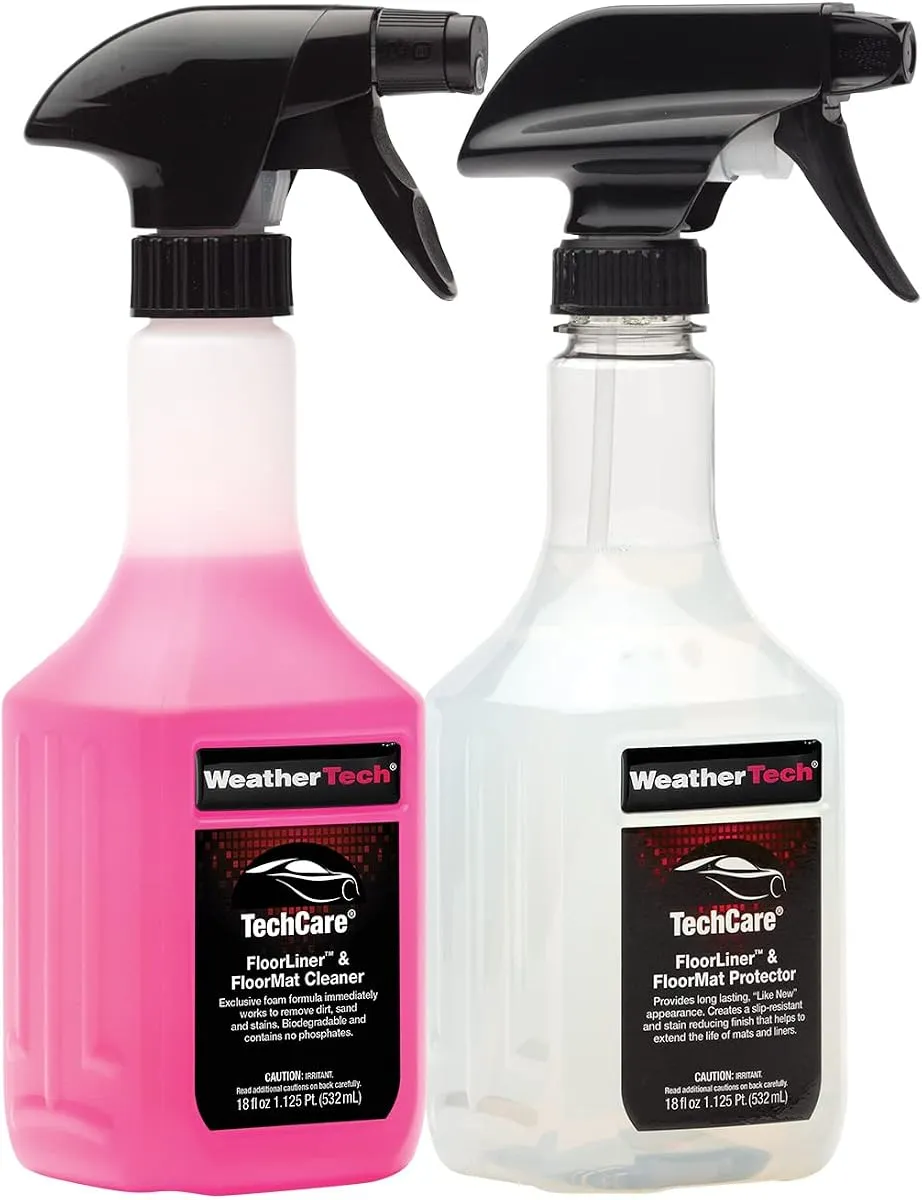
Best for: Stopping TPE and rubber liners going chalky gray
Rubber and TPE need different chemistry from carpet, and household cleaners leave them either chalky or slick. Slick is the dangerous outcome. This cleans and protects without a gloss finish, which is the specification that matters for anything under your pedals.
Pros
- Cleans without leaving a slippery finish
- Protector step slows UV-driven chalky graying
- Also works on cargo liners and trunk mats
Cons
- Wrong product for carpet mats
- Branded pricing — generic rubber cleaners cost less
Frequently asked questions
Are all-weather mats better than carpet mats?
For containing water, road salt and grit, clearly yes — that is what they exist for, and they protect the carpet underneath, which is expensive to replace. Carpet mats look and sound better in a nicer interior. Many people run all-weather liners through winter and carpet in summer.
Why are custom-fit floor liners so much more expensive?
They are laser-measured to a specific model and molded individually, so tooling costs are spread over one vehicle rather than every car on the road. The practical benefit is coverage up the footwell sides and a fit that cannot slide. Trim-to-fit gets most of the way there for much less.
Can floor mats be dangerous?
Yes, and this is the one genuine safety issue in the category. A mat that slides forward can trap the accelerator or block the brake. Never stack a new mat on top of an existing one, always use the factory retention hooks if your car has them, and replace any mat that no longer stays put.
Do I need the retention clips?
If your car has factory anchor points, use them without exception. They exist specifically to stop mats migrating toward the pedals. A mat that only stays in place through friction will eventually move, and the moment it matters is the moment you brake hard.
How do I stop rubber mats going chalky and gray?
Rinse far more thoroughly than feels necessary — most of what looks like permanent degradation is dried cleaner residue in the tread channels. UV exposure causes the rest, which a rubber-specific protector slows. Never use a silicone gloss dressing; a shiny mat under the pedals is a hazard.
Can I cut trim-to-fit mats myself?
Yes, and they are designed for it — molded guide lines show where to cut. Use sharp heavy scissors or a utility knife, cut on the conservative side of the line, and test fit repeatedly. You can always remove more material, and the cut is permanent.