Buying Guides
Best Car Seat Covers: Why Universal Rarely Fits
Universal covers are cut for an average seat nobody owns. What actually determines fit, why airbag compatibility isn't optional, and which type suits your problem.
Moshakha is reader-supported. When you buy through links on our site, we may earn an affiliate commission at no extra cost to you. How we make money.
At a glance
Grouped by the problem each type solves rather than by material. Prices move constantly, so we link out for live pricing rather than quoting figures that go stale.
| Product | Award | Best for | Rating | Jump to review |
|---|---|---|---|---|
| Motor Trend SpillGuard Waterproof Neoprene, full set | Best overall | Kids, dogs, wet gear — anything where liquid reaching the foam is the real fear | Details | |
| FH Group PU002114 Premium PU Leather, full set | Best appearance | Tidying worn cloth seats without the look of an obvious cover | Details | |
| FH Group Travel Master full set (airbag + split rear) | Best airbag-compatible full set | Cars with side airbags in the seat, which is most of them since the mid-2000s | Details | |
| FH Group 3D Air Mesh front set | Best for hot climates | Hot climates and long drives, where breathability beats every other property | Details | |
| FH Group Faux Leather waterproof front pair | Cheapest way to cover the seats that wear | Protecting only the driver's seat and passenger seat, which take nearly all the wear | Details |
Seat covers are one of the few car accessories where the honest answer starts with a caveat: the universal ones mostly don’t fit properly, and that’s structural rather than a quality problem.
Why universal doesn’t fit
“Universal” means cut to an averaged seat shape that no manufacturer actually builds. Bolster depth, headrest post spacing, backrest curvature and base width all vary between models — so a cover sized for everything is baggy in some places and stretched in others.
The gap is widest on sculpted or heavily bolstered seats, and narrowest on flat bench seats in older cars and work vehicles. If your seats have pronounced side bolsters, expect a universal cover to look approximately right rather than tailored.
You have two honest options: accept an imperfect fit at a reasonable price, or pay substantially more for a model-specific set. What doesn’t work is expecting the first to behave like the second.
The airbag question isn’t optional
Most cars built since the mid-2000s have side airbags mounted in the outer seat bolster. They deploy through a specific seam in the upholstery.
A cover that blocks that seam can prevent or misdirect deployment. Covers designed for airbag-equipped seats use a deliberately weakened seam that tears open under deployment force — that’s what “airbag compatible” actually describes.
Check this before anything else. Color, material and price are all preferences. This one isn’t.
Choose by the problem, not the material
Each type here is clearly best at one thing and clearly worst at another:
| Your actual problem | The type that solves it |
|---|---|
| Spills reaching the foam | Neoprene — genuinely waterproof |
| Seats look worn and tired | PU leather — closest to upholstery |
| Car is hot, seats are hotter | Mesh — the only breathable option |
| Only the front seats are worn | A front-only pair |
Buying neoprene because it was the top pick, when your actual complaint was summer heat, gets you a cover you’ll dislike more than the seats you were covering.
Vacuum before you fit
Grit trapped between a cover and the seat abrades the upholstery underneath every time anyone shifts their weight. That’s the one way covers genuinely damage the seats they were meant to protect, and it’s entirely preventable.
Vacuum the seat thoroughly first — including the seams and the gap where the backrest meets the base. The full routine is in cleaning fabric car seats, and if your seats are coated rather than fabric, leather seat care covers that.
Also make sure the seat is genuinely dry. A non-breathable cover over damp foam traps moisture where it can’t evaporate.
How we chose
Specification analysis — airbag seam compatibility, split-bench support, material behavior in heat and under liquid, and attachment method — plus aggregated long-term owner feedback weighted toward whether covers stay put after a few months of use. No lab testing, no paid placement.
What to expect after fitting
Covers settle. Retensioning after the first week is normal rather than a defect, once they’ve been sat on enough to find their shape.
If a cover still slides after that, the issue is usually attachment rather than size — sets that tuck into the seam between backrest and base and anchor there hold far better than ones relying on edge elastic alone.
The picks in detail
Best overall
1. Motor Trend SpillGuard Waterproof Neoprene, full set
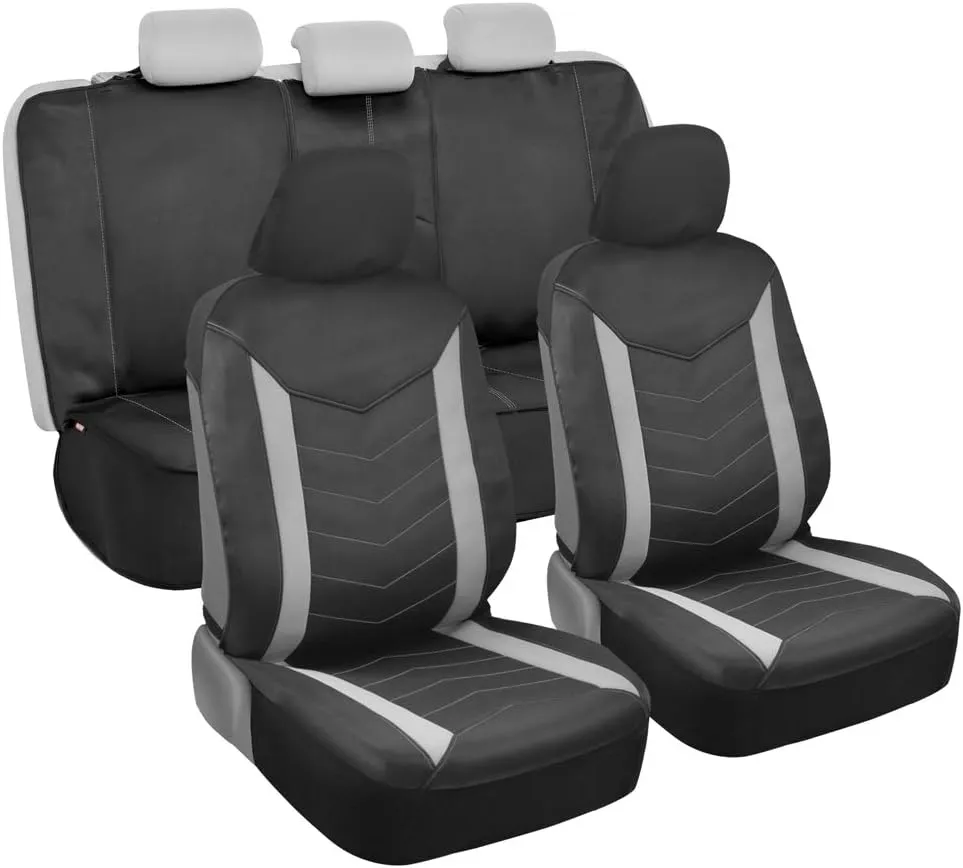
Best for: Kids, dogs, wet gear — anything where liquid reaching the foam is the real fear
Skip if: You want the seats to look factory; neoprene reads as a cover, not upholstery
Waterproof rather than water-resistant, which is the distinction that matters. Most fabric covers slow a spill down long enough for you to notice; neoprene stops it reaching the foam underneath. Once liquid is in seat foam it stays there for days and starts to smell, and no cover you buy afterwards fixes that.
Pros
- Genuinely waterproof, not merely water-resistant
- Split rear bench design works with folding seats
- Wipes clean rather than needing extraction
- Neoprene grips the seat, so it shifts less than slick fabric covers
Cons
- Warm against your back in summer — neoprene doesn't breathe
- Clearly reads as a cover rather than upholstery
Best appearance
2. FH Group PU002114 Premium PU Leather, full set
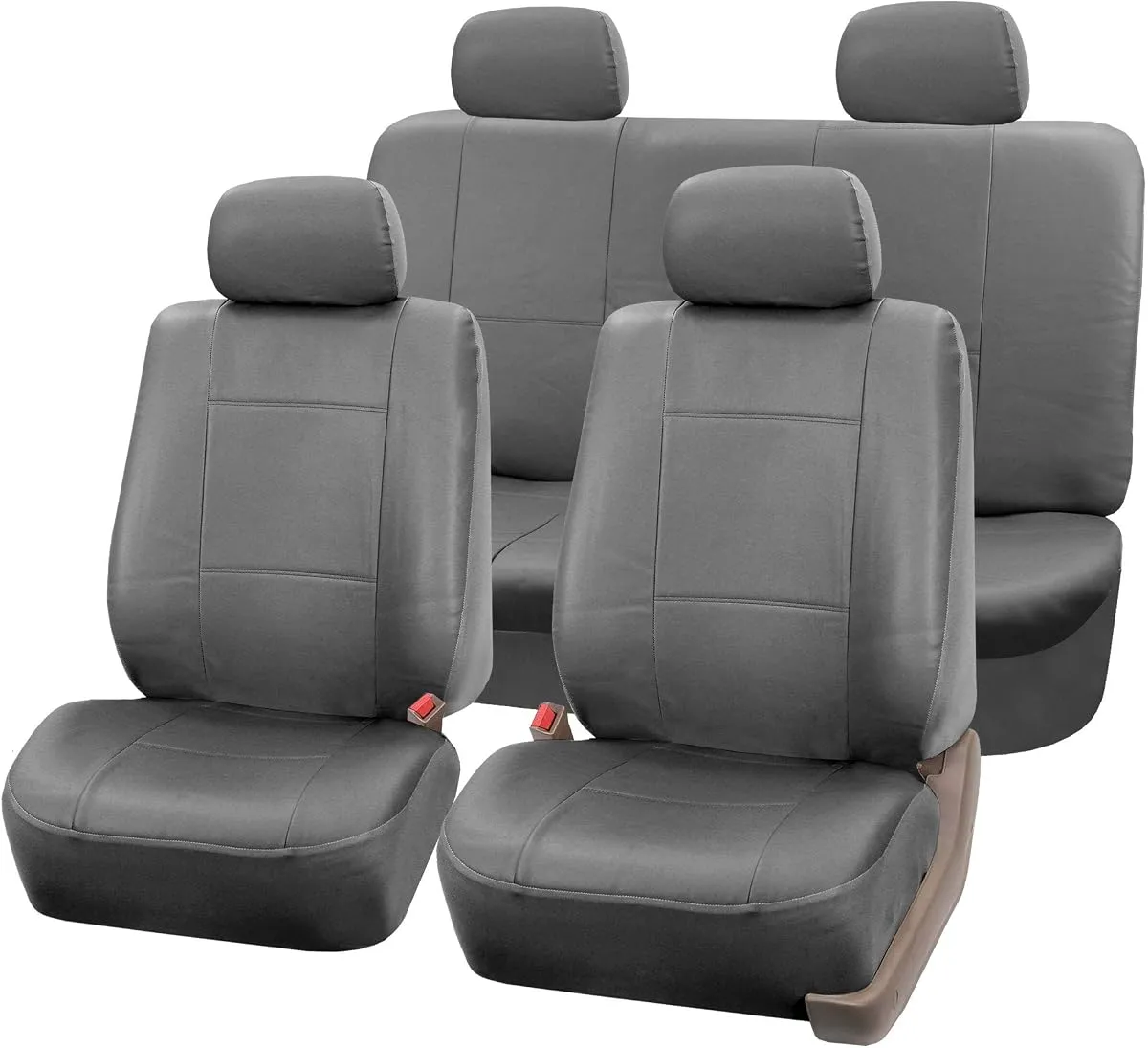
Best for: Tidying worn cloth seats without the look of an obvious cover
Skip if: Your car bakes in the sun — PU leather gets hot and can crack over years
The closest thing here to looking like upholstery rather than a cover. PU leather wipes clean easily and photographs well, which is why it dominates this category. The honest trade-off is heat: it gets hotter than fabric in summer, colder in winter, and the surface eventually cracks under sustained UV.
Pros
- Looks closer to upholstery than any other type here
- Wipes clean in seconds
- Hides worn or stained cloth underneath completely
Cons
- Hot in summer and cold in winter against your back
- PU surface cracks over years of sun exposure
- Slick surface means you slide more than on fabric
Best airbag-compatible full set
3. FH Group Travel Master full set (airbag + split rear)
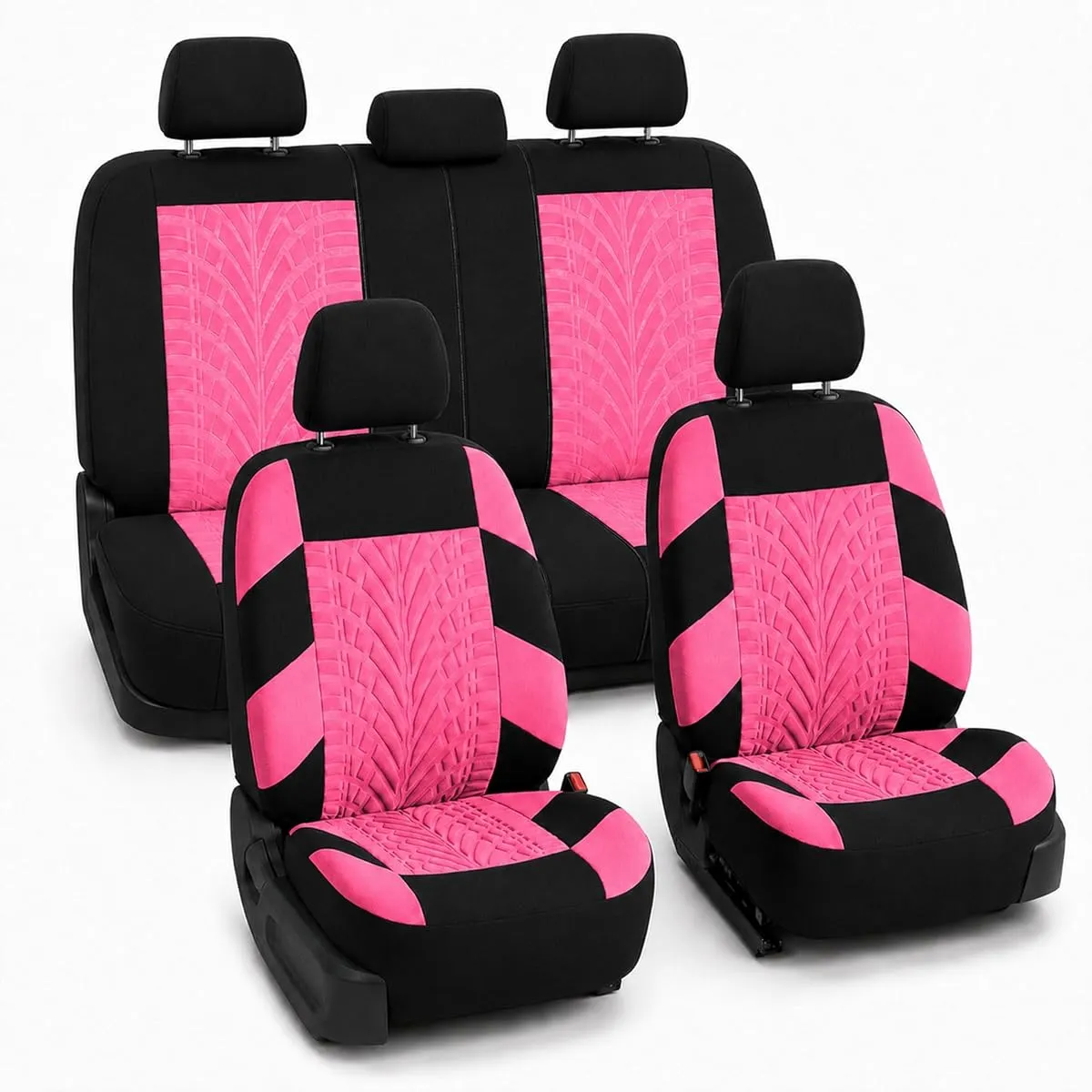
Best for: Cars with side airbags in the seat, which is most of them since the mid-2000s
Skip if: You want a specific color — this listing's variants differ significantly
Side airbags fire out of a seam in the outer seat bolster, and a cover that blocks that seam is a genuine safety problem rather than a fitment nuisance. Covers designed for it use a deliberately weakened seam that tears under deployment. This is the box worth checking before any other feature.
Pros
- Designed with a tear-away seam for seat-mounted side airbags
- Split rear bench accommodates folding seats properly
- Full set covers front and rear in one purchase
Cons
- Color variants under this listing vary a lot — check what you're ordering
- Universal cut still leaves loose areas on sculpted seats
Best for hot climates
4. FH Group 3D Air Mesh front set
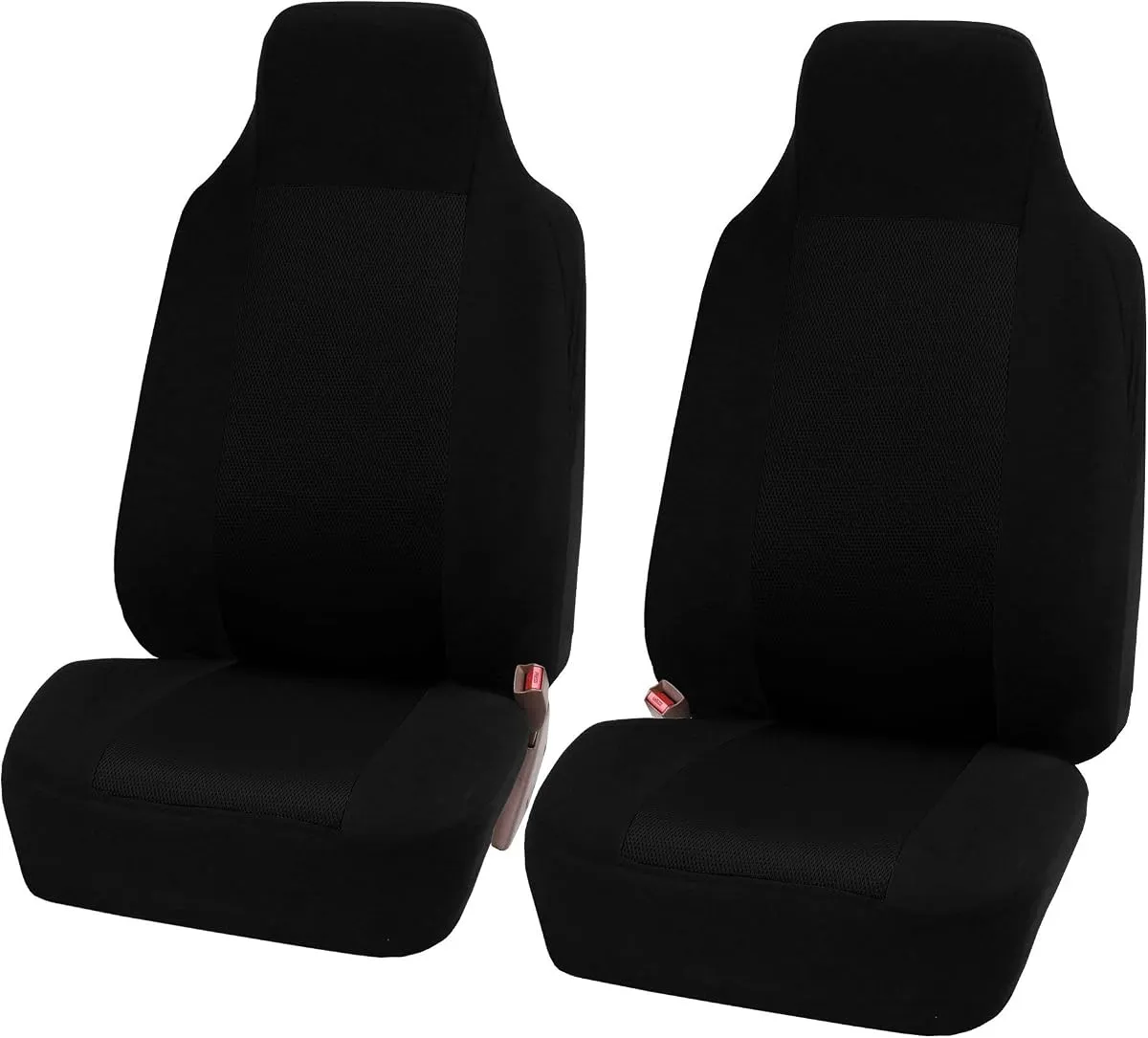
Best for: Hot climates and long drives, where breathability beats every other property
Skip if: Spills are your main concern — mesh passes liquid straight through
Mesh construction lets air move between your back and the seat, which is the one thing neoprene and PU leather both fail at. If your complaint about covers is that they made an already-hot car worse, this is the type that addresses it. It offers essentially no spill protection in exchange.
Pros
- Genuinely breathable on long drives in heat
- Front-only set is cheaper if the rear seats see little use
- Washable and quick to dry
Cons
- No meaningful spill protection — liquid passes through
- Front set only, so the rear stays uncovered
Cheapest way to cover the seats that wear
5. FH Group Faux Leather waterproof front pair
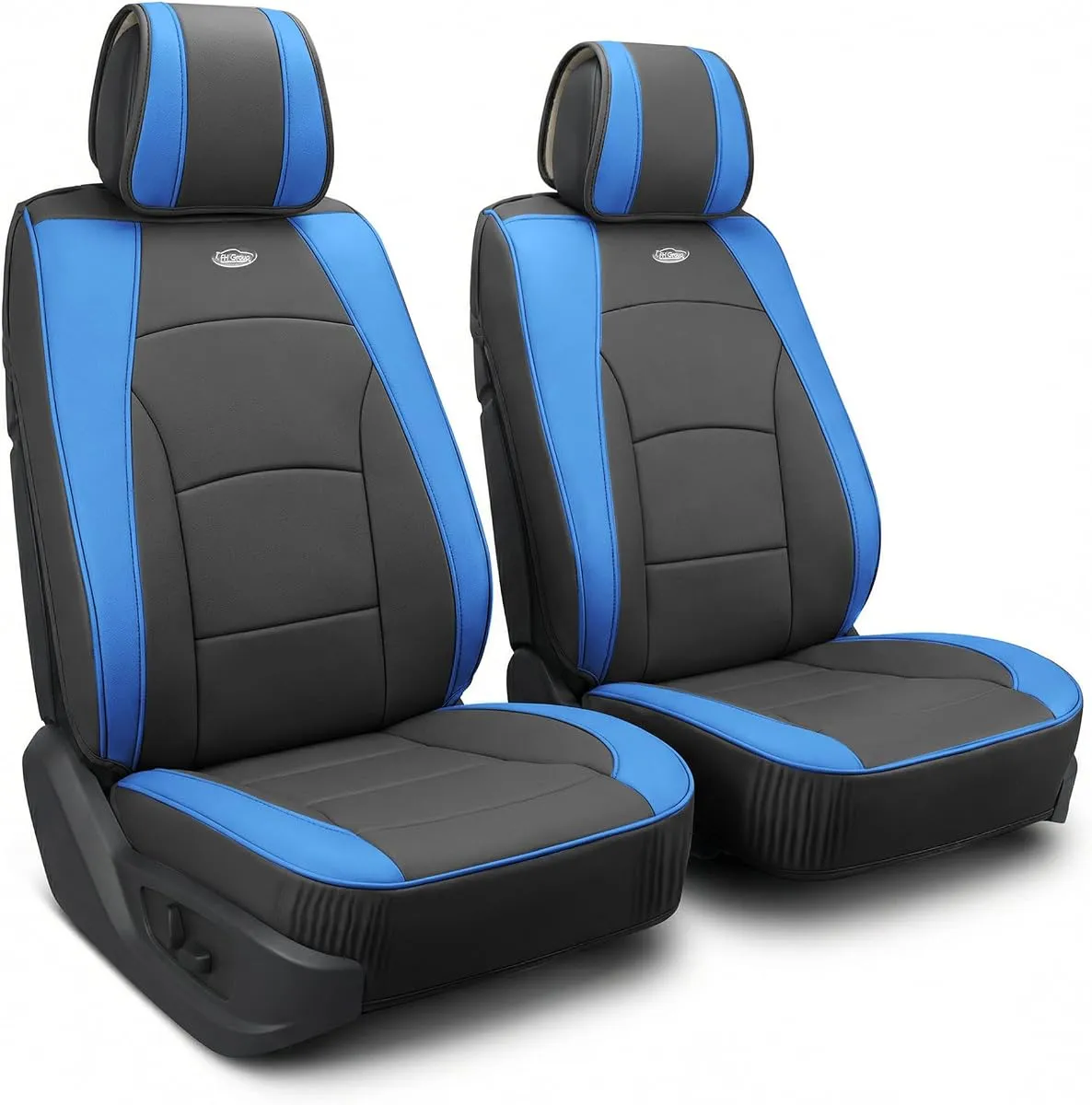
Best for: Protecting only the driver's seat and passenger seat, which take nearly all the wear
Skip if: You carry rear passengers regularly and want the whole cabin to match
A two-piece front set, which is the sensible economy for most cars. The driver's seat absorbs the overwhelming majority of wear — every entry, exit and mile — while rear seats in many cars stay close to new. Covering only what actually wears is a reasonable decision rather than a compromise.
Pros
- Covers the seats that genuinely wear, at the lowest cost here
- Waterproof faux leather wipes clean
- Easy one-person fitting
Cons
- Front and rear won't match if the rear is left bare
- Color options are bolder than most interiors want
Frequently asked questions
Why do universal seat covers fit so badly?
Because 'universal' means cut for an averaged seat shape that no manufacturer actually builds. Seat bolster depth, headrest post spacing, backrest curvature and base width all vary between models, so a cover sized to fit everything is loose in some places and strained in others. Sculpted or heavily bolstered sport seats are where the gap between universal and acceptable is widest.
Are seat covers safe with side airbags?
Only if they're explicitly designed for it. Seat-mounted side airbags deploy through a seam in the outer bolster, and a cover that blocks that path can prevent or misdirect deployment. Covers built for airbag-equipped seats use a deliberately weakened seam that tears open under deployment force. This isn't a fitment preference — it's the one specification worth checking before anything else.
Neoprene, PU leather or mesh — which should I choose?
Choose by the problem, not the look. Neoprene if liquid reaching the foam is the fear — it's the only genuinely waterproof option here. PU leather if you want worn seats to look tidy and you're willing to accept summer heat. Mesh if the car is hot and breathability matters more than spill protection. Each is clearly best at one thing and clearly worst at another.
Will seat covers damage my existing upholstery?
Not usually, but two things are worth watching. Grit trapped between the cover and the seat abrades the upholstery underneath every time you move, so vacuum before fitting. And a non-breathable cover over damp fabric traps moisture against the foam — if the seat has ever been wet, make sure it's fully dry before covering it.
How do I stop seat covers sliding around?
Fit is most of it, but attachment matters too. Look for covers that tuck into the seam between backrest and base and anchor there, rather than relying only on elastic around the edges. Neoprene grips better than slick PU leather. Retensioning after the first week is normal — covers settle once they've been sat on a few times.
Can I machine wash seat covers?
Fabric and mesh covers usually yes, on a cold gentle cycle, air-dried rather than tumbled — heat shrinks them and then they never fit again. Neoprene and PU leather are wipe-clean rather than machine wash. Check the label, because shrinking a cover in a hot dryer is the most common way people ruin an otherwise fine set.