Reviews
Motor Trend SpillGuard Review: Waterproof, Not Water-Resistant
Most fabric covers slow a spill down. Neoprene stops it reaching the foam — which is the difference that matters, because wet seat foam stays wet for days.
Moshakha is reader-supported. When you buy through links on our site, we may earn an affiliate commission at no extra cost to you. How we make money.
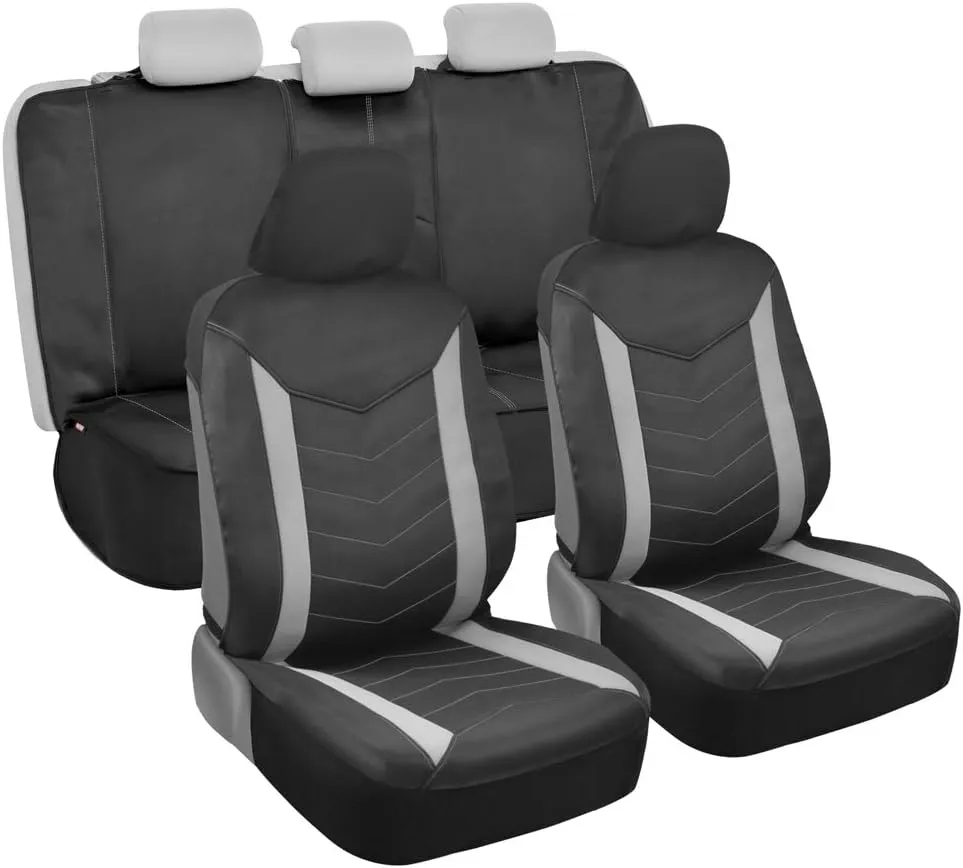
Pros
- Genuinely waterproof, not merely water-resistant
- Split rear bench design works with folding seats
- Wipes clean rather than needing extraction
- Neoprene grips the seat, so it shifts less than slick fabric covers
Cons
- Warm against your back in summer — neoprene doesn't breathe
- Clearly reads as a cover rather than upholstery
Seat covers get bought for appearance and chosen for price. The useful way to decide is which specific failure you’re insuring against.
Waterproof is a different claim from water-resistant
Most fabric covers are water-resistant. They slow a spill down long enough that you can mop it up — assuming you’re in the car when it happens.
Neoprene is closed-cell. It doesn’t pass liquid at all. The spill sits on the surface until someone wipes it, whether that’s in thirty seconds or an hour.
That distinction only matters because of what’s underneath.
The foam is what you’re protecting
Car seat foam is open-cell — it absorbs liquid readily and releases it slowly. Inside a closed car there’s no airflow beneath the seat and very little above.
A genuinely soaked seat can stay damp internally for days. Warm, dark, enclosed and damp is precisely the condition that produces a musty interior, and once liquid is in the foam, surface cleaning doesn’t reach it. That’s the same reason over-wetting is the main mistake when cleaning fabric seats, covered in cleaning fabric car seats.
So the question isn’t really “will this cover stain.” It’s “will liquid reach the part I can’t clean.”
Check the airbag seam before anything else
Most cars built since the mid-2000s have side airbags in the outer seat bolster, and they deploy through a specific seam.
A cover that blocks that path can prevent or misdirect deployment. This is a safety specification rather than a fitment preference, and it’s worth confirming for your specific vehicle before worrying about color or fit.
The fuller argument, including why universal covers fit the way they do, is in best car seat covers.
The trade you’re making
Neoprene doesn’t breathe. That’s not a defect — it’s the same property that makes it waterproof.
On a long summer drive you’ll feel it against your back. If your actual complaint about your car is that it’s too hot, this is the wrong product and a 3D mesh cover is the right one, at the cost of all the spill protection.
It also reads as a cover. Nobody will mistake it for upholstery. If appearance is the priority, PU leather gets closer.
Should you buy it?
Yes, if kids, dogs or wet gear are the reason you’re shopping. That’s the exact case this solves, and it solves it properly rather than partially.
No, if you want the seats to look factory, or your car is already uncomfortably warm in summer.
Vacuum thoroughly before fitting, whichever you choose — grit trapped between a cover and the seat abrades the upholstery underneath every time anyone shifts their weight. That’s the one way covers damage the seats they were meant to protect.
Frequently asked questions
What's the difference between waterproof and water-resistant here?
Time, and where the liquid ends up. A water-resistant fabric cover slows a spill enough that you can mop it before it soaks through — if you're there. Neoprene is a closed-cell material that doesn't pass liquid at all, so the spill sits on top until you wipe it. That matters because the failure you're insuring against is liquid reaching the foam, which is the part you can't clean.
Why is wet seat foam such a problem?
Car seat foam is open-cell, so it absorbs readily and releases slowly, and inside a closed car there's almost no airflow to dry it. A genuinely soaked seat can stay damp internally for days. Warm, dark, enclosed and damp is exactly the condition that produces a musty interior — and once it's in the foam, surface cleaning doesn't reach it.
Will these fit my car?
They're a universal cut, so expect a good approximation rather than a tailored fit — tighter on flat bench seats, looser on heavily bolstered sport seats. Check airbag compatibility specifically: most cars since the mid-2000s have side airbags in the outer seat bolster, and a cover that blocks that seam is a safety problem rather than a fitment one.
Are they hot in summer?
Yes, and that's the honest trade. Neoprene is closed-cell, which is exactly why it's waterproof and exactly why it doesn't breathe. On a long drive in heat you'll notice it against your back. If your main complaint about your car is that it's already too hot, a mesh cover is the better choice and gives up the spill protection.
Can you machine wash them?
Neoprene is wipe-clean rather than machine wash — which is mostly a feature, since the point is that spills stay on the surface. Check the label before putting them in a machine, and never tumble dry covers of any material; heat shrinks them and then they never fit again.