Buying Guides
Windshield Sun Shades: Heat Claims vs What You Feel
Percentage heat-reduction claims are unverifiable marketing. What a shade genuinely protects, why fit beats material, and the three worth recommending.
Moshakha is reader-supported. When you buy through links on our site, we may earn an affiliate commission at no extra cost to you. How we make money.
At a glance
Three picks, because these are the three shapes worth choosing between — a longer list would be repeating one of them. Prices move constantly, so we link out for live pricing rather than quoting figures that go stale.
| Product | Award | Best for | Rating | Jump to review |
|---|---|---|---|---|
| EcoNour Windshield Sun Shade Umbrella (UPF50, 58x32in) | Best overall | Anyone who stopped using their old shade because folding it was annoying | Details | |
| Magnelex Double-Layer Sunshade (63 x 33.8in) | Best for large windshields | SUVs, trucks and vans, where smaller shades leave uncovered glass at the edges | Details | |
| Motor Trend Accordion Folding Windshield Sun Shade | Best simple folding option | A no-mechanism shade that stores flat and has nothing to break | Details |
Sun shade listings compete on percentage claims — “blocks 99% of UV”, “reduces interior temperature by 40 degrees”. There’s no standard test behind any of those numbers, and the conditions they’d depend on vary enormously.
Here’s what’s actually true and checkable.
What a shade genuinely does
It blocks direct sunlight from landing on the dashboard, steering wheel and front seats. That’s the real benefit, and it’s substantial — those surfaces reach temperatures far above cabin air, which is why a steering wheel can be genuinely painful to hold while the air inside merely feels hot.
The cabin air temperature difference is smaller than the surface temperature difference. A shaded car is still hot when you get in; the dash and wheel just aren’t scorching, and the interior plastics aren’t taking UV damage while you’re at work.
That’s a worthwhile outcome. It’s just not the outcome the percentage claims imply.
Coverage beats material
This is the one specification you can verify yourself, and it’s more predictive than any reflectivity claim.
A shade that leaves four inches of glass uncovered along the top edge is admitting direct sunlight onto the dashboard, and it doesn’t matter how reflective the covered portion is. Sunlight through the gap lands on the dash exactly as it would with no shade there at all.
Measure your windshield before ordering. Size labels like “large” mean nothing consistent between brands, and the difference between a compact windshield and a full-size SUV aperture is enormous.
The specification nobody lists: whether you’ll use it
The most effective sun shade is the one that’s actually deployed.
Accordion shades are durable and cheap and store flat — and a significant number of people stop using them, because folding one in a hot car park with an armful of shopping is genuinely annoying. An umbrella shade that collapses one-handed in three seconds gets used every time.
If you’ve owned a shade before and stopped using it, that’s the variable to optimise for, and it’s why pick one leads this list despite having a mechanism that can eventually fail.
Reflective side out, but don’t agonise
Standard advice is reflective side toward the glass, so energy is turned back before it enters the cabin. The reasoning is sound.
In practice the difference is far smaller than coverage and consistent use. Some reversible shades deliberately offer a dark side for winter, when you want the opposite effect.
How we chose
Specification analysis — actual dimensions against common windshield apertures, construction layers, deployment mechanism and storage format — plus aggregated long-term owner feedback weighted toward whether people were still using the shade a year later. No lab testing, and we don’t repeat unverifiable temperature-reduction claims.
The related problem: glare from a glossy dash
If you’re buying a shade because your dashboard is baking, it’s worth knowing that a glossy dashboard dressing makes the other summer problem worse — reflecting low sun up into the windshield as a haze across your view.
Matte protectant, applied thinly, avoids it. That’s covered in dashboard dressing and windshield glare.
The picks in detail
Best overall
1. EcoNour Windshield Sun Shade Umbrella (UPF50, 58x32in)
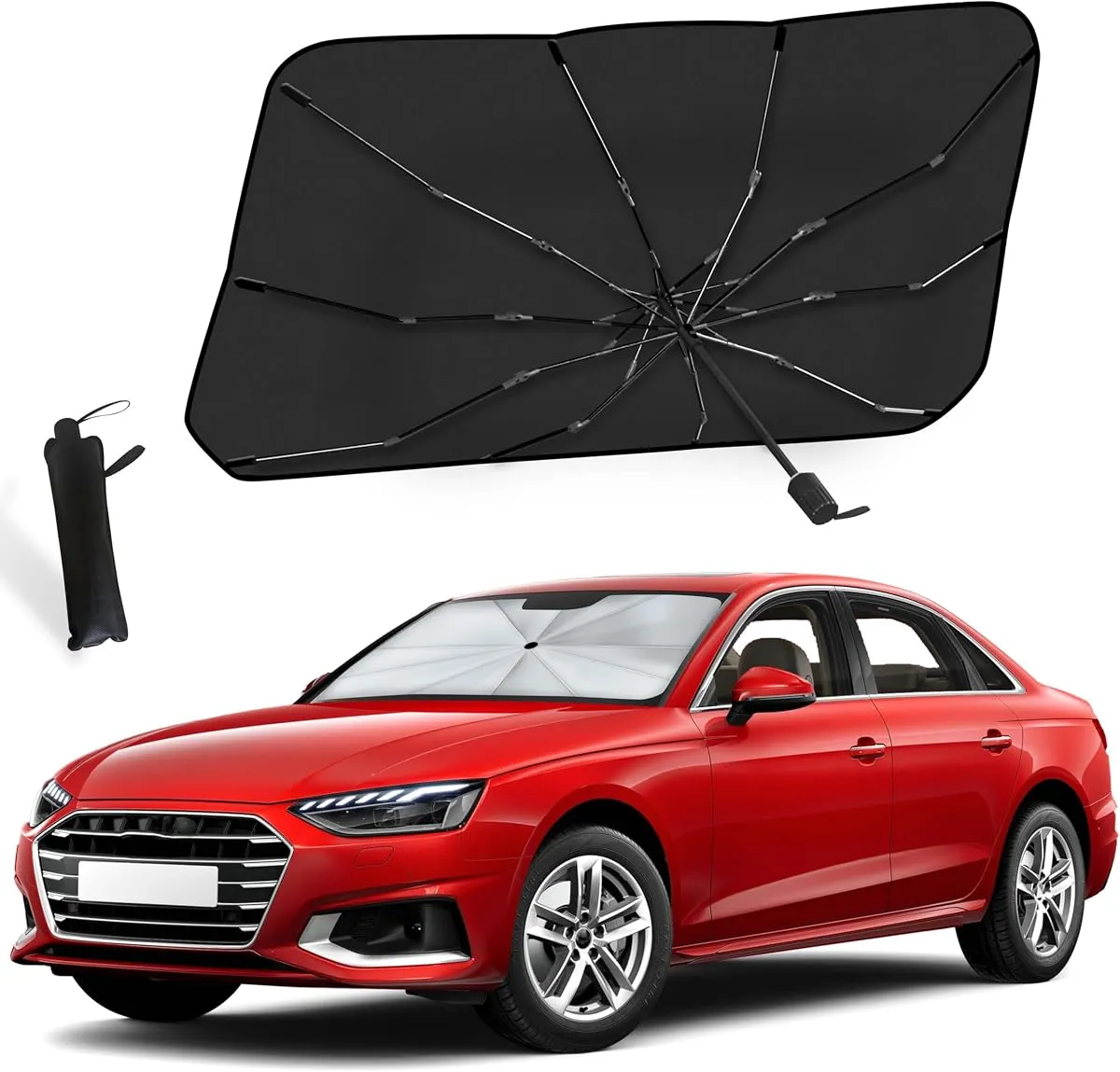
Best for: Anyone who stopped using their old shade because folding it was annoying
Skip if: Your windshield is unusually steeply raked — umbrella ribs suit upright glass better
The umbrella mechanism solves the actual reason people abandon sun shades: an accordion shade takes both hands and a bit of wrestling to stow, so on a hot day in a car park it gets skipped. This opens and collapses in seconds one-handed, and a shade you actually deploy beats a technically better one you don't.
Pros
- Opens and stows in seconds, one-handed
- Spring ribs hold it taut against the glass rather than sagging
- Collapses to a slim rod that fits a door pocket
- Large enough for most sedans and mid-size SUVs
Cons
- Rib mechanism is the part that eventually fails
- Fits steeply raked windshields less neatly than a folding shade
Best for large windshields
2. Magnelex Double-Layer Sunshade (63 x 33.8in)
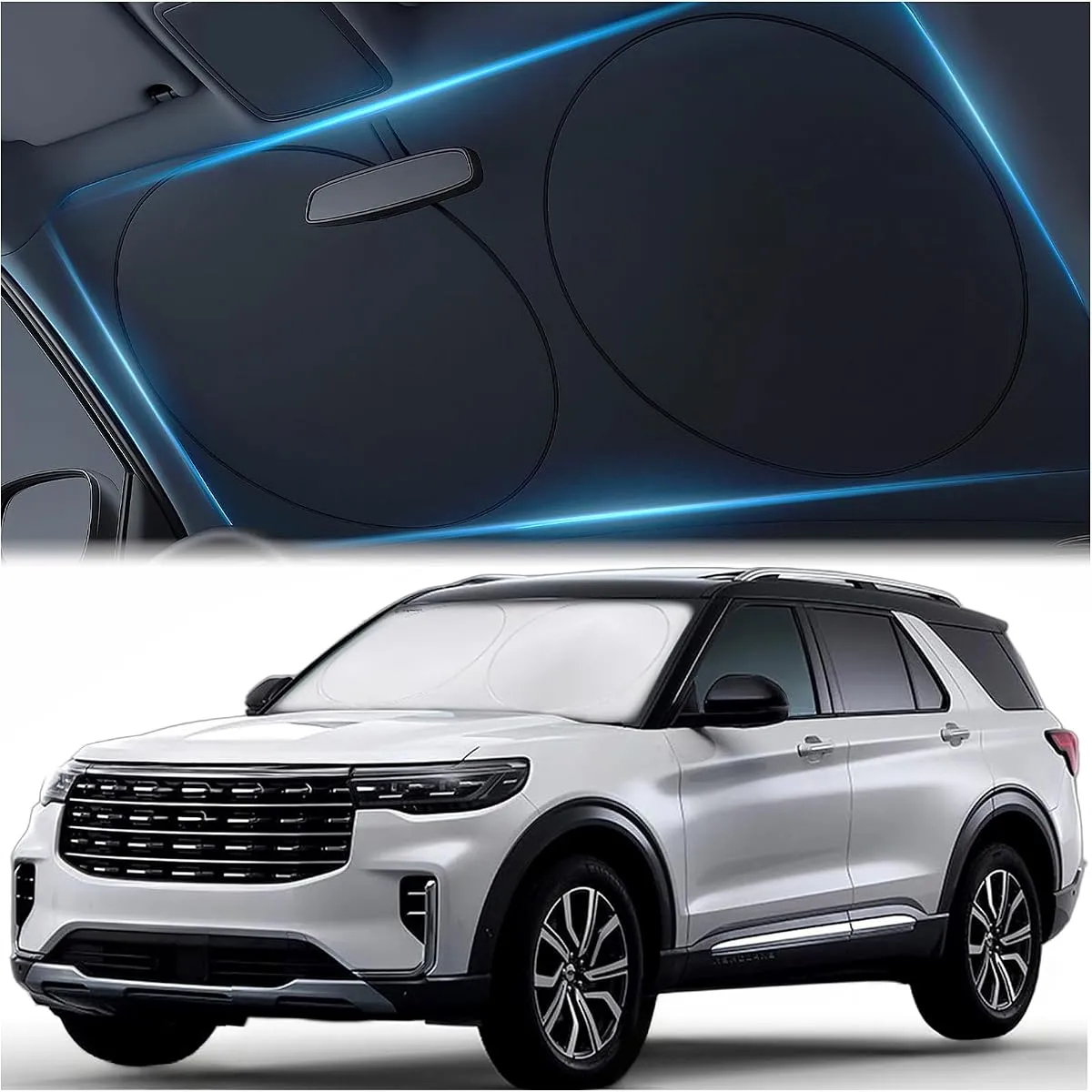
Best for: SUVs, trucks and vans, where smaller shades leave uncovered glass at the edges
Skip if: You drive a compact — this will be more shade than the aperture takes
Coverage is the specification that actually correlates with a cooler cabin, and it's the one most easily checked. A shade that leaves four inches of glass exposed along the top is admitting sunlight directly onto the dash regardless of how reflective the covered part is. At 63 inches this fits the apertures smaller shades don't.
Pros
- Genuinely large enough for full-size SUV and truck windshields
- Double-layer construction rather than a single reflective sheet
- Folds flat, so it stores behind a seat rather than in the footwell
Cons
- Accordion folding is more fiddly than the umbrella type
- Too large for compact cars — measure before ordering
Best simple folding option
3. Motor Trend Accordion Folding Windshield Sun Shade
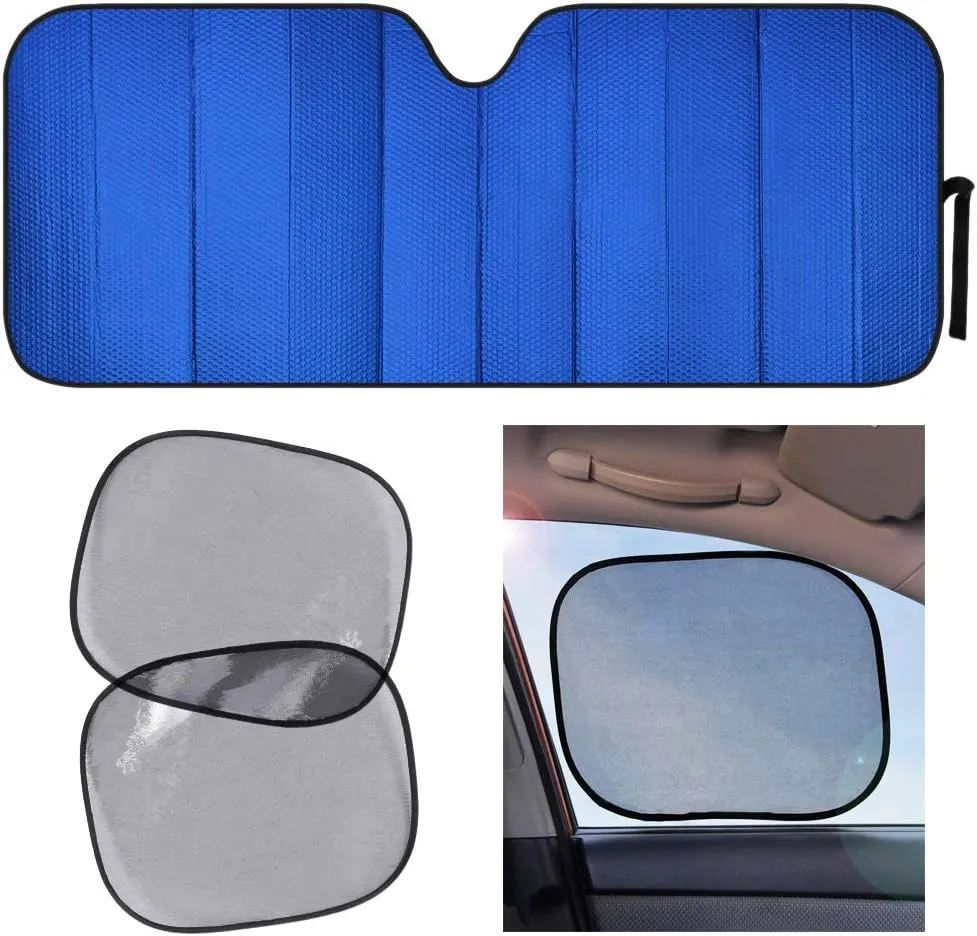
Best for: A no-mechanism shade that stores flat and has nothing to break
Skip if: The folding is what put you off shades before — pick one solves that instead
The traditional accordion shade, and there's a reasonable case for it: no ribs, no springs, nothing that can fail. It stores flat behind a seat and costs less than the mechanisms above. The trade-off is the handling that makes people stop using shades in the first place.
Pros
- No mechanism to fail — the most durable design here
- Stores completely flat behind a seat
- Often bundled with side window shades
Cons
- Two-handed to fold and stow, which is why shades get abandoned
- Accordion panels crease and lose their shape over time
Frequently asked questions
Do windshield sun shades actually reduce interior temperature?
Yes, meaningfully — but treat specific percentage claims with suspicion, because there's no standard test behind them and conditions vary enormously. What a shade reliably does is block direct sunlight from hitting the dashboard, steering wheel and front seats, which is where the worst surface temperatures build. The cabin air temperature difference is smaller than the difference in how hot the dash is to touch.
What actually matters most when choosing one?
Coverage and whether you'll use it. A shade that leaves glass exposed at the edges lets sunlight straight onto the dash regardless of its material claims, so measure your windshield rather than trusting a size label. After that, honestly assess whether you'll deploy it every time — the most effective shade is the one that's actually up.
Umbrella style or accordion folding?
Umbrella if convenience is what determines whether you use it, which for most people it is. Accordion if durability matters more and you don't mind the handling — there's no mechanism to fail, and it stores completely flat. Umbrella shades suit upright windshields best; very steeply raked glass is where folding shades still fit more neatly.
Does a sun shade protect the dashboard from cracking?
It helps considerably. UV exposure and heat cycling are what degrade dashboard plastics and vinyl over years, and blocking direct sun addresses both. It won't stop the process entirely — a parked car still gets hot — but for a car that lives outdoors it's the cheapest meaningful protection available for a surface that's expensive to replace.
Silver or black side out — does it matter?
Reflective side facing the glass is the standard advice, and the reasoning is sound: reflect energy back out before it enters the cabin rather than absorbing it inside. Some reversible shades offer a dark side deliberately for winter warmth. In practice the difference is smaller than coverage and consistent use, so it's not worth much anxiety.
Do I need side window shades too?
For heat, the windshield is by far the largest aperture and the priority. Side shades matter more for passenger comfort and for keeping direct sun off rear-seat occupants — particularly children — than for overall cabin temperature. Several windshield shades bundle them, which is a reasonable way to get both without a separate purchase.