Blog
Dashboard Dressing and Windshield Glare
A glossy dashboard reflects sunlight straight into the windshield, worst in low winter sun. Why finish matters more than the product category.
Glossy dashboard dressing is sold on how the interior looks parked. The problem shows up while driving, at a specific time of day, in a way most people never connect back to the bottle.
The mechanism
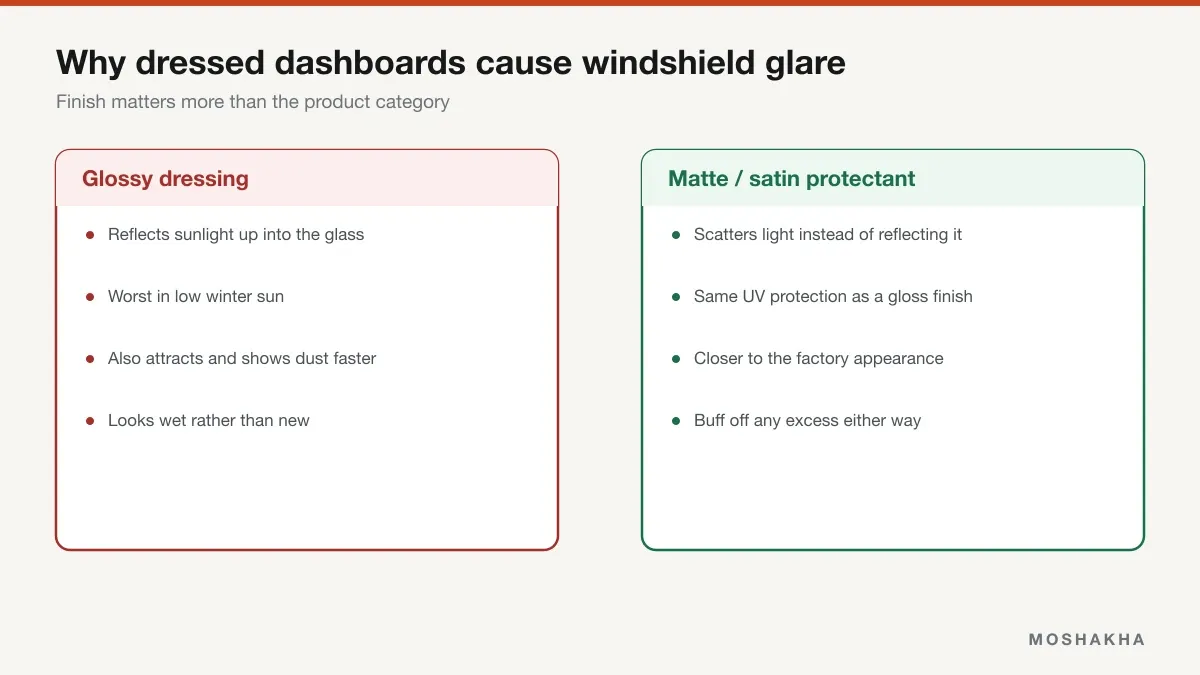
A high-gloss dashboard is a weak mirror. Sunlight hitting it reflects upward onto the inside of the windshield, where it spreads into a bright haze across your forward view.
It’s barely noticeable at midday with the sun overhead. It’s very noticeable when the sun is low — early morning, late afternoon, and essentially all day through winter, which is also when the road ahead is most likely to be wet and reflective already.
A matte or satin finish scatters that light instead of reflecting it. Same dashboard, same sun, no haze.
Gloss isn’t protection
This is the part worth being clear about: UV protection comes from the inhibitors in the formula, not from the shine. Gloss is produced by the carrier and silicone content, and it’s an aesthetic decision.
A matte protectant with UV inhibitors protects the dashboard exactly as well as a glossy one. You’re not trading durability for visibility — you’re choosing a finish.
See the interior protectant from our guideThe dust problem is the same problem
A dashboard that gets dusty within two days of being dressed usually has excess product left on it. Un-buffed dressing stays slightly tacky, and tacky surfaces hold dust electrostatically.
Apply a thin coat, then buff the excess off with a clean dry microfiber. You keep the protection, lose the tackiness, and lose most of the reflection at the same time.
Windshield film has the same origin
That greasy haze on the inside of the glass that smears rather than wipes away is partly off-gassed silicone and solvent from interior products, condensing on the coldest surface in the car. Applying dressing sparingly reduces it directly.
If it’s already there, it needs a proper two-towel glass routine to remove rather than redistribute — that’s covered in glass cleaning mastery.
The practical answer
Use an interior detailer with UV protection and no added gloss agents, apply thinly, and buff off the excess. The dashboard looks like the manufacturer intended, stays protected, and stops throwing light at your windshield every time the sun drops.
Which products belong on which interior surfaces is covered in interior detailer vs all-purpose cleaner.
Frequently asked questions
Does dashboard dressing actually cause windshield glare?
A glossy one does. A shiny dashboard acts as a weak mirror, reflecting sunlight up onto the inside of the windshield where it appears as a bright haze across your forward view. It's most noticeable in low sun — early morning, late afternoon, and through winter when the sun sits low all day. A matte or satin finish scatters that light instead of reflecting it.
Is matte dressing less protective than glossy?
No. UV protection comes from the inhibitors in the formula, not from how shiny the finish is. Gloss is an aesthetic choice produced by the carrier and silicone content. A matte protectant with UV inhibitors protects the same dashboard just as well, without the reflection.
Why does my dashboard get dusty so quickly after dressing it?
Usually because excess product was left on the surface. A dressing that hasn't been buffed down stays slightly tacky, and tacky surfaces hold dust electrostatically. Applying a thin coat and buffing the excess off with a clean dry microfiber gives the same protection without turning the dash into a dust magnet.
Can dashboard dressing damage the windshield?
Not directly, but it contributes to interior windshield film. In a hot car, silicone and solvent content can off-gas and condense on the inside of the glass, producing the greasy haze that smears when you wipe it. That's a real cause of poor night visibility, and it's another argument for applying dressing sparingly.
What should I use if I don't want any shine at all?
An interior detailer with UV protection but no added gloss agents. It cleans and protects without changing the finish, leaving the dashboard looking like the factory intended. This is the sensible default for anyone who drives into low sun regularly.