Buying Guides
Best Car Interior Cleaning Products: One Per Job
Dashboards, leather, glass, carpet and mats all want different chemistry. Our picks for each surface — and the all-purpose cleaners worth avoiding.
Moshakha is reader-supported. When you buy through links on our site, we may earn an affiliate commission at no extra cost to you. How we make money.
At a glance
Organized by surface, because the wrong chemistry on a dashboard is permanent.
| Product | Award | Best for | Rating | Jump to review |
|---|---|---|---|---|
| ThisWorx Car Vacuum 2.0 | Start here | The dry pass that has to happen before any liquid touches the interior | Details | |
| Chemical Guys Total Interior Cleaner & Protectant | Best all-surface | Dashboards, door cards, console and trim in a single pass | Details | |
| Chemical Guys Leather Cleaner & Conditioner Kit | Best for leather | Coated leather seats that have gone shiny and gray at the bolsters | Details | |
| Invisible Glass Premium Aerosol Glass Cleaner | Best for interior glass | The oily film on the inside of the windshield that normal cleaner smears | Details | |
| WeatherTech TechCare FloorLiner Cleaner & Protector Kit | Best for rubber mats | Rubber and TPE floor liners that have gone chalky and gray | Details |
Microfiber is where we started, because it is the category where marketing drifts furthest from reality. Interiors are the category where getting it wrong is permanent.
A towel used badly leaves a streak you can wipe away. An ammonia cleaner on a UV-coated dashboard, or a silicone dressing baked into vinyl over a summer, is not reversible. So this guide is organized by surface rather than by ranking — these products are not competing with each other.
How we chose
Specification analysis — pH, ammonia and silicone content, and material compatibility with automotive plastics, coated leather and TPE — combined with aggregated long-term owner feedback. We have not lab-tested these and don’t claim to have. No brand paid for placement.
The five surfaces
Every interior job falls into one of these, and each wants different chemistry:
| Surface | Wants | Never use |
|---|---|---|
| Carpet + upholstery | Dry extraction first, then minimal moisture | Soaking — the underlay traps it |
| Hard trim, dash, console | Matte, UV-safe, low-silicone cleaner | Gloss dressings, household sprays |
| Coated leather | pH-balanced cleaner, then conditioner | Alkaline cleaners, saddle soap |
| Interior glass | Ammonia-free, low-pile towel | Anything ammonia-based near tint |
| Rubber / TPE liners | Rubber-specific cleaner + protector | Anything leaving a slick finish |
The rule that saves your dashboard
Never wipe dry dust off a hard surface. Blow it off, brush it, or vacuum it first.
This matters most on piano-black trim, which is the most scratch-prone surface in a modern car. Dragging dry dust across gloss black plastic fills it with fine scratches that are effectively uncorrectable without polishing.
It is the same principle as the exterior: dry contact plus grit equals scratches. We cover the full sequence in our interior detailing guide.
What we deliberately left out
Air fresheners. They mask smells while the cause continues. Persistent interior odour is almost always damp carpet, something under a seat, or a neglected cabin air filter — and a cabin filter is cheap enough that replacing it should be the first move, not the last.
All-in-one “interior detailer” sprays that promise shine. Shine on a dashboard is the problem, not the goal.
Steam cleaners. They work, but they are easy to misuse on trim adhesives and electronics, and this is not the category to learn on.
Where to go next
- The full sequence, in order: how to clean a car interior properly
- Mats and liners specifically: how to clean car floor mats
- The vacuum in depth: ThisWorx car vacuum review
- Interior glass without streaks: streak-free car glass
The picks in detail
Start here
1. ThisWorx Car Vacuum 2.0
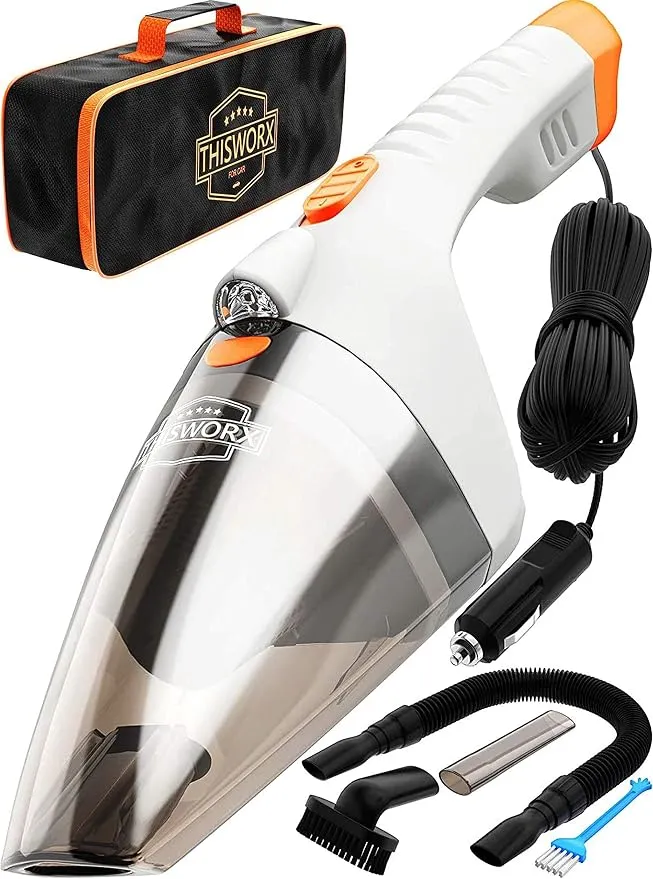
Best for: The dry pass that has to happen before any liquid touches the interior
A corded 12V handheld with a dual HEPA filter, LED and flexible nozzle. Corded is the right call for a car vacuum — cordless units fade exactly when you reach the awkward footwell. This is the highest-selling car accessory on Amazon for a reason, though it is a budget tool and behaves like one.
Pros
- Corded means no fade partway through a job
- Flexible nozzle and crevice tool reach seat rails
- Washable filters, so no consumable cost
- Cheap enough that the bar is easy to clear
Cons
- Suction is modest against a household canister vacuum
- 16ft cord needs the 12V socket live — some cars cut it with ignition off
- Build quality is budget; treat it as a consumable
Best all-surface
2. Chemical Guys Total Interior Cleaner & Protectant
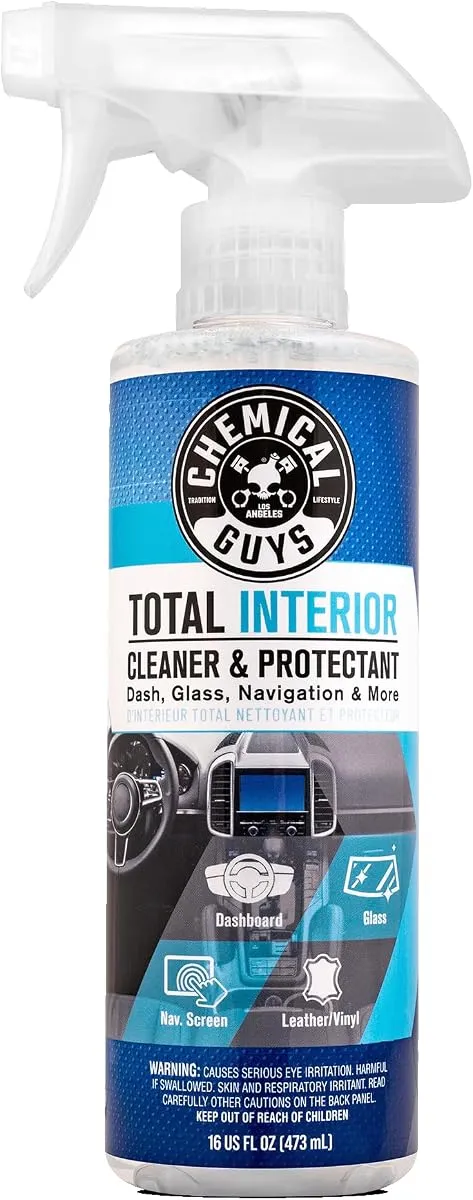
Best for: Dashboards, door cards, console and trim in a single pass
One bottle that handles most hard interior surfaces without leaving the greasy silicone film that causes windshield glare. That matters more than it sounds — a dashboard dressed with a heavy gloss product reflects into the glass and becomes a genuine visibility problem on a low sun.
Pros
- Matte finish, so no reflection into the windshield
- Covers dash, door cards, console and most trim
- Does not attract dust the way gloss dressings do
Cons
- Not a substitute for a dedicated leather conditioner
- Heavy soiling needs a second pass
- Fragrance is strong in a closed car
Best for leather
3. Chemical Guys Leather Cleaner & Conditioner Kit
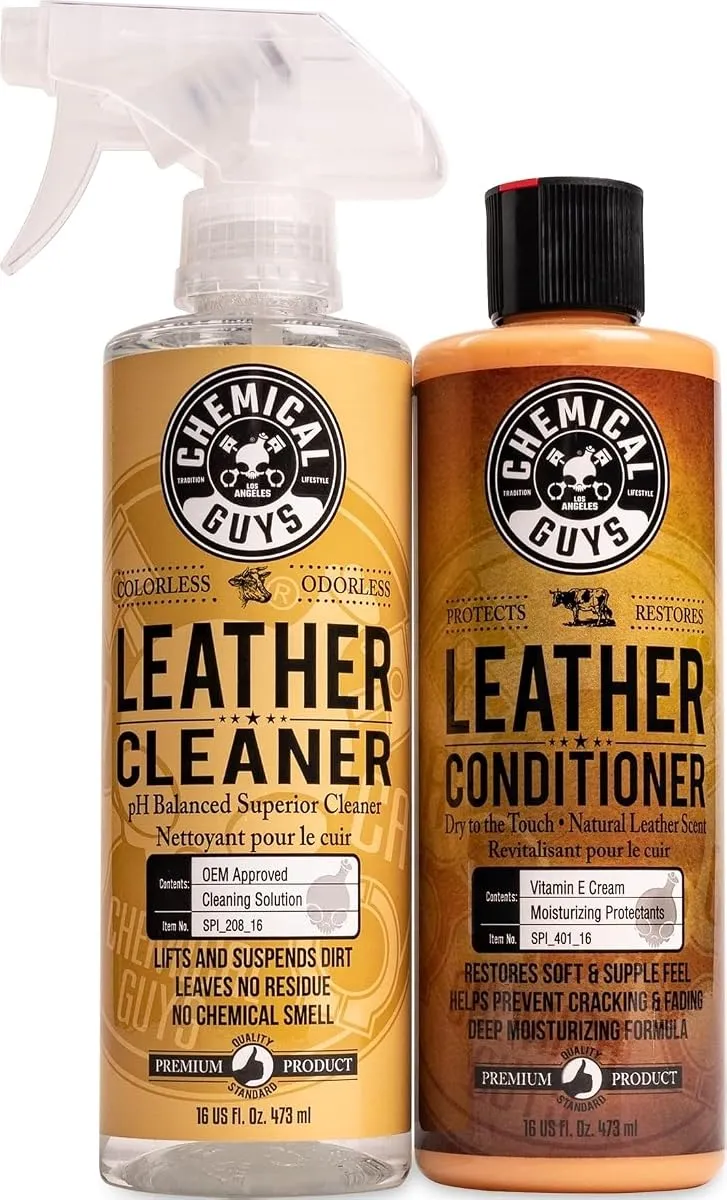
Best for: Coated leather seats that have gone shiny and gray at the bolsters
A two-step kit: clean first, condition second. The order matters — conditioning over trapped grime seals dirt into the grain. Most modern car 'leather' is heavily coated, so a pH-balanced cleaner is doing surface work rather than feeding the hide, whatever the marketing says.
Pros
- Two-step approach actually removes soil before conditioning
- pH-balanced, safe on coated automotive leather
- Non-greasy finish — no slippery seats
Cons
- Two bottles and two passes is slower than a combined spray
- Coated leather cannot be 'fed', so expect appearance not restoration
Best for interior glass
4. Invisible Glass Premium Aerosol Glass Cleaner
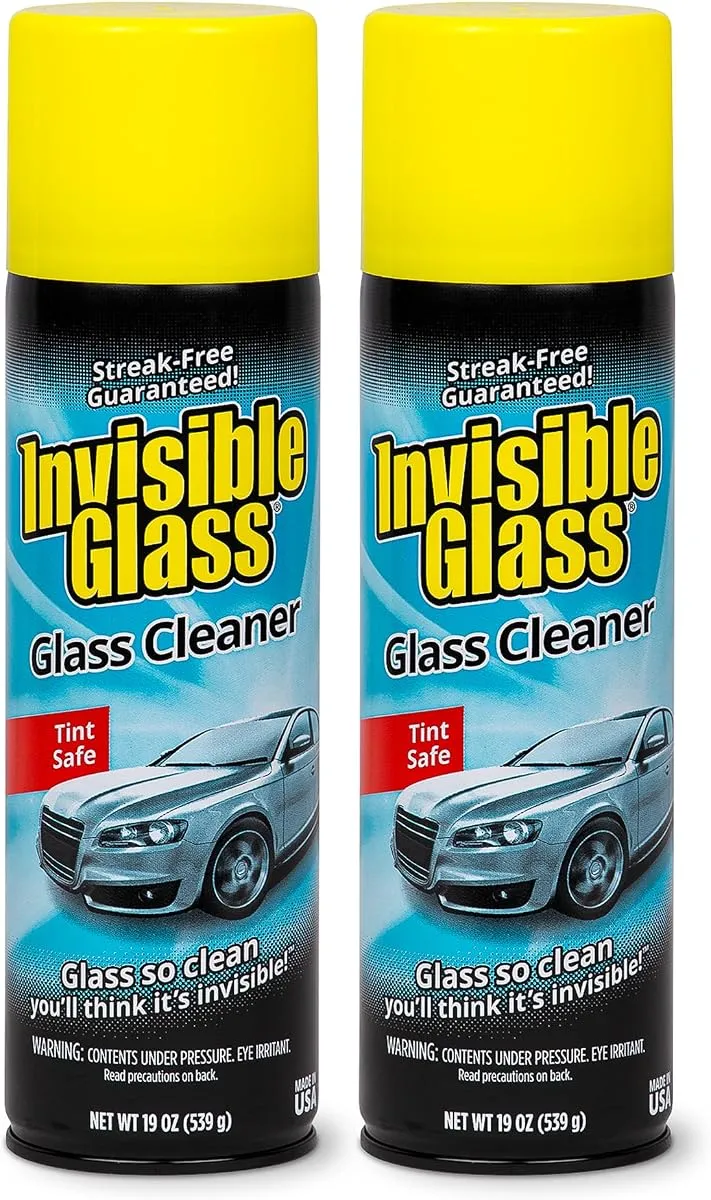
Best for: The oily film on the inside of the windshield that normal cleaner smears
Ammonia-free and tint-safe, which is the specification that matters — ammonia degrades aftermarket tint and interior plastics over time. The aerosol delivers a fine, even mist that cuts the plasticiser haze interior glass accumulates, and which pump sprays tend to push around.
Pros
- Ammonia-free, so safe on tint and interior plastics
- Cuts the interior plasticiser film most cleaners smear
- Fine aerosol mist gives even coverage
Cons
- Aerosol overspray reaches trim — mask or spray onto the towel
- More expensive per ounce than a concentrate
Best for rubber mats
5. WeatherTech TechCare FloorLiner Cleaner & Protector Kit
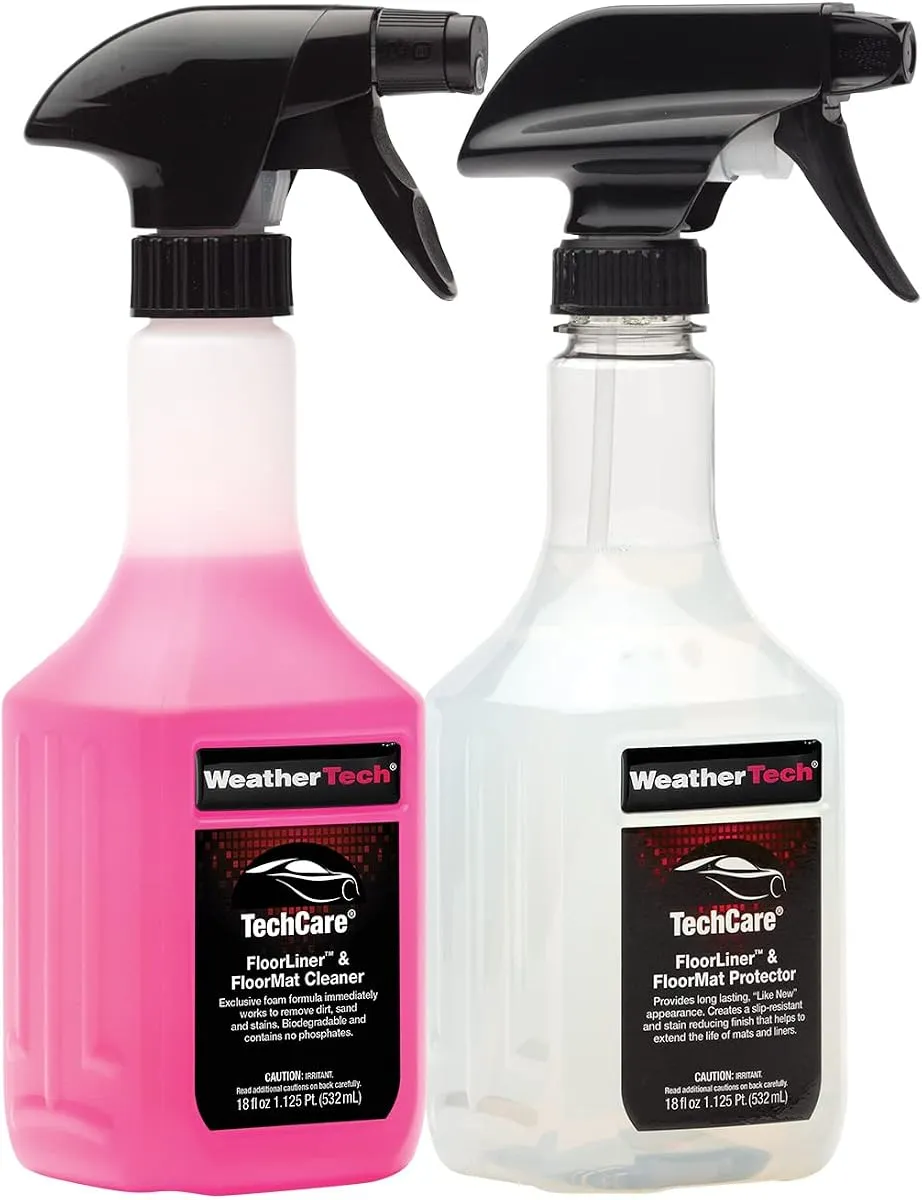
Best for: Rubber and TPE floor liners that have gone chalky and gray
Rubber and thermoplastic liners need different chemistry from carpet, and household cleaners leave them either chalky or slick. Slick is the dangerous outcome — a glossy liner under the pedals is a real hazard. This is formulated to clean and protect without leaving a slippery finish.
Pros
- Restores TPE and rubber without a slippery gloss
- Protector step slows the chalky gray return
- Works on cargo liners and trunk mats too
Cons
- Wrong product for carpet mats — buy a carpet cleaner for those
- Priced as a branded kit; generic rubber cleaners cost less
Frequently asked questions
Can I use household cleaners inside my car?
Avoid them. Many contain ammonia or aggressive solvents that damage the UV coatings on automotive plastics, cause dashboards to become brittle or discolored, and harm window tint. Car interiors sit in direct sun at high temperatures, so the coatings protecting them matter more than in a home.
What order should I clean a car interior in?
Dry before wet, top to bottom, glass last. Vacuum and dust from the headliner downward first, then hard surfaces, then fabric or leather, then interior glass. Cleaning glass first guarantees you will have to do it twice, because everything afterwards mists or splashes it.
Why does my dashboard cause windshield glare?
Silicone gloss dressings. They look impressive for a day, then reflect into the glass on low sun and become a genuine visibility problem, while attracting dust so the surface looks worse within a week. A matte interior cleaner avoids the whole issue.
Do leather conditioners actually feed the leather?
Not on most modern cars. Almost all automotive leather is heavily coated with a polyurethane finish, so a conditioner is working on that coating rather than on the hide beneath. It still improves appearance and slows wear on the coating, but the 'feeding' language is largely marketing.
Is an all-in-one interior cleaner good enough?
For dashboards, door cards and console trim, yes. It is not the right product for leather seats, interior glass, or rubber liners, all of which want specific chemistry. One bottle covers roughly 70% of the interior; the other 30% is where the wrong product does lasting damage.
Should I use a corded or cordless car vacuum?
Corded, for most people. Cordless units are more pleasant to handle but tend to fade partway through a full interior, which is exactly when you have reached the awkward areas. A 12V corded unit runs as long as you need, provided your car keeps the socket live with the ignition off.