Blog
How to Clean a Car Interior Properly, in the Right Order
Interior detailing has an order that saves redoing work: top down, dry before wet, screens last. Plus what not to put on your dashboard.
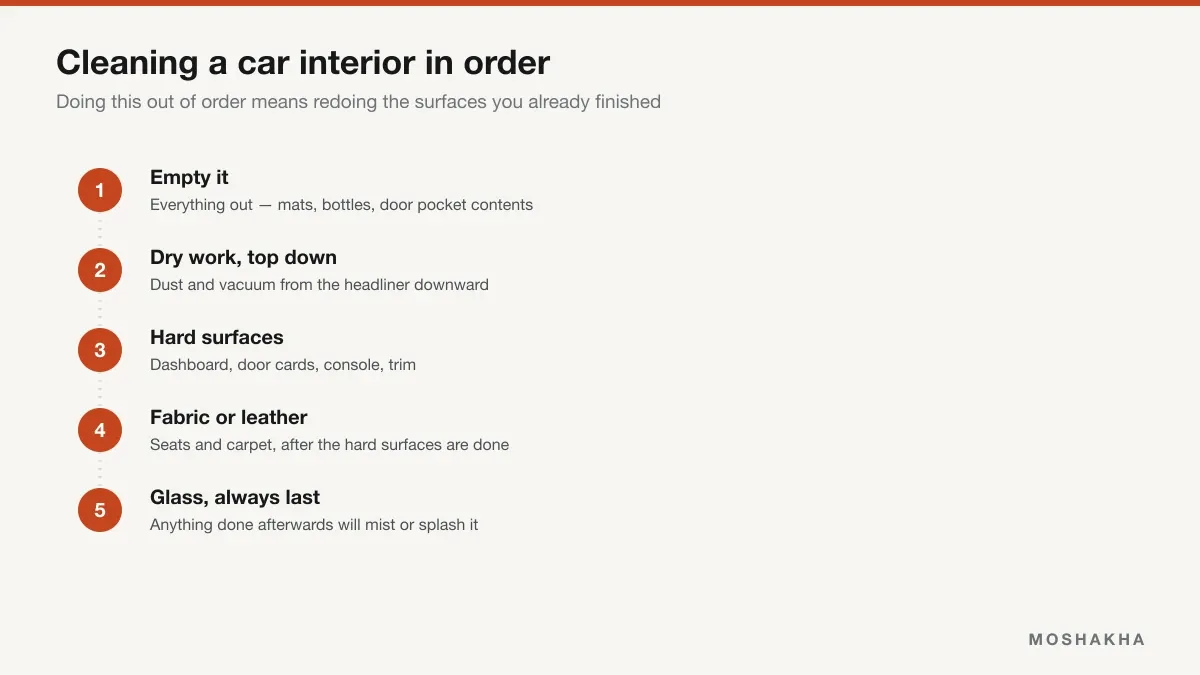
Interior detailing rewards doing things in the right order more than it rewards expensive products. Most of the frustration — cleaning the same surface twice, dust settling on what you just finished — comes from sequence, not technique.
The order
1. Empty it. Everything out — mats, bottles, the contents of door pockets. You cannot clean around objects.
2. Dry work first, top down. Dust and vacuum starting at the headliner and working downward. Gravity means everything you dislodge lands on surfaces below, so anything you clean before the surfaces above it will need doing again.
3. Compressed air or a soft brush into the gaps. Vents, seat rails, seams, around the gear selector. Blow it out onto the floor, then vacuum.
4. Hard surfaces. Dashboard, door cards, console, trim.
5. Fabric or leather. Seats and carpet.
6. Interior glass, last. Always last. Anything you do afterwards will mist or splash it.
The dry-dust rule
Never wipe dry dust off a hard surface. Blow it off, brush it off, or vacuum it — then wipe.
This matters most on piano-black trim, which is the most scratch-prone surface in a modern car. Wiping dry dust across gloss black plastic is the fastest way to fill it with fine scratches, and it’s essentially uncorrectable without polishing.
Same principle as the exterior: dry contact plus grit equals scratches.
What to use on the dashboard
A damp low-pile microfiber towel and a mild interior cleaner covers almost everything.
What to avoid: greasy silicone dressings. They look impressive for a day, then:
- Create glare on the inside of the windshield, which is a genuine visibility problem
- Attract dust, so the surface looks worse within a week
- Can go sticky in heat
- Build up unevenly over repeated applications
A matte, clean finish is safer to drive with and much easier to maintain.
Screens and switchgear
Screens get a dedicated, clean, dry low-pile towel and nothing else — no cleaner sprayed directly, ever. Most infotainment screens have anti-glare coatings that solvents damage permanently.
For switchgear and buttons, a slightly damp towel wrapped over a fingertip gives you control without pushing moisture into the electronics.
Fabric and carpet
Vacuum thoroughly before introducing any moisture. Wet dirt becomes mud and works deeper into the fibers.
For stains, work from the outside inward so you don’t spread the edge, and blot rather than scrub. Use as little liquid as will do the job — over-wetting carpet means moisture trapped in the underlay, which is one of the most common causes of persistent damp smells.
Smells
Air fresheners mask. Find the source instead:
- Damp carpet or underlay, often from a door seal or a spill
- Something under a seat
- The cabin air filter, which is cheap, frequently neglected, and responsible for a surprising share of stubborn interior odours
Towels
Keep interior towels separate from paint towels and from glass towels. An interior towel picks up dressings and cleaners that will streak glass immediately, and a towel that has been on carpet carries grit you don’t want anywhere near piano black.
Microfiber care covers the laundering categories, and our towel guide covers which pile depth suits which surface.
Finish with the glass — streak-free method here.
Frequently asked questions
What order should I clean a car interior in?
Top down and dry before wet: remove everything loose, then dust and vacuum from the headliner downward, then clean hard surfaces, then fabric or leather, then interior glass last. Cleaning glass first guarantees you will have to do it twice.
What should I use on a car dashboard?
A damp low-pile microfiber towel and a mild interior cleaner. Avoid greasy silicone dressings — they create glare on the windshield, attract dust, and can become sticky in heat. A matte finish is both safer to drive with and easier to maintain.
How do I clean piano-black trim without scratching it?
Blow or brush the dust off first, never wipe it dry. Piano black is the most scratch-prone surface in a modern car, and wiping dry dust across it is exactly how it gets covered in fine scratches. Then use a clean, damp, plush low-pile towel with no pressure.
Can I use household cleaners inside my car?
Avoid them. Many contain solvents or ammonia that damage the UV coatings on automotive plastics, cause dashboards to become brittle or shiny, and harm window tint. Automotive interior cleaners are formulated for these materials and cost little.
How do I get rid of a smell rather than covering it?
Find the source — usually damp carpet, spilled liquid under a seat, or the cabin air filter. Air fresheners mask smells while the cause continues. Replacing a cabin filter is cheap and fixes a surprising proportion of persistent interior odours.