How-To Guides
Removing Pet Hair From Car Seats (Vacuums Alone Fail)
Pet hair weaves into carpet pile rather than sitting on it, which is why suction alone doesn't lift it. The agitation-first order that actually clears it.
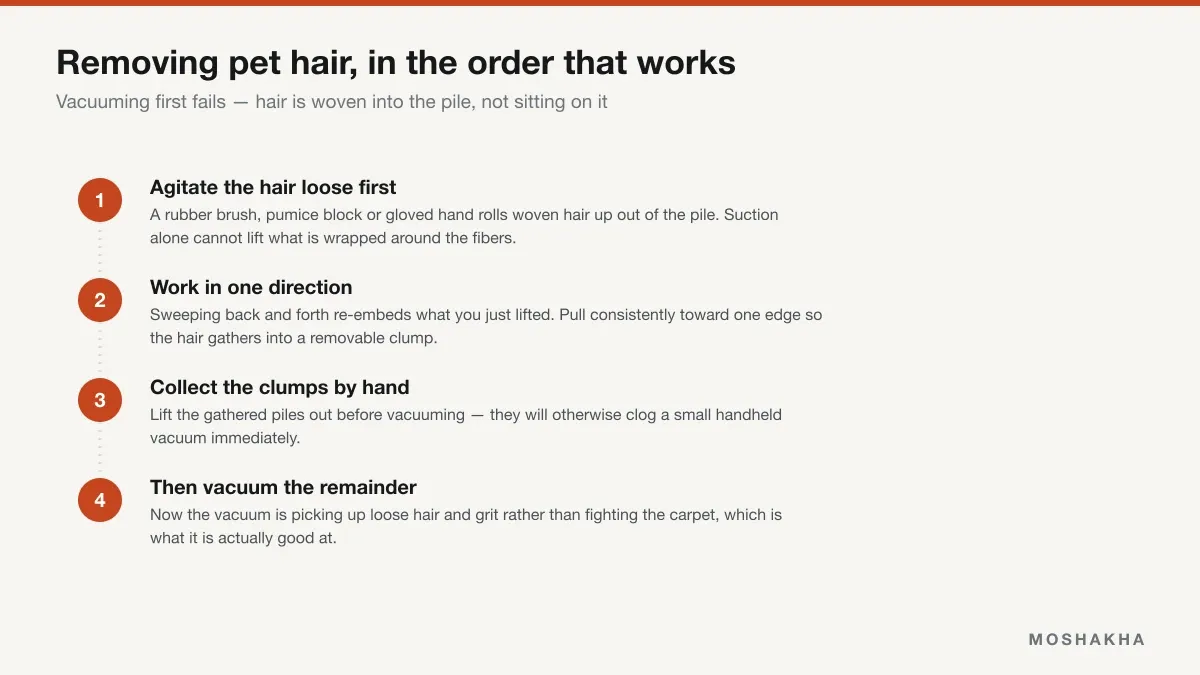
Pet hair is the one interior cleaning job where doing the obvious thing first makes it harder. Reaching for the vacuum is the instinct, and it’s why so many people conclude their car vacuum is useless.
Why suction alone doesn’t work
Loose debris sits on top of carpet. Pet hair doesn’t — it works its way between the fibers and wraps around them. Once that’s happened, it’s mechanically tangled, not merely resting there.
A vacuum can only lift what’s free to move. That’s true of a shop vac as much as a handheld, which is why more suction rarely solves this. The hair has to be freed first.
Rubber does the actual work
A rubber brush, a squeegee edge, or a plain rubber glove generates the friction and static that rolls woven hair back up out of the pile. Plastic bristles skim across the top of it.
Pull in one consistent direction. Sweeping back and forth lifts hair on the forward stroke and pushes it straight back in on the return. Pull toward one edge repeatedly and the hair gathers into a clump you can pick up.
Then collect by hand, then vacuum
Bin the clumps before the vacuum comes out. A handheld car vacuum will clog on a fist-sized wad of hair, and clearing the filter costs more time than collecting by hand.
Once the bulk is gone, the vacuum is doing what it’s actually good at — picking up loose hair and grit — rather than fighting the carpet.
See the car vacuum we reviewedCorded is the right choice for this job specifically. Pet hair removal takes longer than most interior tasks, and a cordless handheld tends to fade partway through the second row. Our full assessment is in the ThisWorx review.
Where a pumice block earns its place
For hair that’s deeply woven into carpet, a dedicated pet hair pumice block grabs what rubber can’t. It’s mildly abrasive by design, so keep it to carpet and durable woven fabric with light pressure — never leather, vinyl, suede or Alcantara.
The only real prevention
A washable seat cover or fitted cargo liner. It gives the hair somewhere to collect that you can lift out and shake off, instead of somewhere it can weave in.
Short, frequent vacuum sessions also beat occasional deep cleans here, because hair that hasn’t yet worked into the pile still lifts out with ordinary suction. The wider interior routine is in the interior detailing guide.
Frequently asked questions
Why doesn't my car vacuum pick up pet hair?
Because the hair isn't loose on the surface — it's mechanically wrapped around carpet and upholstery fibers. Suction can only lift what's free to move. This is true of powerful household vacuums as well, so it's rarely a sign that your car vacuum is underpowered; it's a sign the hair needs to be agitated free first.
What's the best tool for lifting pet hair out of car carpet?
Anything rubber. A dedicated pet hair brush, a small squeegee, or a plain rubber washing-up glove all work through the same mechanism — friction and static that roll the hair up out of the pile. Rubber consistently outperforms plastic bristle brushes, which tend to glide over the top of woven-in hair.
Does dampening the carpet help?
Lightly, yes — a slightly damp rubber glove or brush increases the friction that lifts hair. Don't soak the carpet. Wet carpet takes a long time to dry inside a closed car, and a damp interior is how upholstery starts to smell.
Will a pumice stone damage my car's upholstery?
It can if used aggressively or on the wrong surface. Pet hair pumice blocks are mildly abrasive by design, which is how they grab deeply woven hair. Use light pressure on carpet and durable woven fabric only — never on leather, vinyl, suede, Alcantara, or any soft-touch trim.
How do I stop pet hair building up in the first place?
A washable seat cover or a fitted cargo liner is the only genuinely effective prevention, because it gives the hair somewhere to collect that you can remove and shake out. Frequent short vacuum sessions also help far more than occasional deep cleans, since hair that hasn't yet worked its way into the pile lifts out easily.