How-To Guides
How to Clean Door Jambs (The Bit Everyone Skips)
Clean paint with grimy door shuts still reads as a dirty car. Do them while the car is still wet, with a towel that never touches a panel again.
You can wash, decontaminate and wax a car perfectly and it will still read as dirty the moment someone opens a door. The shuts are what give it away.
Timing is most of the technique
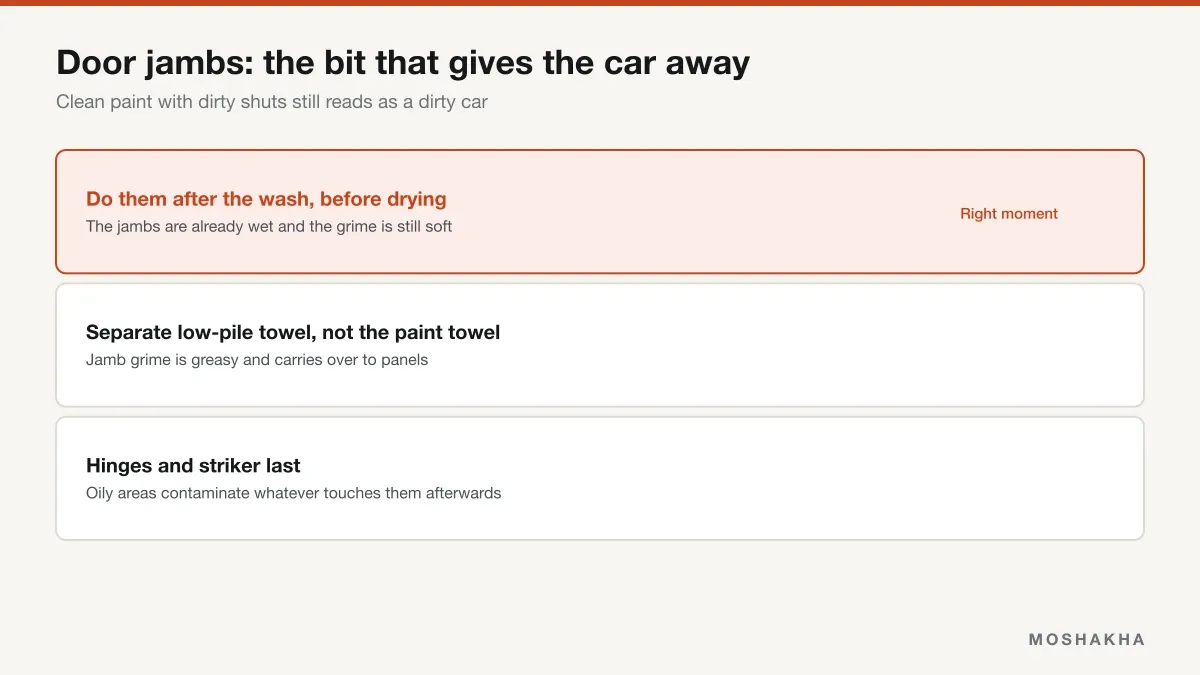
Clean them after rinsing, before drying.
At that moment the jambs are already wet, the grime is soft, and — crucially — you haven’t dried the car yet. Anything that runs out onto a panel gets picked up in the drying pass you were about to do anyway.
Clean them after the car is dry and you get dirty water tracking down finished panels. That’s why the job has a reputation for being annoying: it’s usually done at the wrong point in the sequence, not because it’s difficult.
The wider order-of-operations argument is in the two-bucket method.
A towel that never touches paint again
Jamb grime is greasy in a way panel dirt isn’t. It transfers.
A towel used in a door shut and then on a panel leaves a film. Keep one dedicated low-pile towel for jambs, and launder it separately.
Low pile beats plush here — you’re wiping flat painted surfaces and tight corners, not absorbing volume.
See the low-pile towels from our guideA cheap six-pack is the right purchase for this specific reason: you want towels you can dedicate to the dirty jobs without feeling precious about them. The sorting logic is in best microfiber towels for cars.
The seal channel is where the grit hides
The channel the rubber seal sits in collects road film and grit, and a towel bridges straight across it.
A soft brush lifts it out in seconds. So does a pass around the striker and latch area, which is the dirtiest part of the aperture and the most visible part when the door’s open.
Hinges last, and leave the grease alone
Hinges and latches carry grease by design. You’re not trying to remove it.
Wipe the painted area around them, avoid scrubbing the moving parts, and do this section last so the oil doesn’t transfer to everything else you’re about to touch.
Dry the seals, especially in winter
Water sitting in a seal channel runs out onto the paint the next time the door opens — and in freezing weather it refreezes and glues the door shut.
One quick pass along each seal solves both. That’s the same failure mode covered in drying a car in freezing weather.
Frequently asked questions
When should door jambs be cleaned during a wash?
After rinsing and before drying. At that point the jambs are already wet, the grime is soft, and anything that runs out onto a panel gets picked up in the drying pass you are about to do anyway. Cleaning them after the car is dry means water and dirt running down panels you have just finished.
Can I use my normal drying towel on door jambs?
Better not to. Jamb grime is greasy rather than dusty and it transfers to whatever touches it next, which means a towel used in a shut can leave a film on paint. Keep a dedicated low-pile towel for jambs, and launder it separately from the towels you use on bodywork.
What about the rubber door seals themselves?
Wipe them clean and dry them, and that is usually enough. If they are drying out or squeaking, a silicone-based rubber conditioner applied sparingly keeps them pliable and stops them sticking in freezing weather. Avoid oily products, which attract grit and can transfer onto clothing.
Should I wax door jambs?
It helps, and it is quick because you are already there. A spray wax or sealant on the painted shut areas makes the next clean easier and protects paint that sees a lot of water and grit but rarely gets any protection. Keep it off the rubber seals and the latch mechanism.
Why do my door jambs get so dirty compared to the panels?
They sit in the spray path from the wheels, they are recessed so water and grit collect rather than run off, and they are almost never washed. Panels get rinsed by rain; a closed door shut does not. That combination is why a few months of neglect shows far more in the jamb than on the door skin.