How-To Guides
De-icing a Windshield Without Cracking It
Hot water on cold glass is the fastest way to turn a small chip into a crack across the screen. What actually works, and why the wipers go last.
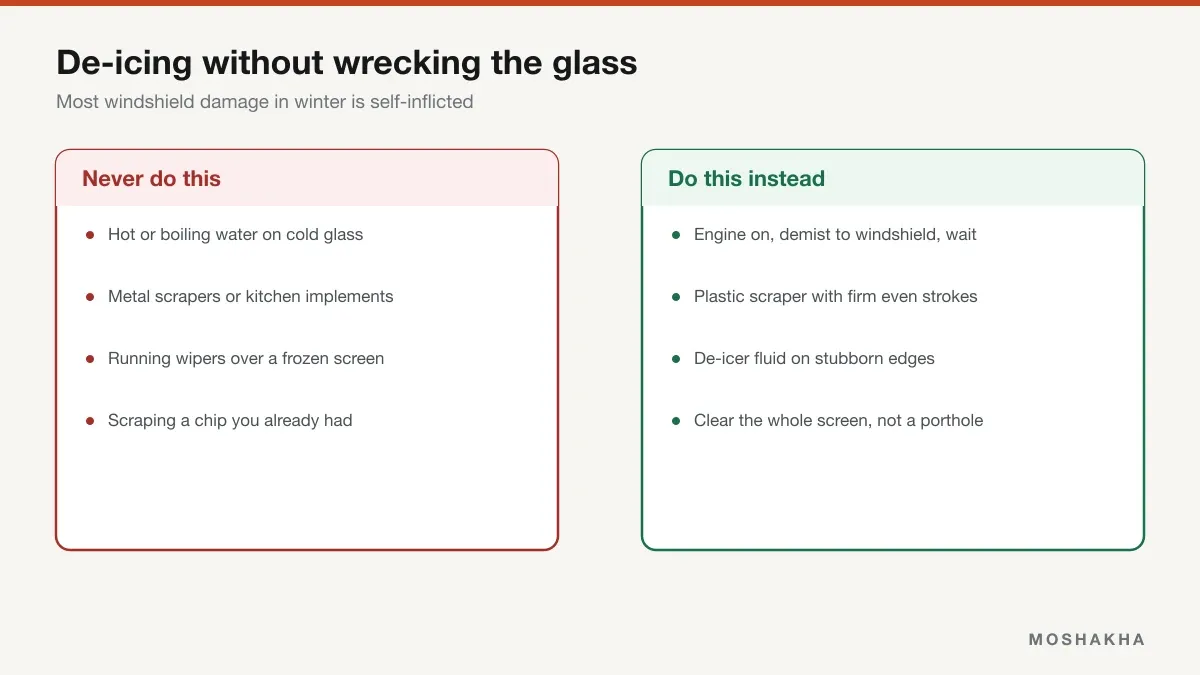
More windshields are damaged by their owners in winter than by stones, and almost all of it comes from one shortcut.
Hot water is the thing not to do
Pouring hot water on very cold glass creates a steep temperature gradient across it. The resulting stress propagates from any existing chip or edge flaw into a crack that runs across the screen.
Modern laminated glass is tough. It is not immune to thermal shock, and the failure happens in an instant with no warning.
Lukewarm water is less risky and still unnecessary. The demister and a plastic scraper do the job without gambling on the screen.
Demister on first, then scrape
Engine running, fan at full, directed at the screen, fresh air rather than recirculate, and air conditioning on if the car has it.
The AC part surprises people. The compressor dehumidifies the air, and dry air clears interior fog far faster than warm humid air. Recirculate does the opposite — it keeps recycling the moisture you’re breathing out.
That works from the inside while you scrape the outside.
Plastic scraper, straight strokes
A proper scraper is shaped to clear ice without marking glass. Metal blades scratch it, credit cards snap, and kitchen implements do both.
Overlapping straight passes work better than short scrubbing motions, and put less stress through any chip you already have.
Leave the wipers until last
Wipers frozen to the screen tear their rubber edges when the motor pulls against the ice. That damage is permanent, and it’s the cause of streaking that people then blame on the blade being old.
Free them by hand or with de-icer fluid before switching them on. Signs a blade is genuinely finished rather than just frozen are in when to replace windshield wipers.
Clear all of it, not a porthole
A cleared patch in front of the driver is unsafe and, in many jurisdictions, an offense.
Full windshield, both front side windows, mirrors, rear screen — and brush the snow off the roof, or it slides down over the glass at your first hard stop.
The interior film matters more in winter
That greasy haze on the inside of the glass is partly off-gassed residue from interior plastics, and it gives moisture something to cling to. It’s why some cars fog and frost on the inside far more readily than others.
See the glass cleaner from our interior guideCleaning it properly makes a genuine difference to how quickly the screen clears each morning — the two-towel method that removes it rather than smearing it is in glass cleaning mastery.
Frequently asked questions
Can hot water crack a windshield?
Yes, and it is the most common way people damage their own glass in winter. Pouring hot water on very cold glass creates a steep temperature gradient, and the resulting stress propagates from any existing chip or edge flaw into a full crack. Modern laminated screens are tough but they are not immune to thermal shock, and the failure is sudden.
Is it bad to use the wipers to clear ice?
It damages the blades and can damage the motor. Rubber frozen to glass tears when the motor pulls against it, and the nicks that result cause streaking for the rest of the blade's life. If the wiper linkage is held solid, the motor draws heavy current and can blow a fuse or strip the linkage. Free the blades by hand first.
Does running the air conditioning help defrost faster?
Yes, and it is counterintuitive. The air conditioning compressor dehumidifies the air, and dry air clears interior fog far faster than warm humid air does. Run AC together with heat and fresh air — not recirculate, which just keeps circulating the moisture you and your passengers are breathing out.
Do windshield covers actually work?
They work well for frost, which is the common case, because they stop moisture condensing and freezing on the glass in the first place. They are less useful in heavy snow, where the weight can make them awkward to remove cleanly, and they need fitting before the frost forms rather than after.
Why does the inside of my windshield frost up?
Moisture inside the cabin — from breath, wet footwells, damp mats or a leaking seal — condensing on the coldest surface and then freezing. A greasy interior film from off-gassed plastics gives that moisture something to cling to. Drying the carpets, cleaning the interior glass properly, and using fresh air rather than recirculate all reduce it.