Reviews
Chemical Guys Woolly Mammoth Review: Soft, But Slow
A large, very plush drying towel at a reasonable price. We look at where its deep pile helps, and the drying speed you give up to get that softness.
Moshakha is reader-supported. When you buy through links on our site, we may earn an affiliate commission at no extra cost to you. How we make money.
Pros
- Very soft, deep pile — forgiving on soft clear coats
- Large 25x36in drying area for the money
- Widely stocked and frequently discounted
- Reassuring to use if you are worried about marring
Cons
- Plush pile saturates sooner than twisted loop at similar size
- Slow to air-dry — needs real hanging space
- Sheds slightly for the first few washes
- Bulky to store and to wring out
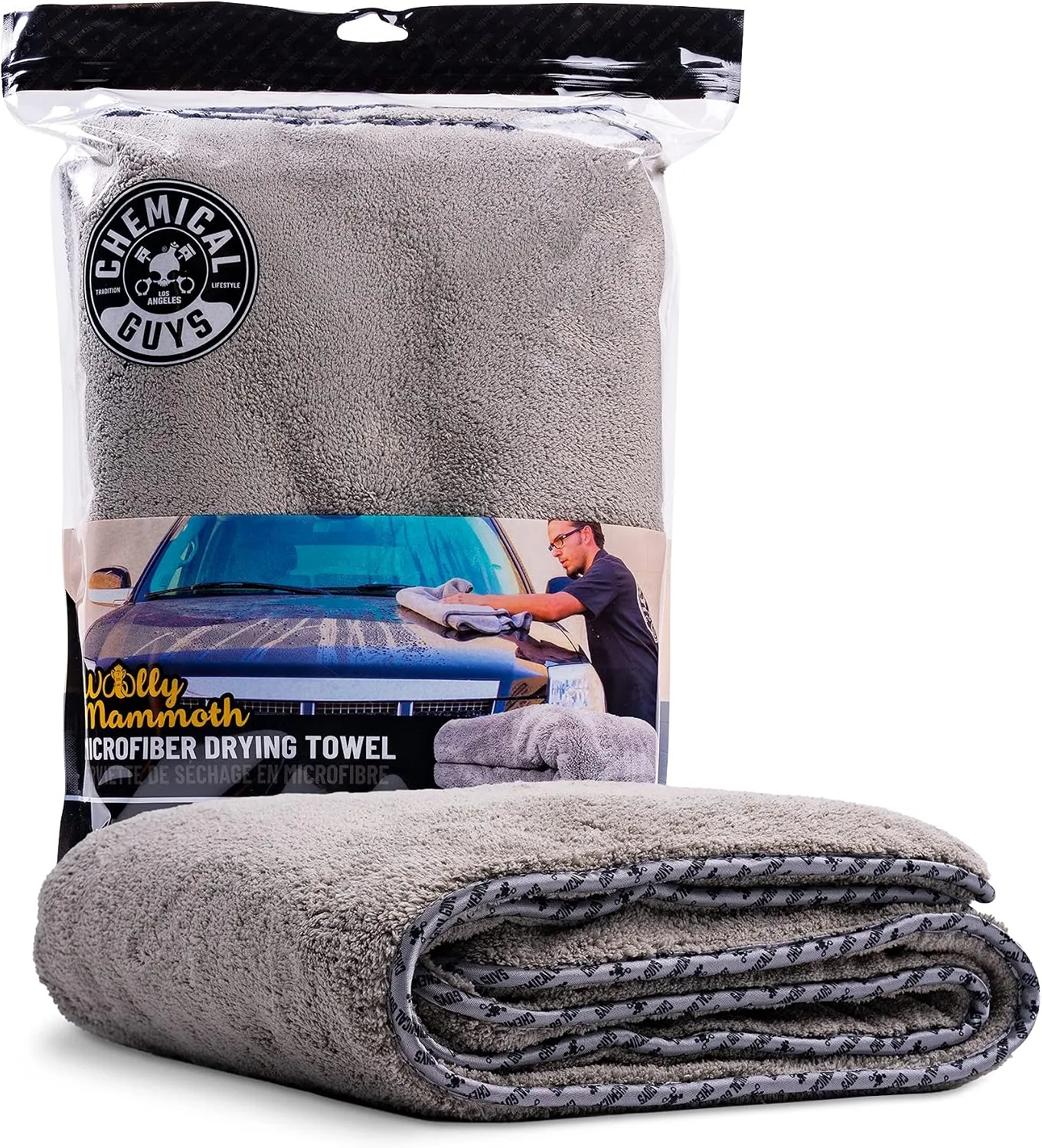
The Woolly Mammoth is one of the most widely sold drying towels there is, and it earns that on softness and price rather than on performance.
What it does well
It is genuinely, noticeably plush. Running it over a panel feels cushioned in a way that twisted loop towels don’t, and for someone nervous about putting marks in their paint, that reassurance has real value. A person who dries confidently with a soft towel will get a better result than someone dabbing anxiously with a technically superior one.
At 25x36in it covers a lot of ground, and it’s frequently discounted well below the premium alternatives.
The trade-off nobody mentions
Plush pile and twisted loop pile handle water differently. Twisted loops draw water up into the pile and keep the contact surface relatively free, so the towel keeps gliding. Plush pile holds water closer to the surface and releases it into the body of the towel more slowly.
The practical result: at a similar size, the Woolly Mammoth reaches the point of saturation sooner. Once saturated, it stops lifting water and starts pushing it around — which is when streaking and water spots appear.
On a sedan you may never notice. On a large SUV you will be wringing it out well before you finish.
Shedding
Some first-wash lint shedding is normal and widely reported. Wash it two or three times on its own before it touches paint. This isn’t a defect; it’s characteristic of deep plush pile, and it settles.
Drying time
This towel takes a long time to air-dry, which matters more than it sounds. A microfiber towel put away damp develops mildew, and mildew permanently affects both smell and absorbency. If you don’t have somewhere to hang a large towel with airflow, that’s a real argument for a thinner one.
Should you buy it?
Yes, if you want maximum softness, you’re washing a normal-sized car, and price matters. It’s a lot of towel for the money.
No, if you’re drying something large or you want the fastest possible drying — in which case a twisted loop towel of the same size will finish the job with less wringing. Our drying towel guide compares both directly, and what GSM actually means explains why weave beats weight here.
Frequently asked questions
Is the Woolly Mammoth better than a twisted loop towel?
Softer, yes. Faster at drying, no. Plush pile holds water but releases it into the pile more slowly than twisted loops do, so it reaches saturation sooner. If your priority is drying a large car in one pass, a twisted loop towel is the better tool.
Does it really shed?
Some lint shedding in the first few washes is commonly reported and is normal for deep plush pile. Wash it two or three times before first use on paint, separately from everything else, and it settles down.
Is it safe on soft paint?
Yes — the deep, soft pile is one of the more forgiving options available, which is why it suits people who are nervous about marring. As always, the risk is grit in the towel rather than the towel itself.
How should I store it?
Hung, with airflow, and completely dry. This towel takes a long time to air-dry because of its pile depth, and a damp microfiber towel stored folded will develop mildew that permanently affects both smell and absorbency.