Reviews
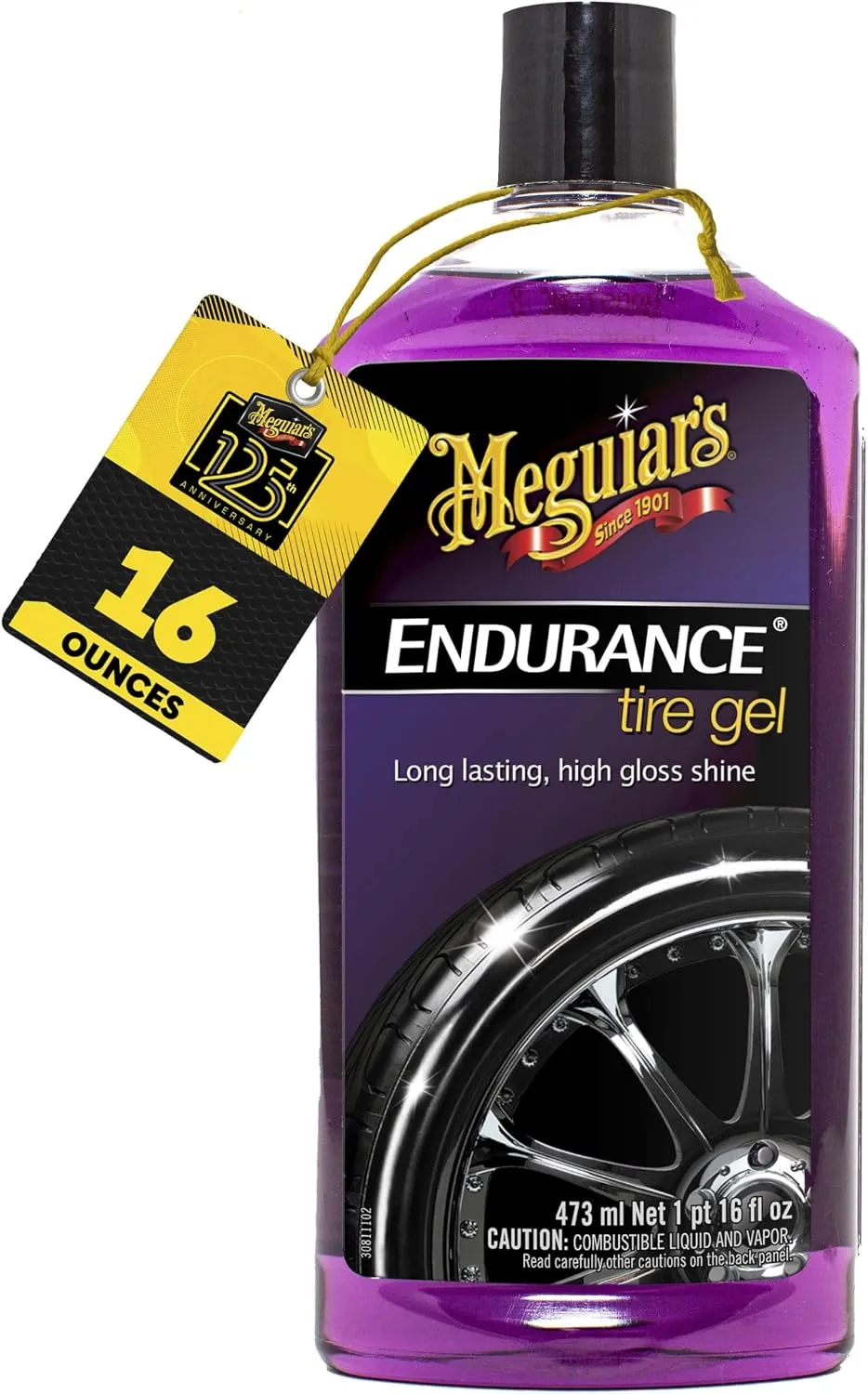
Meguiar's Endurance Tire Gel Review: Gel, Not Spray, on Purpose
A thick gel instead of a spray sounds like a downside until you notice where the overspray from spray-on dressings actually ends up. Here's why gel wins.
Moshakha is reader-supported. When you buy through links on our site, we may earn an affiliate commission at no extra cost to you. How we make money.
Pros
- Genuinely long-lasting — survives rain and a wash or two
- Gel consistency means no overspray onto paint or brake discs
- Deep satin-black finish rather than a wet, greasy gloss
- A 16oz bottle lasts a long time at normal use
Cons
Most tire dressings are a spray, and the Endurance Tire Gel deliberately isn’t. That’s worth explaining, because on the shelf it looks like the slower, more inconvenient option.
Why gel beats spray here
A spray-on dressing is fast, and a meaningful share of what comes out of the nozzle never lands on the tire. It drifts onto the wheel face, into the brake dust already sitting there, and onto the lower rocker panel and paint behind the tire. None of that is intentional — it’s just physics.
A gel applied with a foam applicator pad goes only where the pad touches. It takes longer. You’re not spraying and walking away; you’re working it into the sidewall. What you get in exchange is a product that stays exactly where you put it.
Where it actually holds up
It survives rain and a wash or two, which is unusual — most spray dressings wash off in a single rinse and need reapplying almost every wash. The Endurance formula is built to bond rather than sit on the surface, and that’s the entire reason it’s worth the extra application time.
The finish is a deep satin black, not the wet, high-gloss look some competitors go for. If you specifically want maximum shine, a gloss spray applied more often will get there faster — this is a deliberate style tradeoff, not a shortcoming.
Where it falls short
It’s not a spray-and-walk product. If you’re detailing a car quickly, or need several tires done in under a minute, a spray dressing is the better tool despite its overspray problem.
Over-application slings. A thick, unworked layer in the tread grooves can fling onto lower body panels at speed. The fix is simple — apply a thin, even coat and wipe any pooled excess out of the tread before driving — but it’s an extra step a spray doesn’t require.
Should you buy it?
Yes, if you want a tire finish that survives more than one rinse and don’t mind spending an extra minute per tire applying it with a pad instead of a spray.
No, if speed matters more than longevity, or you’re doing a quick top-up between full details — in that case a spray-on gloss dressing is the better tool for the job, despite the overspray tradeoff.
For the wheel underneath the tire, see wheel and rim care.
Frequently asked questions
Is tire gel better than tire spray?
For control, yes. A spray is faster but a share of it inevitably lands on the wheel face and brake disc rather than the tire — brake dust mixed with dressing overspray is a specific, avoidable mess. A gel applied with a foam applicator pad goes only where you put it, at the cost of taking longer to apply.
How long does the Endurance finish actually last?
Through rain and typically a wash or two, which is unusual for a tire dressing — most sprays wash off in a single rinse. It won't survive indefinitely; reapply when the sidewall starts looking dry or gray rather than on a fixed schedule.
Does it leave a wet, glossy look or a satin finish?
Satin — a deep black rather than the high-gloss, almost-wet look some dressings go for. That's a style preference; if you want maximum shine, a spray-on gloss dressing applied more frequently will get you there, at the cost of the overspray problem above.
Can I use it on wheels or trim as well as tires?
It's formulated and intended for tire sidewalls specifically. Using a tire-specific gel on painted trim risks a finish it wasn't designed for; use a dedicated trim or wheel product for those surfaces instead.
Does it sling off onto the car at highway speed?
Only if over-applied. A thin, worked-in coat is stable; a thick, unworked layer can sling under hard acceleration or at speed. Apply with the pad, then wipe away any excess pooling in the tread grooves before driving.