Reviews
SPTA Boar Hair Detail Brush Kit Review: Soft Enough for Paint
Natural boar bristle is soft enough to use around clear coat, and the graduated sizes matter more than the piece count. Where it's genuinely too soft to help.
Moshakha is reader-supported. When you buy through links on our site, we may earn an affiliate commission at no extra cost to you. How we make money.
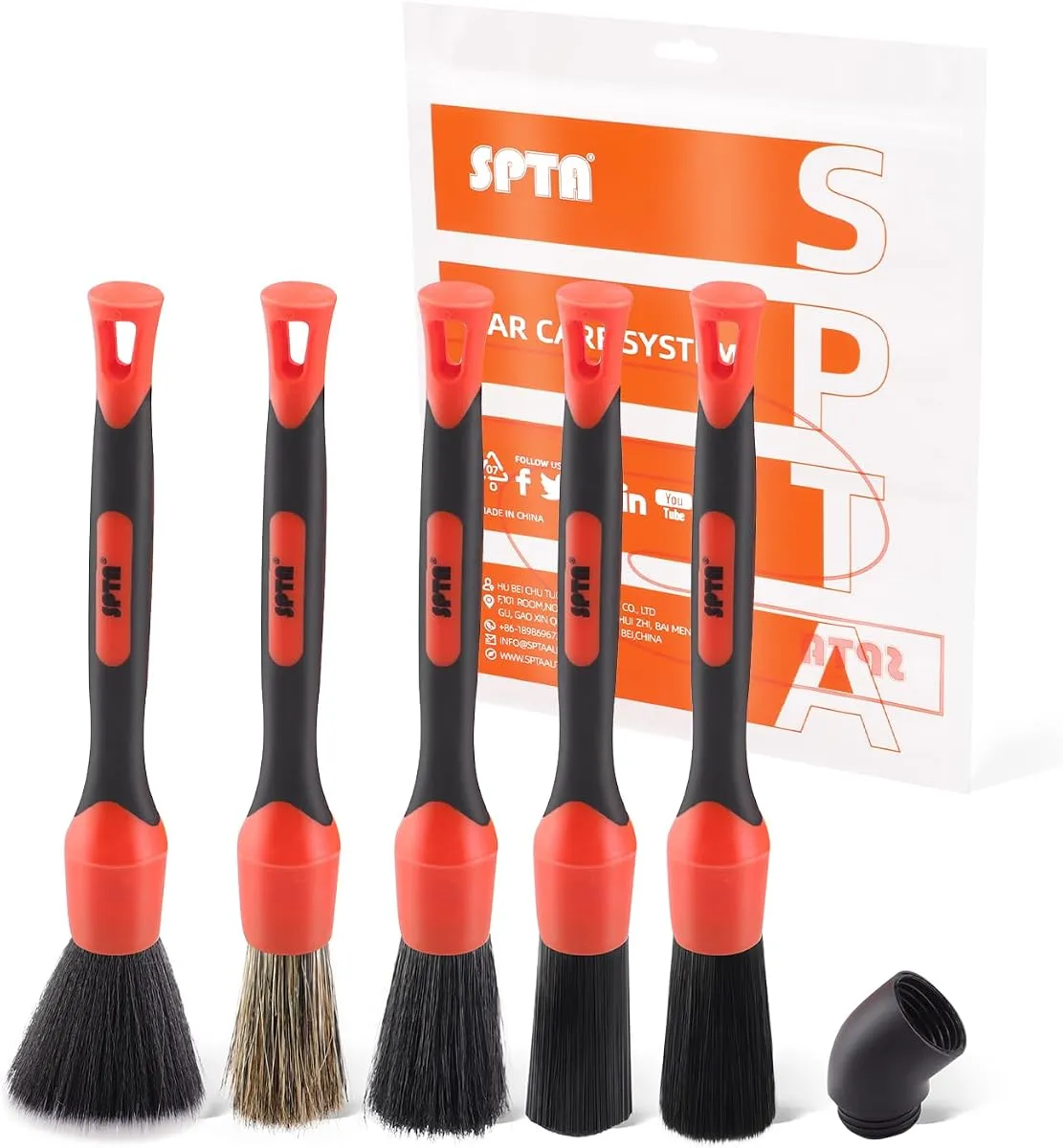
Pros
- Boar bristle is soft enough to use around paint and trim
- Graduated sizes cover vents, badges and panel gaps properly
- Holds cleaner well rather than flinging it off the bristles
- Rubberized ferrules reduce the risk of metal touching paint
Cons
- Too soft for heavy brake dust or engine bay grime
- Natural bristle needs drying properly or it goes musty
Detailing brush sets are sold on piece count. What actually matters is whether the set spans real differences, and whether any of it is safe to put near your paint.
Boar bristle, specifically
Natural boar is soft enough to work around clear coat and trim without marring, and it holds cleaner rather than flinging it off the bristles on the first stroke.
That makes it the right choice for the jobs where a slip puts a brush against paint — vents, badges, panel gaps, emblems, the edges around trim.
Synthetic is stiffer and more chemical-resistant, which makes it better for engine bays and wheels. These are complementary rather than competing tools, and the honest answer is that most people doing this regularly own both. This is the set you’ll reach for far more often.
The ferrule is the part that scratches
Worth checking on any brush before buying, and it’s where this set earns its rank.
The ferrule is the band where bristles meet the handle. On cheap brushes it’s bare metal. Press a brush flat against a surface and the bristles splay — which brings that band closer to the paint than you meant it to be.
Rubberized ferrules remove the risk. It’s a small detail that decides whether a brush is genuinely safe near paint or merely sold as such.
Sizes, not count
A vent slot, a badge surround and a panel gap need genuinely different brush widths. One medium brush does all three badly.
This set spans real size differences rather than repeating one shape five times, which is the test worth applying to any kit. The useful question isn’t how many brushes are in the box — it’s how many distinct jobs they cover.
Where they do their best work: cleaning air vents and cup holders and the console, both of which are jobs where a cloth simply bridges over the gap.
Where it’s genuinely too soft
Stated plainly because it’s the real limitation: this set won’t shift baked-on brake dust or engine bay grime.
That’s not a defect — it’s the direct consequence of being soft enough to use near paint. You can’t have both in one brush. For engine bays you want stiffer synthetic, and for wheels you want something dedicated that never comes back to paint. Both are in detailing brush sets.
Dry them properly
The one maintenance difference versus synthetic. Natural bristle that stays damp in the ferrule develops a smell, and that smell transfers to the next thing you clean.
Dry bristles-down or flat, never standing on the handle. Takes no effort once you know.
Should you buy it?
Yes, if you want one set for interior trim, vents, badges and panel gaps — the jobs closest to paint, where bristle softness and ferrule construction actually matter.
No, if you were hoping for one kit to also handle wheels and the engine bay. That’s two more sets, kept separate, and the separation is the point rather than an inconvenience.
Frequently asked questions
Is boar bristle genuinely better than synthetic?
For work near paint and trim, yes — it's softer and holds product better, so it agitates without marring clear coat. Synthetic bristle is generally stiffer and more chemical-resistant, which makes it the better choice for engine bays, wheels and anywhere you're using aggressive cleaner. They're complementary rather than competing, and most people who detail regularly end up owning both.
What's the ferrule and why does it matter?
It's the band where the bristles meet the handle. On cheap brushes it's exposed metal — and when you press a brush flat against a surface the bristles splay, which brings that band closer to the paint than you intended. A rubberized or coated ferrule removes the risk entirely, and it's the detail that most separates a paint-safe brush from one that will eventually leave a mark.
Can I use these on wheels?
You can, but don't then use them on paint. Brake dust is metallic and sharp, and it embeds in bristles in a way rinsing doesn't reliably clear — a brush that's been on a wheel carries that grit onto whatever it touches next. If you want one set for everything, that's not how it works. Keep wheel brushes physically separate, the same discipline you'd apply to a wash mitt.
How do I stop natural bristle going musty?
Dry it bristles-down or flat rather than standing on the handle, so water doesn't sit in the ferrule. Natural boar bristle in particular needs to dry fully or it develops a smell that transfers to whatever you clean next. That's the main maintenance difference versus synthetic, and it takes no effort once you know.
Is five brushes overkill?
Sizes matter more than count, and this set spans real size differences rather than repeating one shape — which is the useful test. A vent slot, a badge surround and a panel gap genuinely need different widths. A ten-piece set of near-identical brushes would be worse than this five.