How-To Guides
How to Clean Car Air Vents Without Pushing Dust Deeper
Blowing compressed air at a vent moves the dust into the cabin you just cleaned. Suction first, brush second — and never spray cleaner into the ducting.
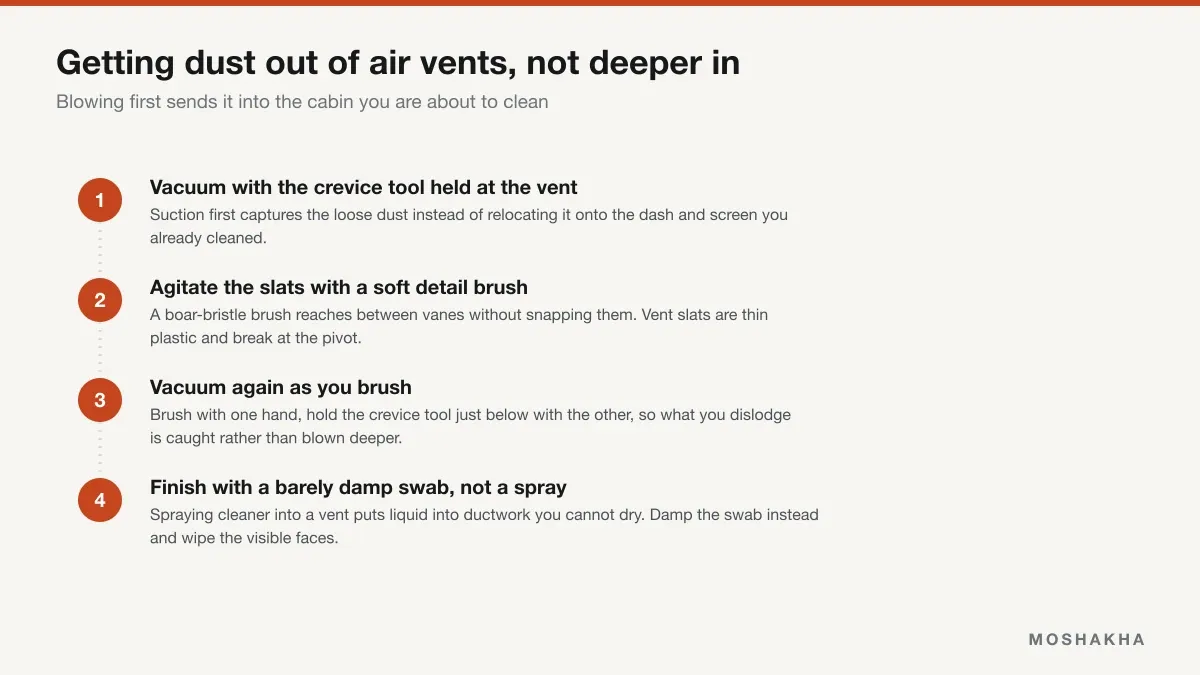
Air vents are the detail that separates an interior that looks clean from one that actually is — and the place where the obvious method makes things worse.
Compressed air is the wrong instinct
Reaching for an air compressor or a can of compressed air feels right. It isn’t.
Air blows dust off the slats and into the ducting behind them. From there it distributes through the system and settles back out of every vent in the car over the following days. You’ve moved the problem somewhere you can’t reach and delayed it.
Suction removes dust from the system. That’s the difference, and it’s why the order below starts with a vacuum rather than a blast.
Vents before the dashboard
Whatever comes out of a vent lands on the console and dash below it.
Clean the dash first and you’ll be cleaning it twice. This is the most common sequencing mistake in an interior detail, and it’s the same top-down logic that governs the rest of the job — covered in the interior detailing guide.
Brush with the vacuum held underneath
The technique that actually works uses both hands: detail brush between the vanes, crevice tool held just below the vent catching what comes free.
It feels awkward for about ten seconds and then becomes obvious. Everything you dislodge gets captured in the moment rather than settling somewhere you’ll have to clean again.
See the detailing brushes from our guideBoar bristle matters here specifically because vent vanes are thin plastic on a small pivot. They snap rather than bend. A soft brush lets the bristle tips work between the slats without you levering against them.
Never spray into a vent
Interior detailer goes onto the swab, not into the opening.
Liquid that gets past the slats lands in ducting with no airflow to dry it. That’s how you create a damp smell rather than remove one — and it’s exactly the mistake that leads people to think they need an air purifier.
When the smell isn’t the vents
If the smell arrives with the fan, particularly with the air conditioning on, the vents aren’t the source. It’s mold on the evaporator behind the dash, or a cabin filter long overdue.
Cleaning the slats won’t touch either. Start with replacing the cabin air filter — it’s ten minutes and it’s almost certainly due.
Finish with the fan on high
Doors open, fan at maximum for a minute. Anything you loosened deeper in comes out and leaves the car, rather than settling back onto a dashboard you’ve just finished.
Frequently asked questions
Can I use compressed air to clean car vents?
It's the instinctive approach and it makes the job worse. Compressed air pushes dust off the slats and into the ductwork, where it distributes to every other vent in the car and settles back out over the following days. Suction removes dust from the system; air just relocates it. If you do use air, hold a running vacuum immediately adjacent to catch what comes off.
Why do my vents smell when I turn the fan on?
Usually not the vents themselves. A musty smell that appears with the fan — particularly with air conditioning running — generally comes from mold on the evaporator behind the dashboard, or from a cabin air filter that's overdue. Cleaning the visible slats won't touch either. Replace the filter first, since it's cheap and quick.
What's safe to spray on vent slats?
An interior detailer, applied to the swab or brush rather than sprayed into the vent. Liquid that goes past the slats lands in ducting that has no airflow to dry it, which is how you create a damp smell rather than remove one. All-purpose cleaner is too aggressive for dashboard plastics in general and vents are no exception.
How do I clean vents I can't reach?
Foam swabs on a thin handle, or a soft artist's brush, reach further than a detail brush without risking the vanes. Beyond about an inch in, accept that you're cleaning what's visible rather than the whole duct — and that a cabin filter replacement does more for the air quality than reaching deeper ever will.
Why do vents get dusty so fast after cleaning?
Two common causes. Excess dressing left on the dashboard nearby stays tacky and holds dust electrostatically, and it migrates. And a clogged cabin filter means more particulate is passing through the system to settle on the slats. If vents dust up within days, look at both rather than cleaning more often.