Buying Guides
Detailing Brush Sets: Boar vs Synthetic, and Drill Brushes
Boar bristle and synthetic do different jobs, and drill brushes are safe in fewer places than they're sold for. What to use where, and what to keep off paint.
Moshakha is reader-supported. When you buy through links on our site, we may earn an affiliate commission at no extra cost to you. How we make money.
At a glance
Grouped by what each brush is safe to touch, which matters more than the piece count in the box. Prices move constantly, so we link out for live pricing rather than quoting figures that go stale.
| Product | Award | Best for | Rating | Jump to review |
|---|---|---|---|---|
| SPTA 5-Pack Soft Boar Hair Detail Brush Kit | Best overall | Vents, badges, panel gaps, emblems and trim — anywhere near paint | Details | |
| SPTA 3pc Leather & Textile Interior Brush Kit | Best for interiors | Seats, carpet and upholstery, where you need agitation without abrasion | Details | |
| SPTA Microfiber Rim Brush Set (2-piece) | Best for wheel faces | Wheel faces and between spokes, on finishes you don't want scratched | Details | |
| Drill Brush Ultimate Automotive Cleaning Kit with Extension | Best for arches, mats and sills | Rubber mats, wheel arch liners, door sills and load areas | Details | |
| Brush Hero Water-Powered Wheel Brush Kit | The niche option that earns it | Wheel barrels and intricate spokes, without electricity near water | Details |
Detailing brush sets are sold on piece count. The number that matters is how many genuinely different jobs the set covers — and which surfaces each brush must never touch.
Boar versus synthetic
These get framed as competing options. They’re complementary.
Natural boar bristle is soft, holds product well, and is safe near paint and trim. It’s what you want for vents, badges, panel gaps and emblems — anywhere a slip would put a brush against clear coat.
Synthetic bristle is generally stiffer and more chemical-resistant, which makes it right for engine bays, wheels, and anywhere you’re using aggressive cleaner that would degrade natural bristle over time.
Most people who detail regularly own both, and use the boar set far more often.
The ferrule is the part that scratches
Worth checking before you buy anything: the ferrule is the band where the bristles meet the handle. On cheap brushes it’s bare metal.
Press a brush flat against a surface and the bristles splay, which brings that band closer to the paint than you intended. A rubberised or coated ferrule removes the risk entirely, and it’s the detail that separates a brush safe near paint from one that isn’t.
Where drill brushes are genuinely fine
Drill brushes get sold as a whole-car solution and they’re nothing of the sort. But dismissing them is wrong too, because on the right surfaces they save real work.
Fine: rubber floor mats, wheel arch liners, door sills, load area plastics, engine bay covers. Robust, unprotected surfaces where speed is the only consideration — the same logic as using full-strength cleaner in the arches, covered in cleaning wheel arches.
Not fine: paint, alloy wheel faces, upholstery, any coated or soft-touch surface. A drill delivers far more torque than your hand, and dwelling in one place removes material rather than dirt.
The failure mode isn’t gradual. It’s a visible mark in a couple of seconds.
Keep wheel brushes away from paint
This is the same discipline as wash mitts, for the same reason. Brake dust is metallic, sharp, and embeds in bristles where rinsing won’t reliably clear it. A brush that’s been on a wheel will carry that grit onto whatever it touches next.
Separate brushes, stored separately. The reasoning is in wheel and rim care.
How we chose
Specification analysis — bristle material and stiffness, ferrule construction, size range across the set, and what each brush is safe to contact — plus aggregated owner feedback weighted toward bristle retention and whether sets hold up after repeated chemical exposure. No lab testing, no paid placement.
What a sensible kit looks like
You don’t need five sets. For most people:
- A graduated boar set for trim, vents and badges — the one you’ll reach for most.
- One upholstery brush if you have fabric seats.
- A dedicated wheel brush, kept separate from everything above.
- A drill brush, only if you regularly clean rubber mats and arch liners.
Anything beyond that is duplication. The set that covers four genuinely different jobs beats the ten-piece box that covers one job ten times.
The picks in detail
Best overall
1. SPTA 5-Pack Soft Boar Hair Detail Brush Kit
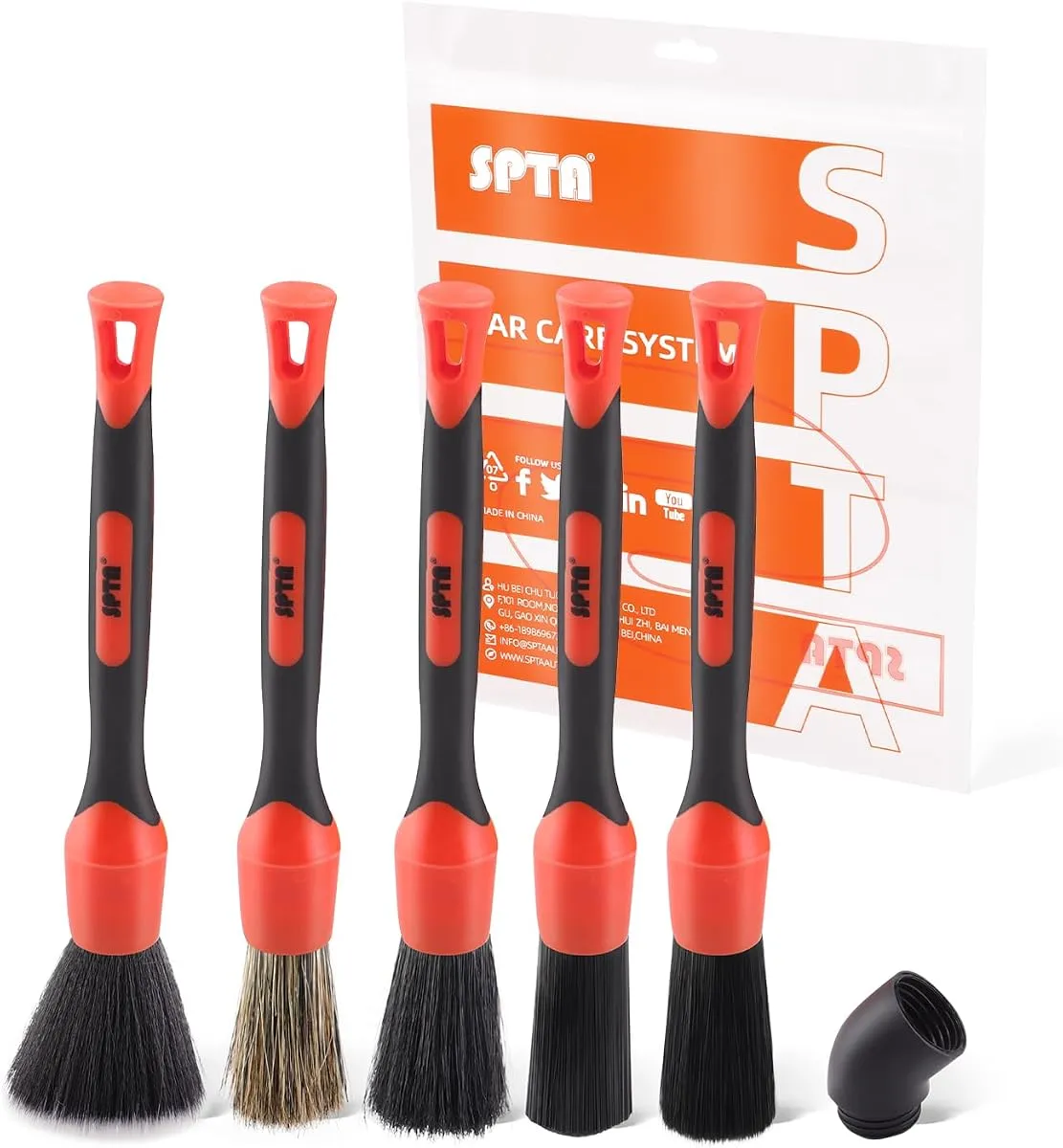
Best for: Vents, badges, panel gaps, emblems and trim — anywhere near paint
Skip if: You need something stiff enough for baked-on brake dust or engine grime
Natural boar bristle is the right choice near paint because it's soft enough not to marr clear coat and holds product well. The graduated sizes matter more than the count: a vent slot and a wheel spoke need different brush widths, and one medium brush does neither well.
Pros
- Boar bristle is soft enough to use around paint and trim
- Graduated sizes cover vents, badges and panel gaps properly
- Holds cleaner well rather than flinging it off the bristles
- Rubberised ferrules reduce the risk of metal touching paint
Cons
- Too soft for heavy brake dust or engine bay grime
- Natural bristle needs drying properly or it goes musty
Best for interiors
2. SPTA 3pc Leather & Textile Interior Brush Kit
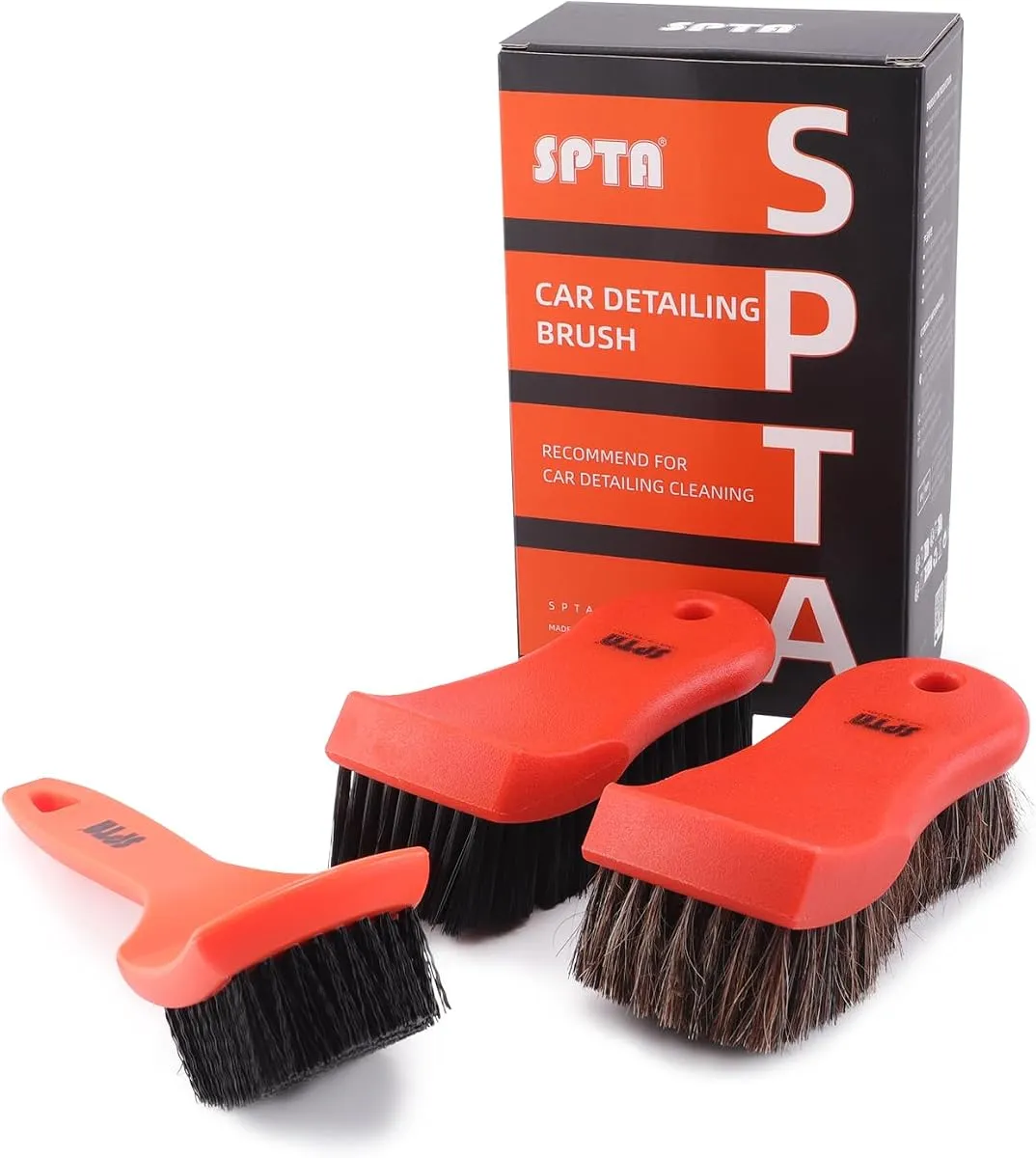
Best for: Seats, carpet and upholstery, where you need agitation without abrasion
Skip if: Your interior is all hard plastic — the softer detail brushes above cover that
Upholstery needs a different bristle stiffness from trim: enough to lift soil out of a weave, not enough to abrade a coated seat. The wide head also matters, because agitating a seat panel with a narrow brush takes long enough that the cleaner dries before you extract it.
Pros
- Stiffness suited to fabric agitation without abrading coated surfaces
- Wide head covers a seat panel before the cleaner dries
- Comfortable to hold for the length of a full interior
Cons
- Too stiff for dashboards and soft-touch plastics
- Three pieces is a narrow range if you wanted one kit for everything
Best for wheel faces
3. SPTA Microfiber Rim Brush Set (2-piece)
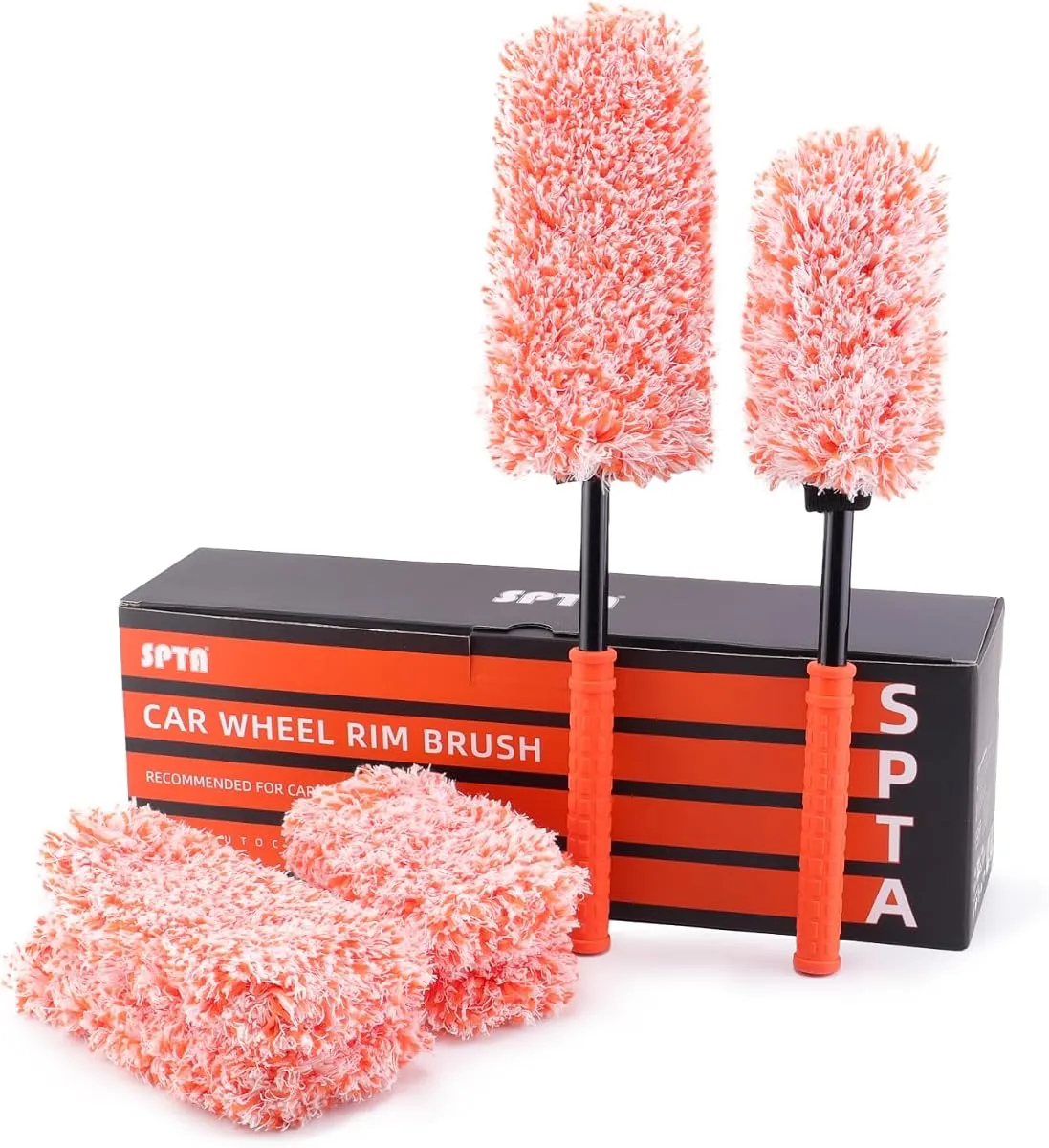
Best for: Wheel faces and between spokes, on finishes you don't want scratched
Skip if: You mainly need to clean the barrel — these are shaped for the face
Microfiber rather than bristle, which is the correct call on a wheel face. Painted and machined wheel finishes scratch, and brake dust is metallic and sharp — a soft microfiber sleeve carries that grit away from the finish instead of dragging it along a stiff bristle.
Pros
- Microfiber sleeves are safe on painted and machined wheel faces
- Interchangeable covers can be washed rather than replaced
- Long enough to reach between spokes without knuckle damage
Cons
- Not shaped for the wheel barrel, where most brake dust collects
- Sleeves need washing separately from paint towels
Best for arches, mats and sills
4. Drill Brush Ultimate Automotive Cleaning Kit with Extension
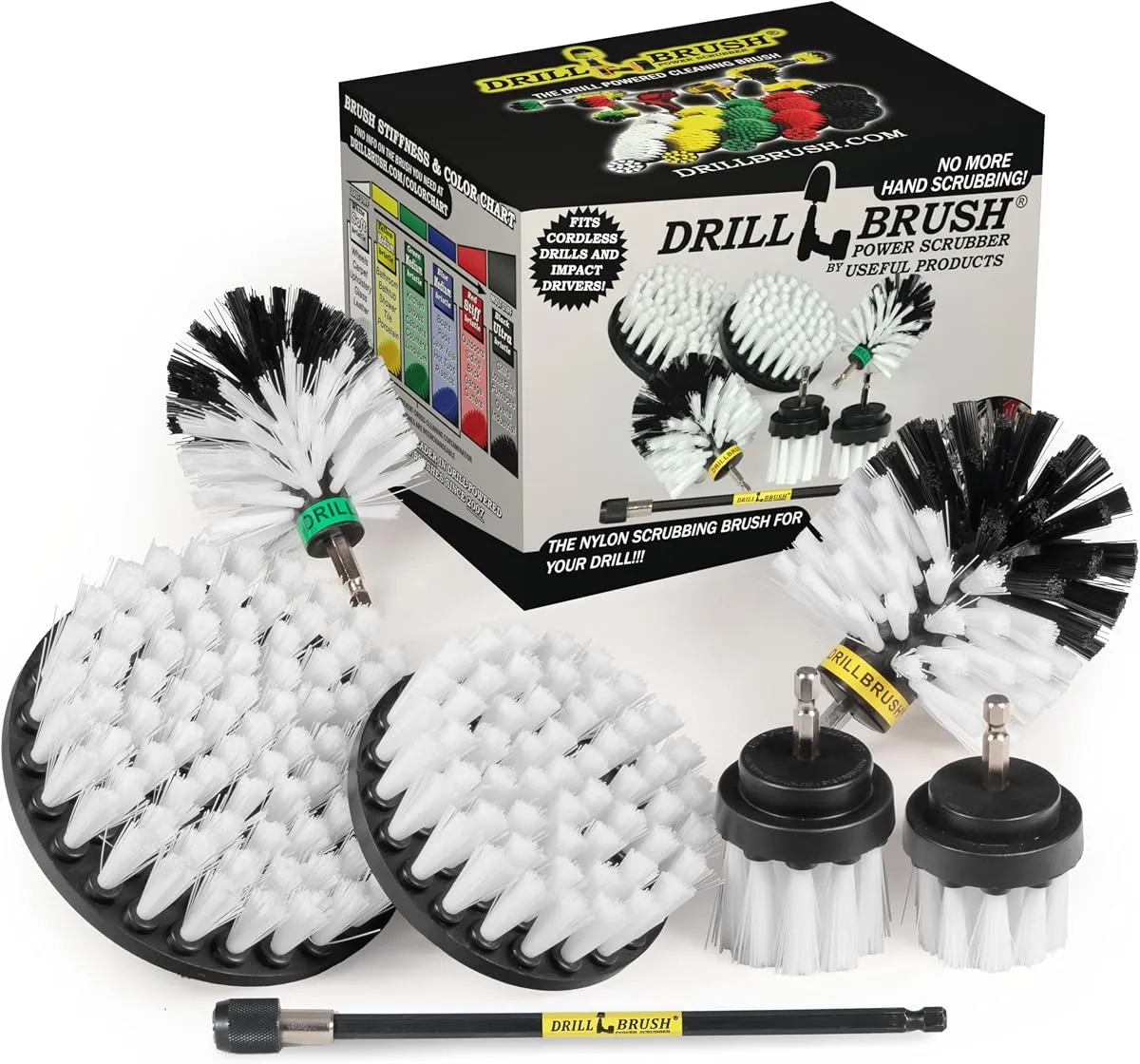
Best for: Rubber mats, wheel arch liners, door sills and load areas
Skip if: You intend to use it on paint, wheels or upholstery — see the warning below
A drill brush covers ground fast, which is genuinely useful on the parts of a car that are robust and filthy. The important thing is where it doesn't belong. On rubber mats and arch liners it saves real effort; on paint, alloy wheels or seat fabric it removes material rather than dirt.
Pros
- Covers rubber mats and arch liners far faster than hand scrubbing
- Extension shaft reaches up inside arches without lying on the ground
- Multiple stiffnesses in the kit for different surfaces
Cons
- Genuinely unsafe on paint, alloy finishes and upholstery
- A drill's torque removes material quickly if you dwell in one spot
- Needs a drill you're willing to get wet and dirty
The niche option that earns it
5. Brush Hero Water-Powered Wheel Brush Kit
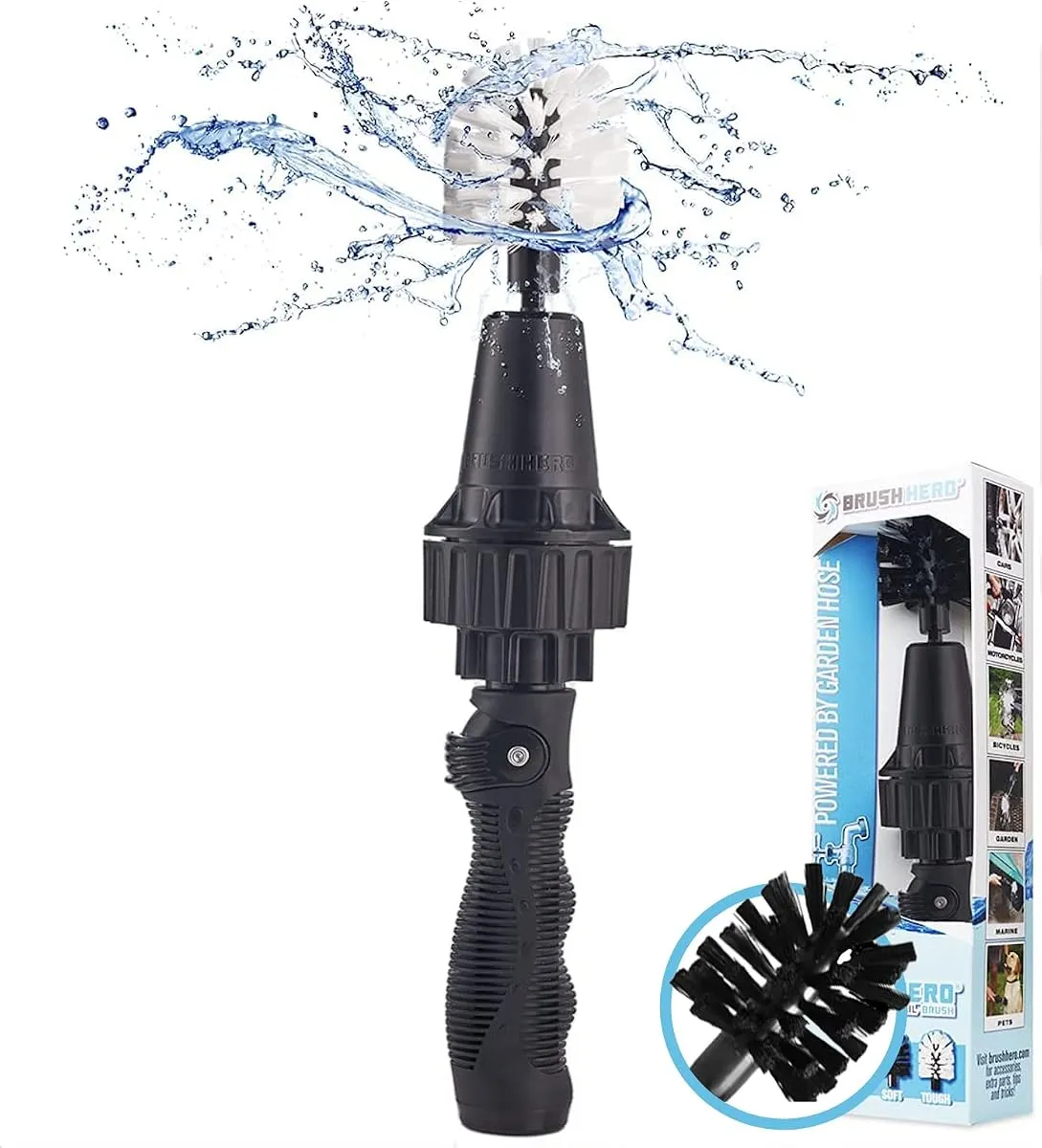
Best for: Wheel barrels and intricate spokes, without electricity near water
Skip if: Your wheels are simple five-spoke designs a mitt already reaches
Driven by hose water pressure rather than a motor, which sidesteps the obvious objection to powered brushes around a wet car. It's slower than a drill brush and that's the point — lower torque means it's far harder to damage a finish with it while still reaching into places a hand cannot.
Pros
- No electricity involved, which is the right call around a wet wheel
- Lower torque than a drill makes finish damage much less likely
- Reaches barrel areas and intricate spokes a mitt can't
Cons
- Needs decent hose pressure to spin properly
- Slower than a drill brush on large flat areas
- Single-purpose, so it's an addition rather than a kit replacement
Frequently asked questions
Is boar bristle actually better than synthetic for detailing?
For work near paint and trim, yes — natural boar bristle is softer and holds product better, so it agitates without marring clear coat. Synthetic bristle is generally stiffer and more chemical-resistant, which makes it the better choice for engine bays, wheels and anywhere you're using aggressive cleaner. They're complementary rather than competing, which is why most people end up owning both.
Are drill brushes safe to use on a car?
On rubber mats, wheel arch liners, door sills and load areas, yes — those surfaces are robust and the time saved is real. On paint, alloy wheel finishes and upholstery, no. A drill applies far more torque than a hand does, and dwelling in one spot removes material rather than dirt. The nylon stiffness that makes them effective on a rubber mat is exactly what damages a coated wheel.
Can I use the same brushes on wheels and paint?
No, and this is worth being strict about. Brake dust is metallic and sharp, and it embeds in bristles in a way that rinsing doesn't reliably clear. A brush that's been on a wheel carries that grit onto whatever it touches next. Keep wheel brushes physically separate from paint and trim brushes, the same way you'd keep a wheel mitt separate.
How do I stop a detailing brush scratching trim?
Check the ferrule — the metal band where bristles meet the handle. On cheap brushes it's exposed metal that will scratch anything it contacts once the bristles splay under pressure. Brushes with rubberised or coated ferrules remove that risk. Beyond that, let the bristle tips do the work rather than pressing the brush flat against the surface.
How should detailing brushes be cleaned and stored?
Rinse thoroughly after each use, shake out the excess, and dry bristles-down or flat rather than standing on the handle — water sitting in the ferrule rots natural bristle and rusts cheap metal bands. Natural boar bristle in particular needs to dry fully or it develops a smell that transfers to whatever you clean next.
Do I need a whole set, or will one or two brushes do?
Sizes matter more than piece count. A vent slot, a badge surround and a wheel spoke need genuinely different widths, and one medium brush does all three badly. Two or three well-chosen sizes beat a ten-piece set of near-identical brushes — the useful question is whether the set spans real size differences or just repeats one shape.