How-To Guides
How to Clean an Engine Bay Without Causing Problems
Modern bays handle water fine in most places and badly in a few. What to cover first, why the engine should be warm but not hot, and what to skip entirely.
Engine bay cleaning has a reputation for being risky, and the reputation comes almost entirely from people using pressure washers on it.
The bay already handles water
A modern engine bay lives through rain, road spray and deep puddles. Components down there are sealed for exactly that. Water itself is not the threat.
Concentrated pressure is. A pressure washer can force water past a seal that shrugs off rain all winter, push it into a connector, dislodge clips and lift insulation pads.
So the method here is: normal hose pressure, and let brushes do the work that a jet would otherwise be doing.
Cover these, skip the rest
There’s a short list worth protecting, and a long list that doesn’t need it.
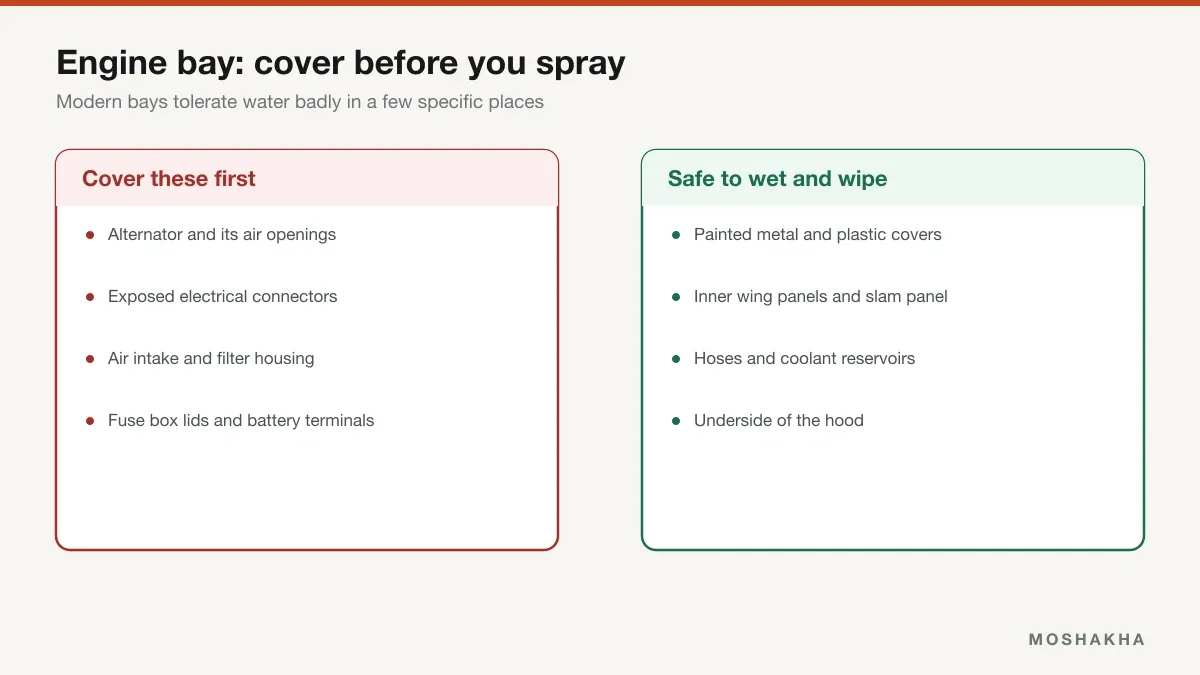
Cover: alternator, exposed electrical connectors, air intake opening and filter housing, fuse box lids, battery terminals.
Don’t bother covering: painted metal, plastic engine covers, inner wings, slam panel, hoses, coolant and washer reservoirs, the underside of the hood.
Plastic bags or foil, tucked or taped. It takes five minutes and removes most of the remaining risk.
Warm engine, not hot
Slightly warm helps the cleaner work and speeds the drying afterwards.
Hot is a genuine hazard. Cold water hitting a hot exhaust manifold or turbo housing risks thermal shock, and you can’t safely reach around hot components in the first place. About twenty minutes after a short drive is right — warm to the touch, not uncomfortable.
Brushes do the work
This is where an engine bay differs from paint. There’s no marring risk on a cast aluminum block or a plastic cover, so you can agitate properly.
A long-handled brush reaches the back of the bay and down the sides of the block, which is where the grime you can see from above actually lives.
See the detailing brushes from our guideKeep these separate from the brushes you use on paint and interior trim — engine bay grime is oily and carries over. That separation logic runs through detailing brush sets.
Run the engine afterwards
Towel what you can reach, pull your coverings off, then run the engine for ten minutes with the hood up.
The heat drives moisture out of casting recesses and around connectors where no towel reaches. Skipping this is why people occasionally get a rough idle or a warning light after a wash — usually temporary damp rather than damage, and entirely avoidable.
On dressing the plastics
Optional, and if you do it, matte or satin rather than gloss. A glossy engine bay reads as wet rather than clean, holds dust, and can migrate when the bay heats up.
Same reasoning as applies inside the car, covered in interior detailer vs all-purpose cleaner.
Frequently asked questions
Is it safe to wash an engine bay with water?
On a modern car, broadly yes — the bay is exposed to rain and road spray constantly and the components are sealed for it. The risks come from concentrated pressure rather than water itself, and from a small number of parts that don't like being soaked: the alternator, exposed connectors, the air intake, and the fuse box. Cover those, use a gentle spray rather than a pressure washer, and it's a low-risk job.
Can I pressure wash an engine bay?
It's the main way people cause damage, so we'd avoid it. A pressure washer can force water past seals and into connectors that handle rain perfectly well, and it can dislodge clips and loosen insulation. A normal hose with a spread spray plus proper brush agitation gets the same result without that risk.
Should the engine be hot or cold?
Warm, not hot. A slightly warm engine helps the cleaner work and speeds drying afterwards. A hot one is a genuine hazard — cold water on a hot exhaust manifold or turbo housing risks cracking, and you can't work safely around hot components. Roughly twenty minutes after a short drive is the sweet spot.
What should I never spray directly?
The alternator, any exposed electrical connector, the air intake and filter housing, the fuse box, and the battery terminals. Also avoid soaking any exposed engine control module. None of these will be harmed by the incidental damp of normal driving, but none of them want a direct stream of water and cleaner either.
Should I dress the plastics afterwards?
It's optional and purely cosmetic. If you do, use a matte or satin trim dressing rather than a high-gloss one, applied thinly and buffed. Gloss dressing in an engine bay looks wet rather than clean, attracts dust quickly, and can migrate onto surfaces you'd rather stayed dry when the bay heats up.