Blog
Corded vs Cordless Car Vacuum: Which Is Better?
Cordless feels nicer for the first five minutes. Here's why runtime, suction fade and socket behavior make corded the safer bet for most car interiors.
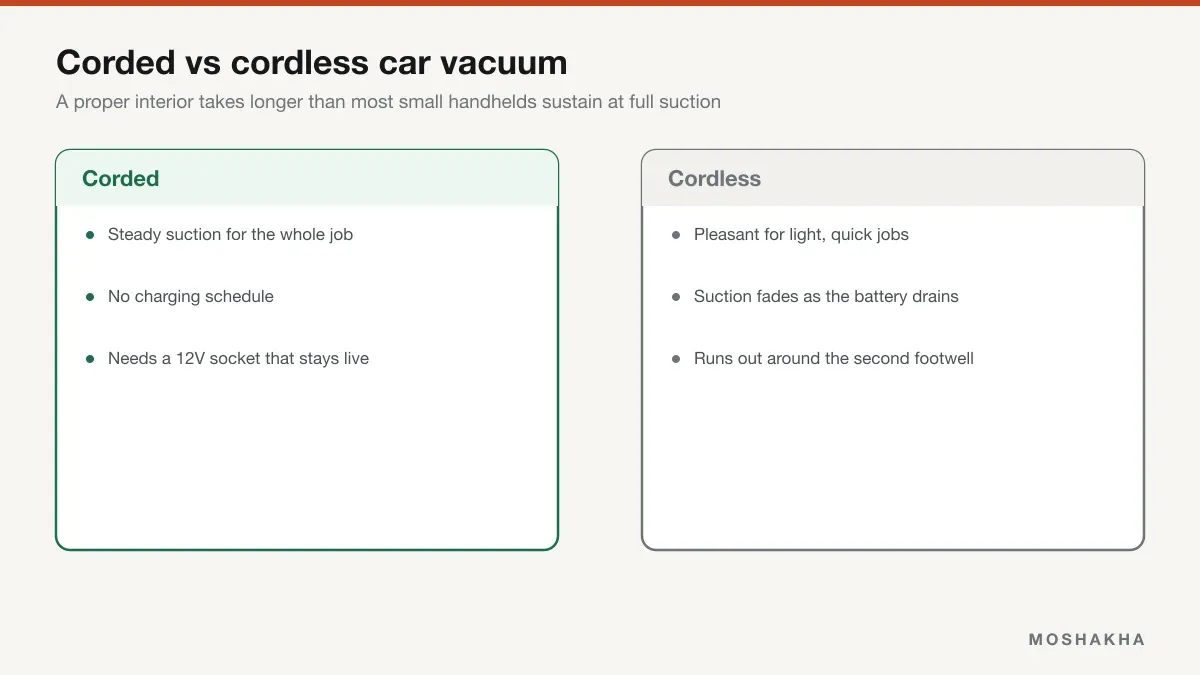
Cordless vacuums are the ones people want, because nothing is more pleasant than no cable across the driveway. They are also the ones that most often disappoint halfway through the job.
The real constraint: time
A proper interior vacuum means seats, rails, footwells, mats, the trunk, the gaps beside the console. That’s more time than most small cordless handhelds sustain at full suction.
Two things happen as the battery drains:
- The motor loses power, and suction falls off.
- Filters clog, which restricts airflow further. Fine dust is what kills airflow.
You notice it around the second footwell, which is exactly when you’re reaching the places that need it.
What corded gives you
- Consistent suction for as long as you’re working.
- No charging schedule: it’s ready when you are.
- Often a lower price for equivalent power.
The downsides: a cord to manage, and in the 12V case you need a socket that’s live.
The socket trap
Many modern cars switch off the 12V socket with the ignition. If yours does, a corded 12V vacuum runs only with the engine on, which is a poor idea in a closed garage. We explain how to check in does the 12V socket stay on with the ignition off. Check before you buy, not after.
Who should choose what
- Choose corded for a full interior clean, dirty family cars, pets, anything that takes longer than a few minutes.
- Choose cordless for light upkeep: crumbs, a quick tidy, keeping one in the door pocket.
- Use a household vacuum if your car is parked near the house. It’s often the most powerful of the three.
One honest caveat
Budget car vacuums have modest suction next to a household machine, and embedded pet hair needs a rubber brush first. Our ThisWorx review covers the trade-offs, and the interior detailing sequence shows where vacuuming fits in the order of work.
Verdict
For most people, corded wins on consistency. Cordless wins on convenience for small jobs, and you should pick based on which kind of cleaning you really do.
Frequently asked questions
Is a cordless car vacuum good enough?
For light, quick jobs like crumbs on a seat, yes. For a proper interior clean, most cordless units run out of battery or lose suction before you've reached the awkward areas under the seats and in the trunk.
Why does suction fade on cordless vacuums?
As the battery drains, the motor gets less power, and suction drops. Filters clogging with fine dust also reduces airflow. Both happen sooner on small handhelds with small batteries.
Will a corded 12V vacuum work with the engine off?
Only if your car's 12V socket stays powered with the ignition off. Many cars cut the socket, in which case you need the engine running, or a different power source.
Can I use a household vacuum in the car?
Yes, and for heavy cleaning it's often the strongest option. Suction and runtime beat most car-specific handhelds, but you need a mains socket and a cord that reaches.