Buying Guides
Best Dash Cams 2026: What Actually Matters in the Spec
Resolution is oversold and night performance is undersold. Our dash cam picks, the capacitor-vs-battery issue, and what parking mode really requires.
Moshakha is reader-supported. When you buy through links on our site, we may earn an affiliate commission at no extra cost to you. How we make money.
At a glance
Every pick here uses a supercapacitor rather than a lithium battery — see why below.
| Product | Award | Best for | Rating | Jump to review |
|---|---|---|---|---|
| VIOFO A129 Plus Duo (2K front + 1080p rear) | Best overall | Full front and rear coverage, which is where most disputed claims happen | Details | |
| VIOFO A119 Mini 2 (STARVIS 2, 2K 60fps) | Best single camera | A discreet front camera with genuinely good night performance | Details | |
| VIOFO A129 Plus (2K 1440P 60fps) | Best value 2K | 2K front coverage with the option to add a rear channel later | Details | |
| VIOFO A129 (1080P with GPS) | Budget pick | Getting a reliable camera fitted rather than waiting for the perfect one | Details |
Dash cam listings compete on resolution because it’s a big number that’s easy to print. It is not the spec that determines whether the footage is any use.
Resolution is oversold
The moment that matters is almost always in poor conditions — dusk, rain, an unlit road, oncoming headlights. What determines whether a license plate is readable there is the sensor and lens aperture, not the pixel count.
A 4K camera with a weak sensor gives you more pixels of the same unreadable smear. A 2K camera with a modern low-light sensor gives you a legible plate.
4K also fills memory cards faster, generates more heat on a hot windshield, and produces files awkward enough that people stop pulling footage off.
2K with a good sensor is the sweet spot. Above that you’re paying for a number.
Supercapacitor, not battery
This is a hard requirement, and it’s why every pick here has one.
A dash cam sits on a windshield. Interior temperatures in summer sun get extreme. Lithium batteries degrade rapidly under sustained heat, lose the ability to close a file safely on shutdown, and carry a small but real swelling risk.
A supercapacitor holds just enough charge to finish writing the current file when power cuts, tolerates heat far better, and lasts years longer.
If a listing does not say supercapacitor, assume it has a battery.
Front and rear beats front and sharper
If you’re choosing between a sharper single camera and two decent ones, take two.
A large share of contested incidents are rear-end collisions, and a front-only camera records nothing useful in those. The second channel closes a coverage gap that no amount of front resolution can.
Parking mode needs hardwiring
Parking mode records while the car is off, which means drawing power while the car is off.
Doing this from the 12V socket — where it works at all — risks a flat battery. Done properly it’s hardwired through a fuse box with a voltage cut-off that stops recording when battery voltage drops below a set threshold.
That’s a hardwire kit and either an afternoon or a fitter. If you’re not doing that, treat parking mode as unavailable rather than as a feature you have.
How we chose
Specification analysis — sensor generation, aperture, capacitor versus battery, parking mode implementation and channel count — plus aggregated long-term owner feedback with attention to heat-related failure and firmware stability. We have not run comparative night footage tests. No brand paid for placement.
The two things that make footage useless
A worn memory card. Dash cams write continuously and loop-overwrite, which kills standard cards fast. Use a high-endurance surveillance-rated card, and reformat it in the camera every month or two. Card failure is the most common reason footage is missing when someone finally needs it.
A dirty windshield. The camera shoots through your glass, and the interior plasticiser film scatters light straight into the lens at night. Clean the inside of the screen properly — our streak-free glass guide covers it, and it’s also what makes the adhesive mount actually stick.
The picks in detail
Best overall
1. VIOFO A129 Plus Duo (2K front + 1080p rear)
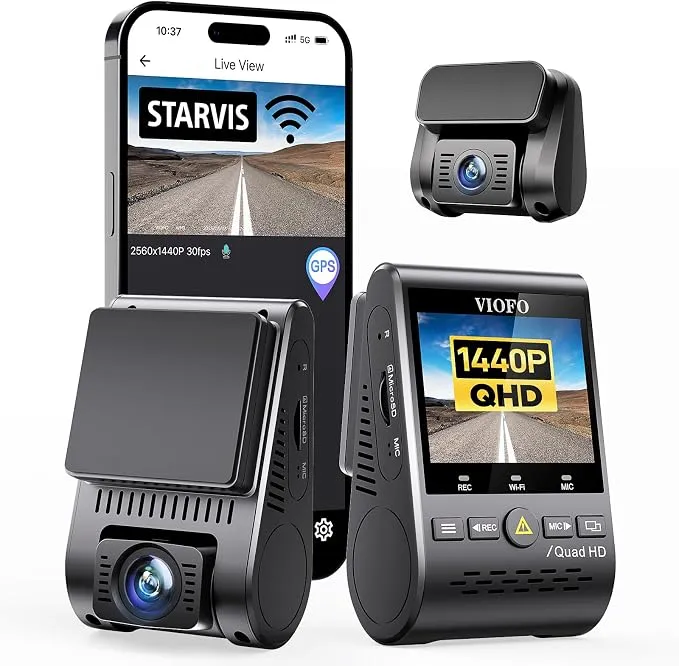
Best for: Full front and rear coverage, which is where most disputed claims happen
Two channels matter more than resolution. A large share of contested incidents are rear-end collisions, and a front-only camera gives you nothing there. 2K front is enough to read a plate at a sensible distance; adding a rear channel covers a failure the sharpest single camera cannot.
Pros
- Front and rear coverage — the actual gap in most setups
- Supercapacitor, not a lithium battery
- Buffered parking mode captures the moments before an impact
- Wi-Fi and GPS for pulling footage and logging speed and location
Cons
- Two-camera install means running cable to the tailgate — plan an afternoon
- Parking mode needs hardwiring to a fuse box, not the 12V socket
- App is functional rather than polished
Best single camera
2. VIOFO A119 Mini 2 (STARVIS 2, 2K 60fps)
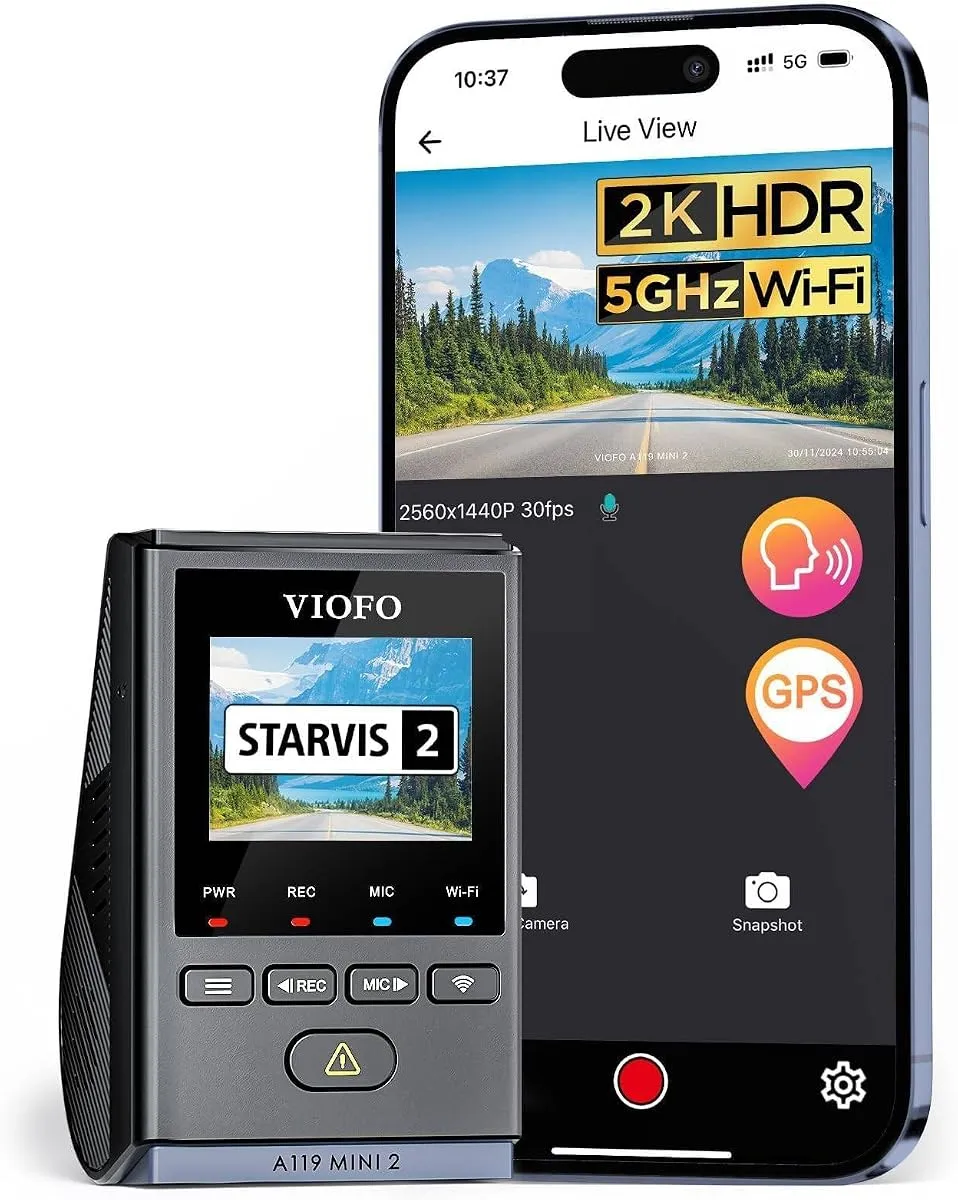
Best for: A discreet front camera with genuinely good night performance
The STARVIS 2 sensor is the specification worth paying for. Almost all the footage that matters is shot in poor light — dusk, rain, unlit roads — and sensor quality determines whether a plate is readable there. A 4K camera with a weak sensor produces more pixels of the same unreadable smear.
Pros
- STARVIS 2 sensor — the spec that actually improves usable footage
- Very compact; hides behind the mirror
- 60fps helps freeze plates on oncoming vehicles
- Voice control and 5GHz Wi-Fi
Cons
- Front only — no rear coverage
- No screen, so framing depends on the phone app
Best value 2K
3. VIOFO A129 Plus (2K 1440P 60fps)
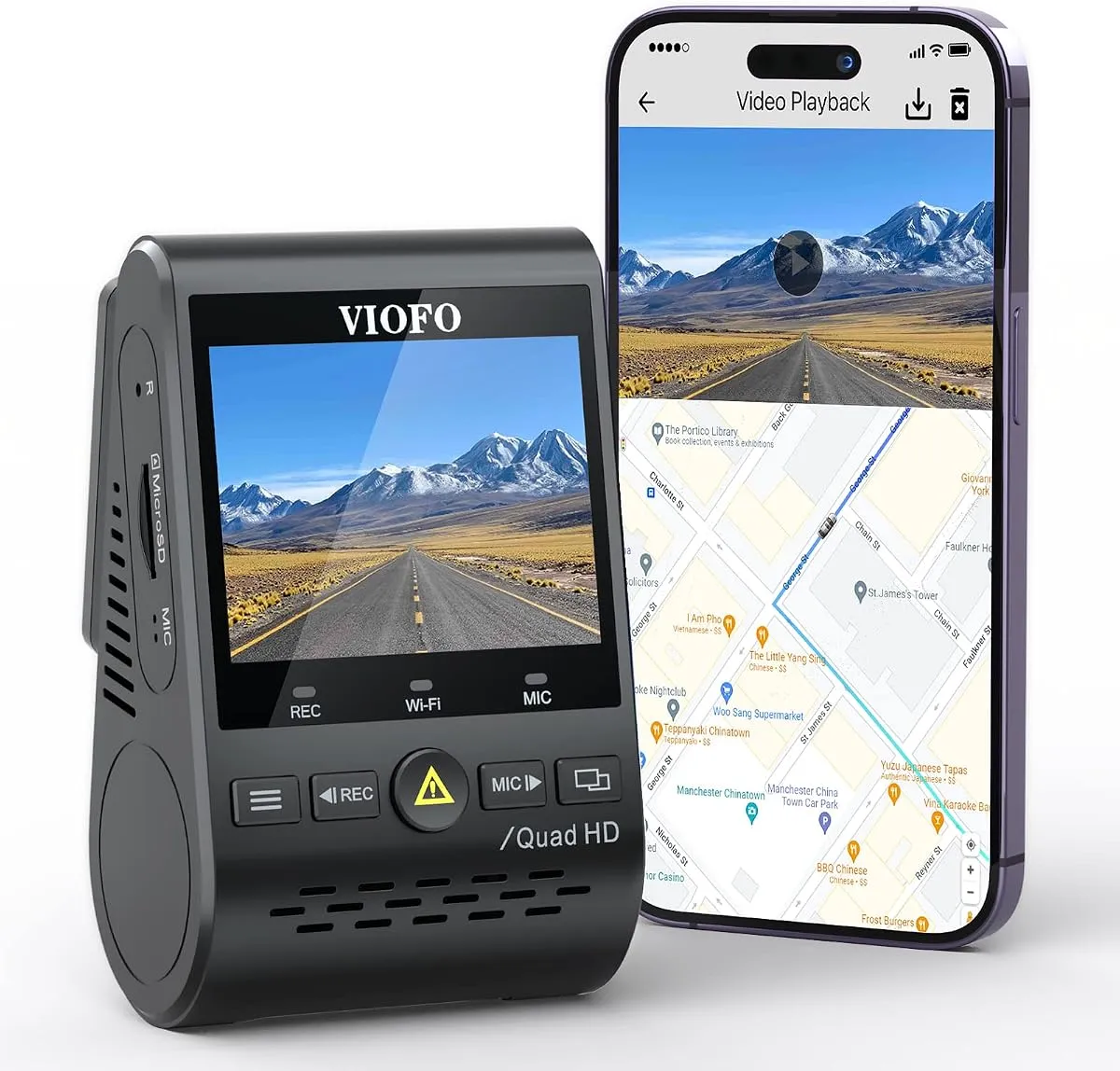
Best for: 2K front coverage with the option to add a rear channel later
The single-channel version of pick one, which can be paired with a rear camera afterwards. Buying this and adding the rear channel later is a reasonable way to split the install work over two weekends rather than committing to a full afternoon of trim removal at once.
Pros
- Upgrade path to dual channel
- Supercapacitor and buffered parking mode
- Well-established model with mature firmware
Cons
- Older sensor than the Mini 2 — weaker at night
- Bulkier than the Mini
Budget pick
4. VIOFO A129 (1080P with GPS)
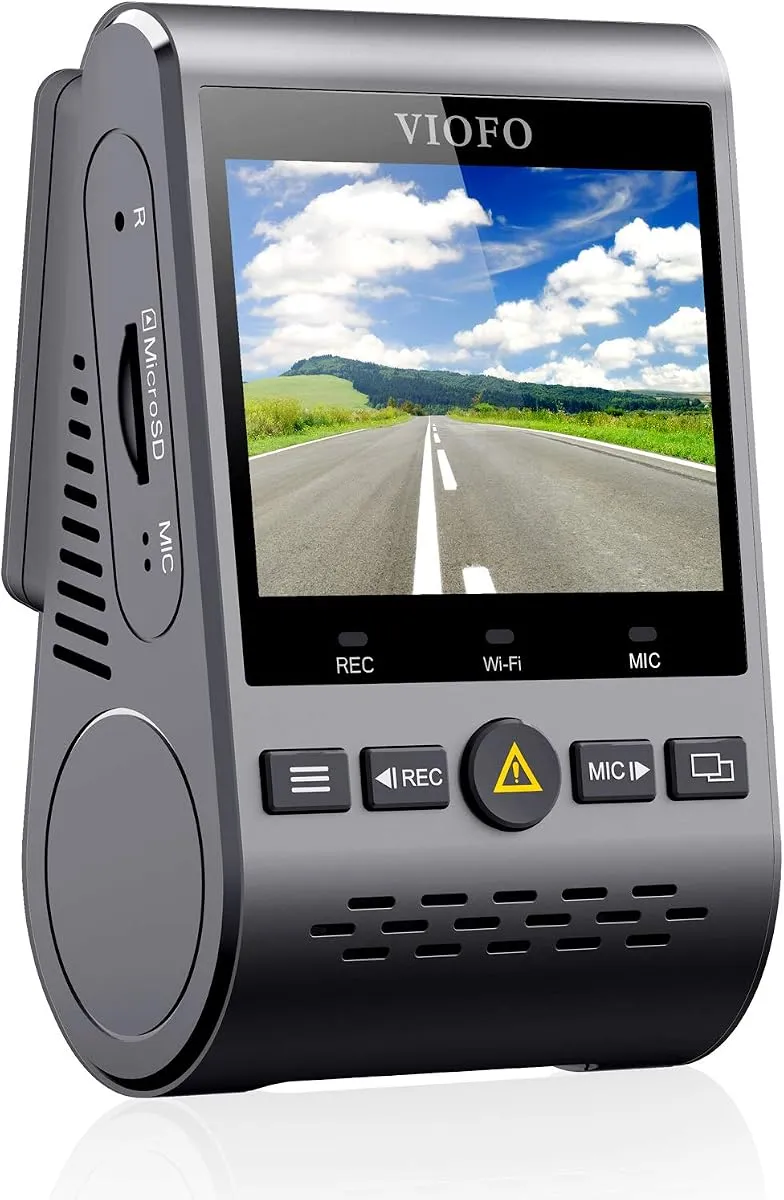
Best for: Getting a reliable camera fitted rather than waiting for the perfect one
1080p is enough to establish what happened, who was where, and roughly how fast — which is what a dash cam is actually for. It will struggle to read a plate at distance in poor light. A fitted 1080p camera is worth vastly more than a 4K one still in its box.
Pros
- Cheapest route to reliable, capacitor-based recording
- GPS logging included
- Small and unobtrusive
Cons
- 1080p limits plate readability at distance and at night
- Noticeably weaker in rain and low light
Frequently asked questions
Is 4K worth it in a dash cam?
Usually not. Sensor quality and lens aperture determine whether a plate is readable in poor light, and that is where nearly all useful footage is shot. A 2K camera with a modern low-light sensor routinely outperforms a 4K camera with a weak one. 4K also fills cards faster and generates more heat.
Supercapacitor or battery dash cam?
Supercapacitor, without question. A dash cam lives on a windshield where summer interior temperatures can be extreme, and lithium batteries degrade badly under sustained heat — with a small but real swelling risk. Capacitors tolerate heat far better and last longer. Every pick here uses one.
Does parking mode drain my car battery?
It can, which is why it should be hardwired through a fuse box with a voltage cut-off rather than run from the 12V socket. The cut-off stops recording when battery voltage drops below a threshold, protecting your ability to start the car. Without it, a few days parked can leave you stranded.
What memory card should I use?
A high-endurance card rated for continuous surveillance recording, not a standard photography card. Dash cams write constantly and overwrite in a loop, which destroys ordinary cards quickly. Format the card in the camera every month or two — card failure is the most common reason footage is missing when it matters.
Is it legal to have a dash cam on my windshield?
Rules vary by state and country, both on windshield obstruction and on recording audio of passengers. In most US states dash cams are legal with placement restrictions. Check your local rules on mounting position and on audio consent before fitting, particularly if you drive for a rideshare service.
Where should I mount a dash cam?
Behind the rear-view mirror, high and central. It stays out of your sightline, sits in the area the wipers clear, and is hard to see from outside the car. Clean the glass properly before fitting — the adhesive mount will not stick reliably to a screen with an oily interior film.