How-To Guides
How to Prepare a Car for Months of Storage
A flat battery is what actually fails on a stored car, not the paint. The order that matters, and the two mistakes that cause most storage damage.
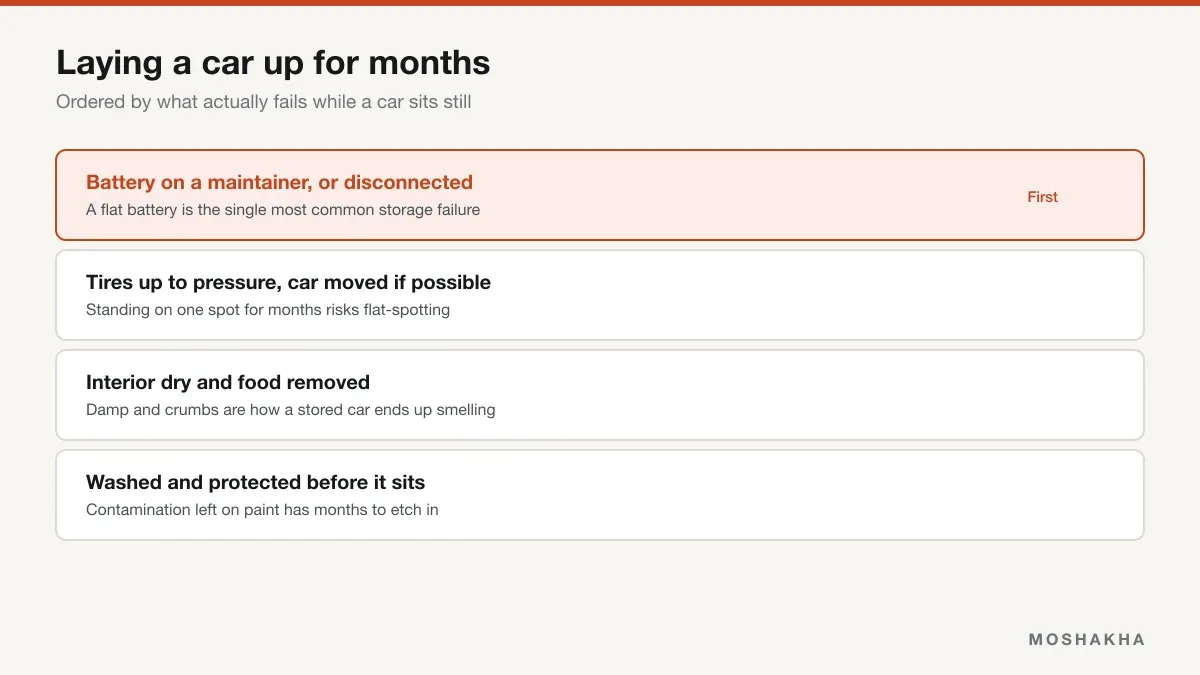
Storage advice usually starts with paint protection. In practice, the thing that’s actually flat, seized or smelling when you come back is rarely the paint.
The battery is what fails
Modern cars draw current constantly even switched off — alarm, keyless entry, various control modules staying in a low-power state. Over months, that drains a battery completely, and a battery left deeply discharged for a long period often doesn’t recover.
A maintainer is the right answer if there’s mains power where the car sits. It holds the charge without overcharging, and the car keeps its settings.
Disconnecting the negative terminal is the fallback with no power available. It stops the parasitic drain, though the battery still self-discharges slowly on its own.
See the jump starter we reviewedWorth keeping a jump pack with the car regardless — it’s the thing you’ll want on the day you try to bring it back into service. Sizing is in best jump starters, and the signals that a battery is already on its way out are in when to replace a car battery.
Don’t start it “to keep it healthy”
This is the most common well-intentioned mistake.
A brief start never gets the engine and exhaust hot enough to drive off the water that combustion produces. That moisture condenses in the oil and the exhaust system and sits there. You’ve added contamination without achieving circulation.
Either drive it properly for twenty minutes or more, or leave it alone. A five-minute idle in the driveway is the worst of both.
Wash and protect before, not after
Contamination left on paint has the whole storage period to work. Bird droppings and sap etch permanently over months; brake dust corrodes into wheel finishes.
A wash, a decontamination pass and a coat of sealant before it sits is far more valuable than the same work after.
Pressures a little high
Tires lose pressure slowly, and a tire sitting under-inflated on one spot for months can take a flat spot. Most settle after some miles; a long enough period can leave a permanent vibration.
A few PSI above the placard figure gives margin for the slow loss. Sizing and technique in best tire inflators.
Handbrake off, wheels chocked
Rear pads seize to discs when held in contact for months in damp conditions. Releasing the handbrake and chocking the wheels avoids it.
On cars with an electronic parking brake this is more awkward and the manual may specifically say to leave it engaged — follow that if so.
Breathable cover, or none
A breathable cover keeps dust off and lets moisture escape.
A plastic tarpaulin traps condensation against the paint and holds it there all winter. That does more damage than no cover at all. Indoors and uncovered beats outdoors under plastic, every time.
Frequently asked questions
Should I disconnect the battery or use a maintainer?
A maintainer is better if you have power where the car is stored — it keeps the battery at full charge without overcharging, and the car keeps its settings. Disconnecting the negative terminal is the fallback when there is no power available; it stops the parasitic drain from the car's electronics but the battery still self-discharges slowly on its own.
Do I need to start the car periodically?
Briefly starting it is generally worse than leaving it alone. A short run does not get the engine and exhaust hot enough to drive off the condensation that combustion produces, so moisture accumulates in the oil and exhaust. If you can drive it properly for twenty minutes or more, that is worthwhile; a five-minute idle in the driveway is not.
Will the tires get flat spots?
They can, particularly in cold conditions and on a car left for several months on under-inflated tires. Most flat-spotting works itself out after some miles once the tires warm up, but a long enough period can leave a permanent vibration. Inflating a few PSI above normal before storage is the simple mitigation.
Should I use a car cover?
Only a breathable one. A breathable cover keeps dust and debris off while letting moisture escape. A plastic sheet or tarpaulin traps condensation against the paint, holds it there, and causes more harm over a winter than leaving the car uncovered would have. Indoors and uncovered beats outdoors under plastic.
Why leave the handbrake off?
Rear brake pads can seize to the disc when held in contact for months, especially in damp conditions. Releasing the handbrake and chocking the wheels instead avoids it. On cars with an electronic parking brake this is more awkward, and the manual may specifically advise leaving it engaged — follow the manufacturer's guidance if so.