How-To Guides
Restoring Faded Black Trim (Dressing vs Dye)
If the color comes back when the plastic is wet, a dressing will restore it. If it doesn't, no dressing will — and that's the test worth doing first.
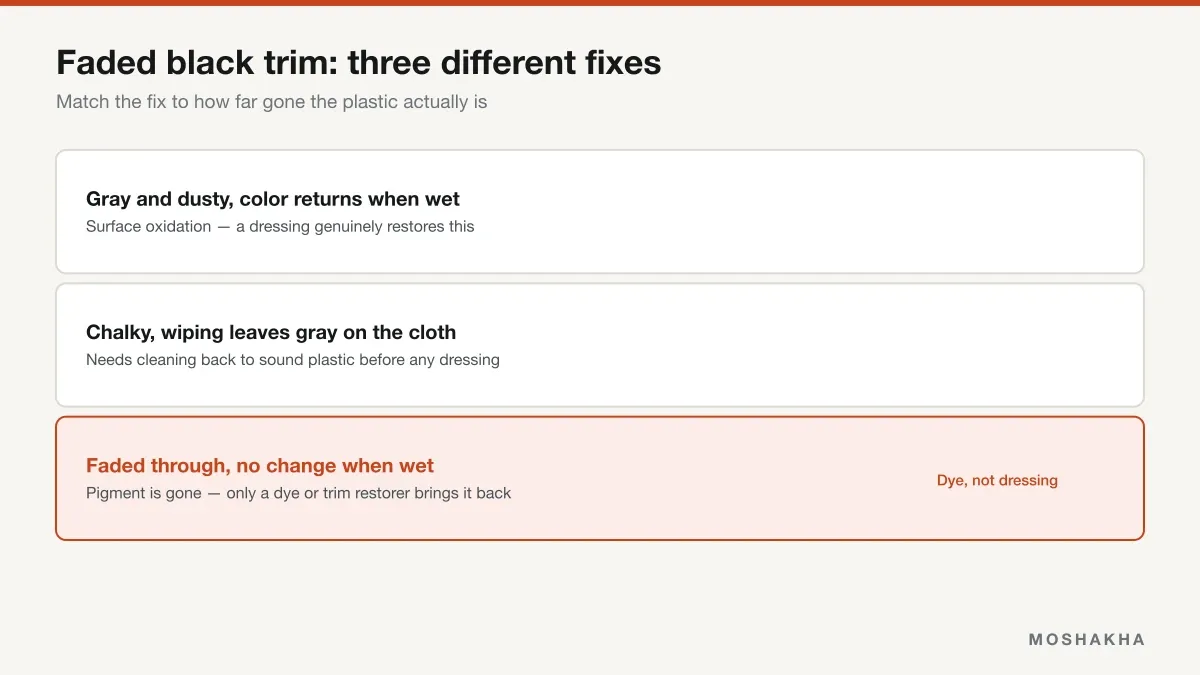
Faded black trim is one of the few car care problems where the right product depends entirely on a test you can do for free in ten seconds.
Wet it and watch
Splash some plain water on the faded area.
If the black comes back while it’s wet, the pigment is still in the plastic. The surface has micro-texture from oxidation that scatters light and reads as gray. A dressing fills that texture and the color returns — exactly like the water did, but durably.
If it stays gray when wet, the pigment itself has gone. No dressing will restore it, because there’s no color underneath for the dressing to reveal. That’s a dye or trim restorer job — a product that deposits new pigment rather than revealing old.
Buying the wrong one of those two is the single most common mistake here, and this test prevents it.
Why trim fades in the first place
UV breaks down the polymer’s surface layer and drives out the plasticisers and carbon black that give it color and flexibility. The surface oxidises into a chalky gray.
It’s a sun problem primarily — which is why roof rails, mirror caps and the tops of bumpers go long before the lower sections that live in shadow.
Prep decides how long it lasts
This is the part people skip, and it matters more than which product you choose.
Faded trim carries oxidised material plus whatever old dressing was applied over it. Scrub with all-purpose cleaner and a stiff brush until the cloth stops coming away gray — dressing applied over oxidation is bonded to a layer that’s already flaking off.
Then wipe down with isopropyl alcohol. Two minutes, and it removes the residue and oils so the new product bonds to bare plastic.
See the protectant from our interior guideFull-strength APC is entirely appropriate on exterior trim, the same way it is in the wheel arches — the boundaries of where that’s true are in cleaning wheel arches.
Thin coats, buffed
A foam applicator and a thin, even film. Two thin coats an hour apart last considerably longer than one heavy one.
Once the surface hazes slightly, buff the excess off with a clean microfiber. Excess left to cure is what produces the greasy look and the white streaks that run down the paint on the first wet drive — the same failure as over-applied dashboard dressing, covered in dashboard dressing and windshield glare.
Mask narrow trim
Window surrounds and thin pillar trim sit tight against paint, and restorers in particular stain it and are difficult to remove once cured.
Dressings are more forgiving. Restorers are not. Five minutes of tape on anything narrow is the cheapest insurance in this job.
Frequently asked questions
Why does exterior black plastic trim fade?
UV exposure breaks down the surface layer of the polymer and drives out the plasticisers and carbon black that give it color and flexibility. The surface oxidises into a chalky gray layer. It's a sun problem primarily, which is why roof rails, mirror caps and the tops of bumpers fade long before the lower sections do.
How do I know if a dressing will work or if I need a dye?
Wet the trim with plain water. If the black returns while it's wet, the pigment is still there and a dressing will restore the look — water and dressing both work by filling the micro-texture and letting light reflect normally again. If it stays gray when wet, the pigment is genuinely gone and only a dye or restorer that deposits new color will fix it.
How long does trim dressing last?
Typically weeks to a few months depending on the product, the weather and how well the surface was prepped. Dressings applied over unprepped oxidised trim fail fastest, because they're bonded to a layer that's already flaking. The alcohol wipe before application probably has more effect on longevity than the choice of product does.
Can I use tire dressing on exterior trim?
Many people do and it works in the short term, but it's formulated for rubber sidewalls rather than plastic, and the glossier tire products look wrong on trim. Solvent-heavy tire dressings can also accelerate drying-out in plastic. A dedicated trim product with UV inhibitors is the better long-term choice.
Will trim restorer stain my paint?
Restorers and dyes can, and they're far harder to remove once cured than a dressing is. On narrow trim tight against paint — window surrounds, thin pillar trim — masking tape is worth the five minutes. Dressings are more forgiving, but even those leave a residue that's easier to prevent than to clean off.