Reviews
Rag Company Cyclone Ultra Wash Mitt Review
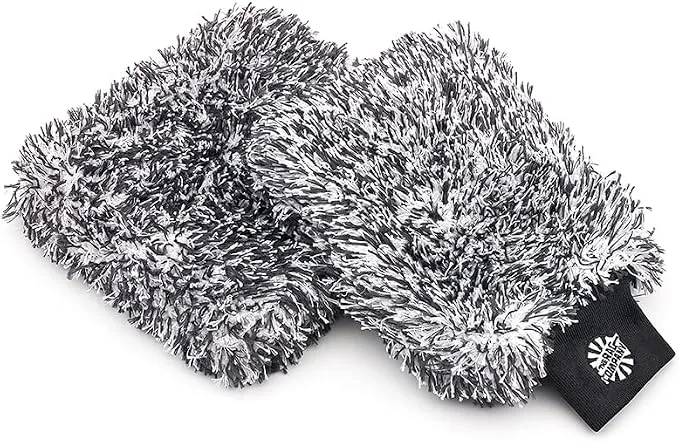
A foam-cored 70/30 microfiber wash mitt bundled with a flat wash pad. We look at whether the foam core and pad combination justify the price over chenille.
Moshakha is reader-supported. When you buy through links on our site, we may earn an affiliate commission at no extra cost to you. How we make money.
Pros
- Foam core spreads pressure — fewer concentrated contact points
- 70/30 Korean microfiber releases grit readily when rinsed
- Bundled flat pad handles lower panels and rocker rails well
- Works for rinseless and traditional bucket washes
Cons
- Roughly double the price of a basic chenille mitt
- The flat pad has no wrist cuff and can slip when soapy
- Foam core extends drying time after laundering
Most wash mitt comparisons come down to “any mitt beats any sponge”, which is true and not very useful once you’ve accepted it. The interesting question is what separates a $10 chenille mitt from a $22 one.
The foam core
This is the actual differentiator, and it’s easy to overlook.
A mitt without a foam core is essentially a fabric glove. Your fingertips press through it, concentrating force into five small contact points. Those points are where marring happens — not across the flat of your palm, but where you’re inadvertently pushing.
A foam core spreads that force across the whole face of the mitt. You get contact without pressure concentration, which is what lets the mitt glide over grit instead of grinding it in.
Grit release
The other thing you’re paying for is what happens in the rinse bucket.
A mitt that traps dirt and holds onto it through a rinse carries that dirt back to your paint on the next panel. This is where cheap mitts genuinely underperform: chenille noodles tangle and hold grit deep in the pile.
The 70/30 Korean microfiber here lets go readily when agitated against a grit guard. That’s the whole point of the two-bucket method, and a mitt that defeats it undermines the entire wash.
The bundled pad
Combo packs are usually padding out the value proposition. This one isn’t. The flat 10x10in pad is the better tool for rocker panels, lower doors and sills — areas where a mitt is bulky and where you want to feel what you’re touching.
Its one real flaw: no wrist cuff. Soapy, it can slip out of your hand, and a pad that hits the ground is out of service until it’s laundered.
Drying time
The foam core holds water and extends drying time after laundering. Hang it with the opening downward and give it longer than you’d think. A mitt put away damp develops mildew in the core, which you cannot wash out.
Should you buy it?
Yes, if you wash regularly and want the mitt to stop being the weak link. The foam core and grit release are real engineering differences, not marketing.
No, if you wash occasionally — a chenille mitt at half the price is still enormously safer than a sponge, and technique matters more than either. Our wash mitt guide covers the cheaper options, and wash mitt vs sponge explains why any mitt is the upgrade that matters most.
Frequently asked questions
Why does a foam core matter in a wash mitt?
Without one, your fingertips press through the mitt and concentrate force into small areas of paint — which is exactly where swirl marks appear. A foam core spreads that pressure across the whole contact face, so the mitt glides rather than being pushed.
Is this better than a chenille noodle mitt?
For grit release and pressure distribution, yes. Chenille mitts hold more suds and cost less, and they are still dramatically safer than a sponge. The Cyclone's advantage is that it lets go of trapped dirt more readily in the rinse bucket, which is where cheap mitts fall down.
What is the flat pad for?
Lower panels, rocker rails and other flat areas where a mitt is clumsy. It is also easier to feel the surface through a pad than through a mitt, which helps on badly contaminated lower sections.
Can I use it for wheels?
No. Anything used on wheels picks up hard metallic brake dust particles and must never touch paint afterwards. Buy a separate wheel mitt and keep the two strictly apart.