Blog
Pollen Season Car Care: Rinse More, Wipe Less
Pollen is abrasive and slightly acidic when wet. Dry-wiping it off is why cars pick up fine scratches every spring — frequent rinsing costs less and works better.
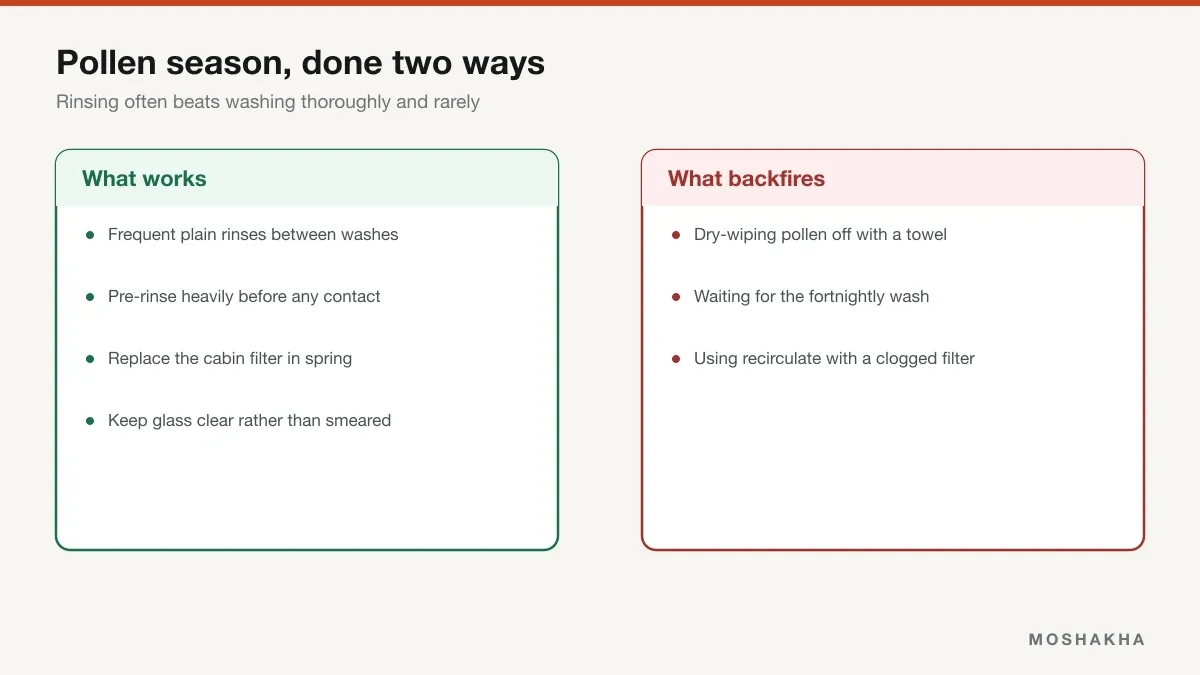
Pollen season produces more fine scratching than any other time of year, and almost all of it comes from a single reflex: the car looks dusty, so people wipe it.
Why dry-wiping pollen is the problem
Pollen grains aren’t smooth. Many are textured or spiked — that’s how they cling to insects — and some become mildly acidic when wet.
Dragging that across clear coat with a dry cloth is the same mechanism that causes swirl marks during washing: abrasive particles, no lubrication, pressure from your hand. The difference is that people do it casually, in a car park, without thinking of it as “washing” at all.
One pass doesn’t do visible harm. A whole spring of them does.
Rinse frequently instead
The useful change in pollen season isn’t washing more thoroughly — it’s rinsing more often.
A plain hose-down removes the bulk of the pollen with zero contact risk. No mitt, no bucket, no technique required. Do that every few days and the pollen never accumulates into something you feel tempted to wipe.
Save the full contact wash for when there’s genuine road film underneath, and pre-rinse heavily before touching anything — the reasoning is in how to avoid swirl marks.
See the shampoo from our soap guideWhen you do wash properly, lubrication matters more than usual because of what’s sitting on the paint.
If you can’t rinse — use a real waterless wash
Apartment parking, no hose, pollen everywhere. This is the legitimate case for a waterless wash product, which carries enough lubricant and polymer content to encapsulate grains and let the towel slide rather than drag.
Not a quick detailer. That’s the distinction that matters here, and getting it wrong is how careful people scratch their own paint — covered in quick detailer: the dry-panel warning and the waterless wash guide.
The part that affects you more than the car
If you have hay fever, the cabin air filter matters more than the paint does.
Spring is when filters load fastest, and a clogged filter both reduces airflow and stops doing the filtering you want. Replacing it at the start of pollen season rather than the end is ten minutes that changes how the car feels to sit in — how to replace a cabin air filter.
Also worth avoiding recirculate mode with a loaded filter: you’re circulating cabin air through a filter that’s already full rather than drawing filtered fresh air in.
Does wax help?
It helps pollen release during a rinse, which is a real benefit when your strategy is frequent rinsing.
It doesn’t stop pollen landing, and it doesn’t make dry-wiping safe. Treat it as something that makes the rinsing approach work better, not as a substitute for it.
Frequently asked questions
Can pollen damage car paint?
Indirectly, in two ways. Pollen grains have textured, sometimes spiked surfaces, so dragging them across paint with a dry cloth is abrasive. And some pollens become mildly acidic when wet, so a layer left on paint through rain and sun can contribute to etching. Neither is dramatic, but a whole season of dry-wiping produces visible fine scratching.
Should I wipe pollen off with a dry cloth?
No — this is the single worst thing you can do in pollen season, and it's what most people reach for because the car looks merely dusty. A dry cloth drags textured grains across clear coat with no lubrication, which is exactly the mechanism that creates swirl marks. Rinse it off, or use a proper waterless wash product with real lubricant.
How often should I wash during pollen season?
More often than usual, but the important change is that many of those can be plain rinses rather than full contact washes. A hose-down removes the bulk of the pollen without any contact risk at all. Save the full two-bucket wash for when there's actual road film underneath, and rinse in between.
Does pollen affect anything other than the paint?
The cabin air filter, significantly. Spring is when filters load fastest, and a clogged one reduces airflow and stops filtering the pollen you're trying to keep out of the cabin. If you have hay fever, replacing the cabin filter at the start of pollen season does more for your comfort than anything you do to the paint.
Will a coating or wax help with pollen?
It helps the pollen release more easily during a rinse, which is a genuine benefit when you're rinsing frequently. It doesn't stop pollen landing, and it doesn't make dry-wiping safe. Think of it as making the frequent-rinse strategy work better rather than as an alternative to it.